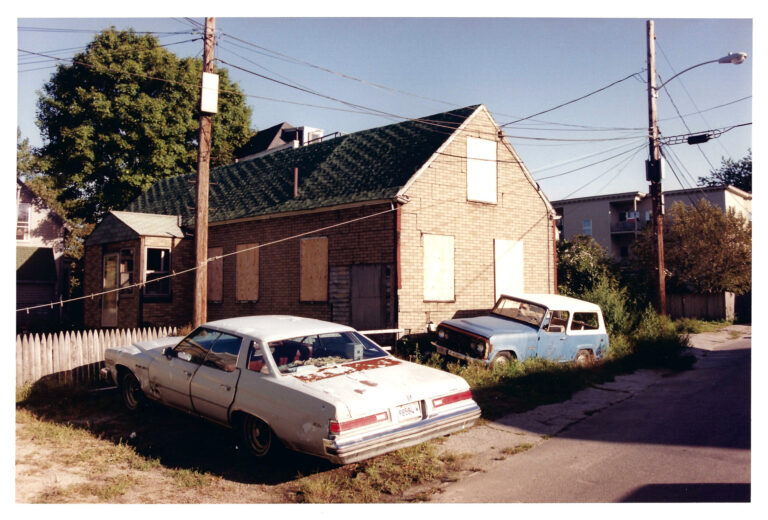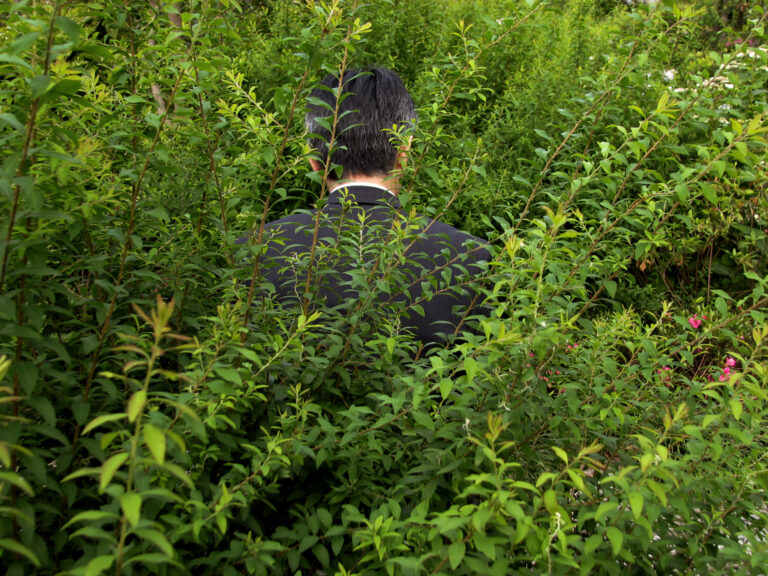

All images by Ella Morton. Used with permission.
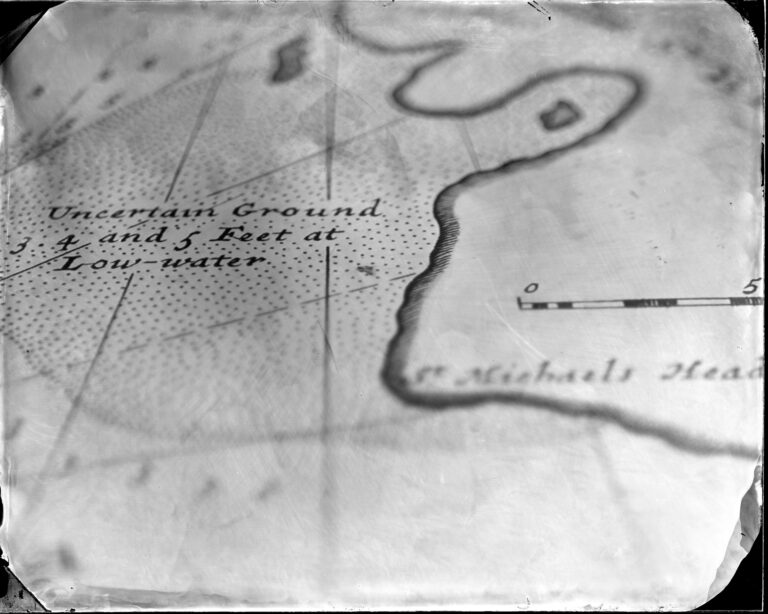
There is a particular kind of curiosity that is born not from what you are shown, but from what you are not. For Ella Morton, it started with a map.
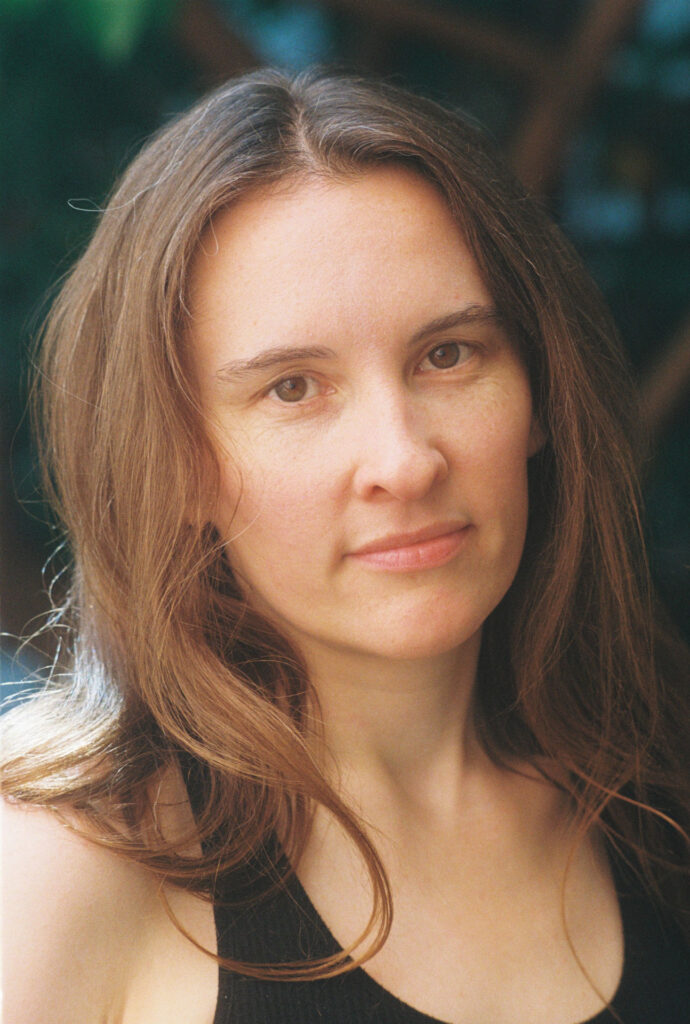
Ella Morton.
Growing up in Vancouver, Canada, Morton spent her school years staring at maps of a country whose vast northern interior was largely passed over in the curriculum. The history lessons, the stories, the attention, all of it hugged the southern border. The rest was silence.
“You see this map and there’s all this other land and you’re not told much about it,” she says. “So that just sparked this curiosity and this interest in lesser-known places.”
That curiosity never left her. Today, Morton is a distinctive voice in contemporary photography. Not because of where she travels – though she has ventured deep into Iceland, Svalbard, and Antarctica – but because of how she captures what she finds there.
Her work sits at the intersection of the scientific and the spiritual, the beautiful and the grief-stricken. It is photography that asks you to feel something you may not have words for.
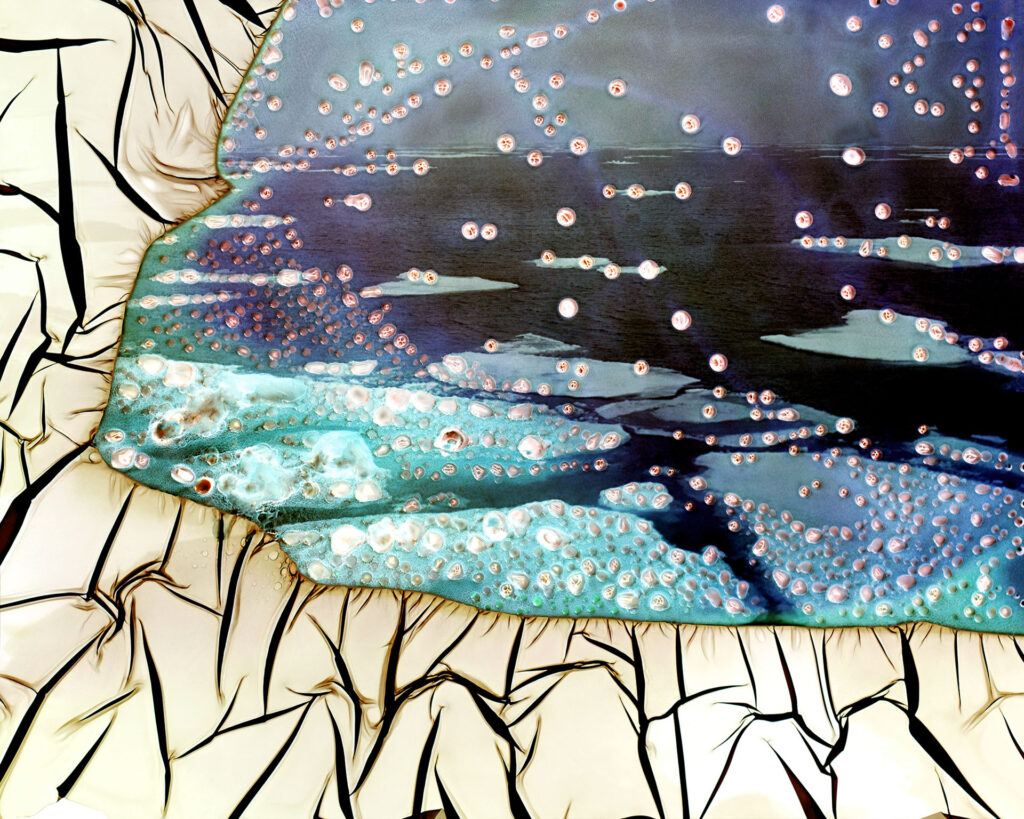
Morton came of age as a photographer at a pivotal moment. Her formative years landed right as the photography world was making its anxious pivot from analog to digital. She was trained on film, and film was her norm. But the noise around digital was growing louder by the semester.
She was never quite convinced.
“I felt like the conversations within analog photography were not finished at all,” she explains. “It would be an oversimplification to just abandon it. I always had this intuition that there was more to pull out of it.”
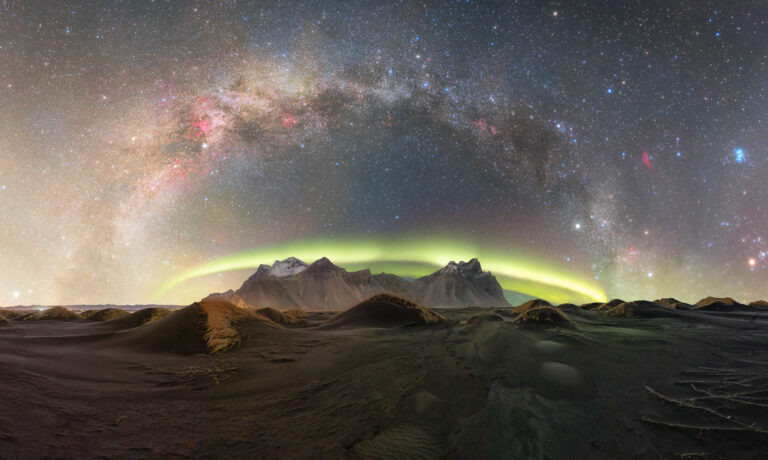
That intuition took years to develop into a practice. The turning point came in 2010, when Morton undertook an artist residency in Iceland, before Iceland became the popular destination it is today. She arrived in March. Snow blanketed everything. She was above the tree line and completely captivated.
“I just completely fell in love with the Arctic environment,” she says. “It was just so sublime. I was hooked after that.”
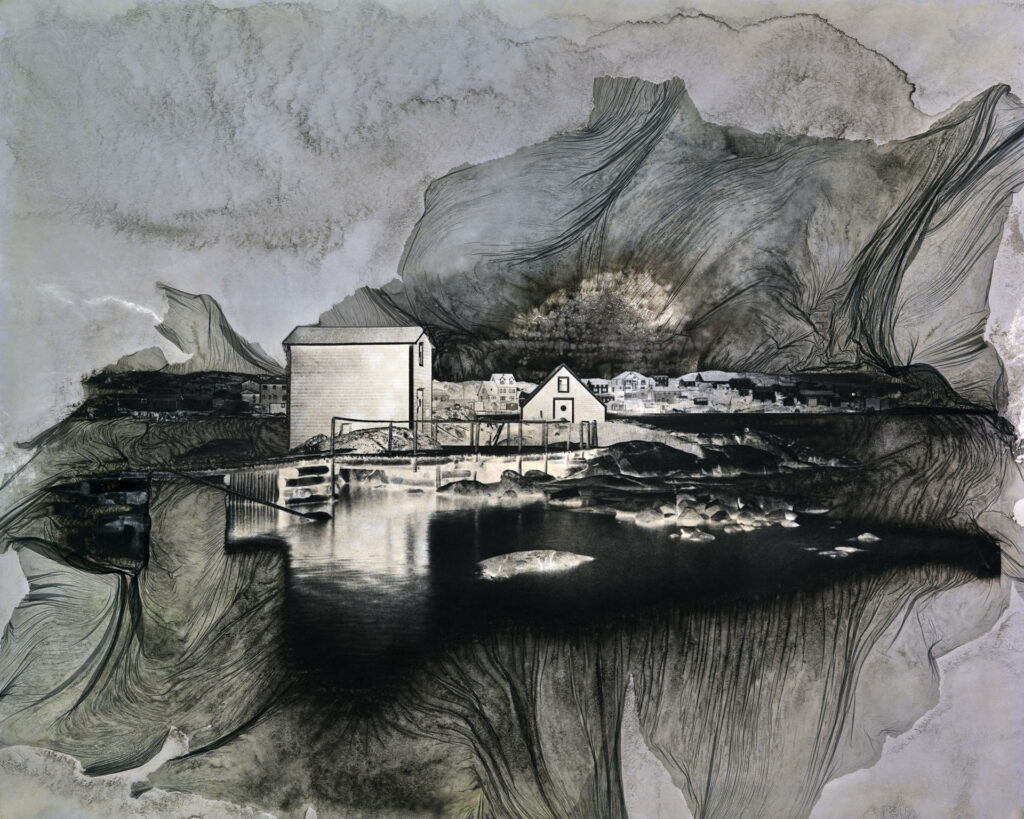
Another residency followed in 2016 on a ship in Svalbard as part of the Arctic Circle Residency. If Iceland captivated her, Svalbard floored her. “It’s like another planet,” she says.
It was in these places that Morton began to understand what her work was really about. Not documentation. Not tourism. A deep respect for land so vast and indifferent it dwarfs whatever you brought to it.
“I really felt this power of the land that I couldn’t really describe it,” she admits. “I don’t know if I can describe it even now, or if my work even describes it at all. I think you really just have to be there and feel it.”
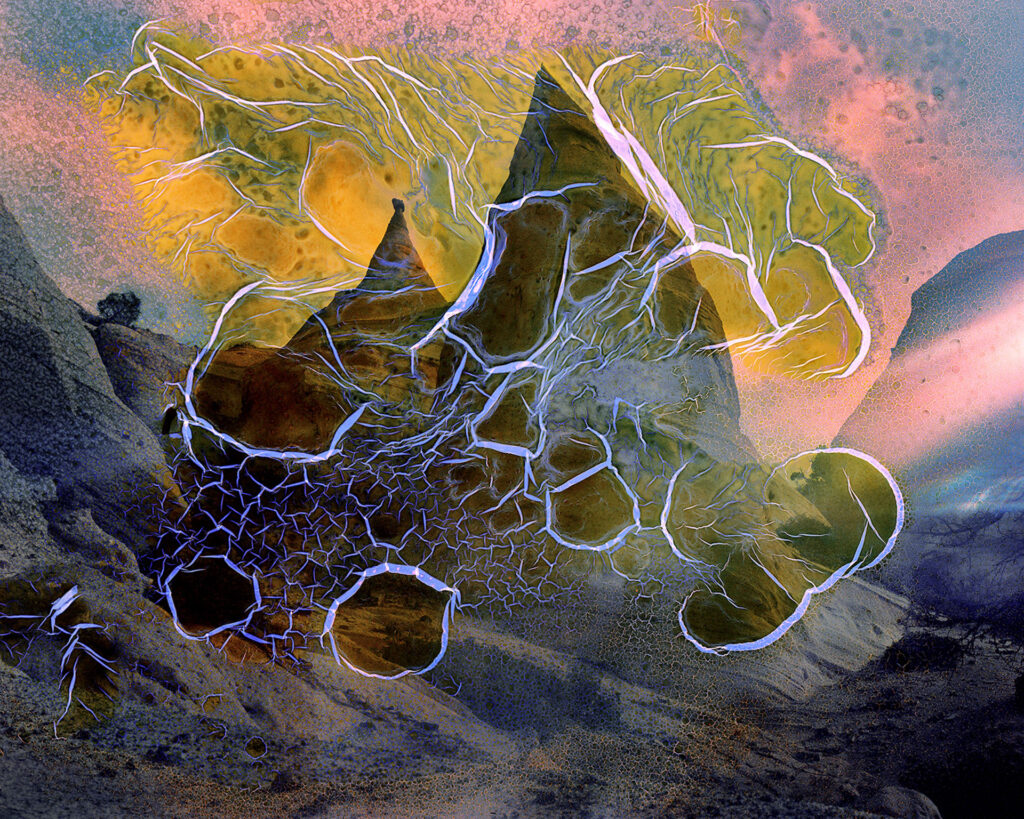
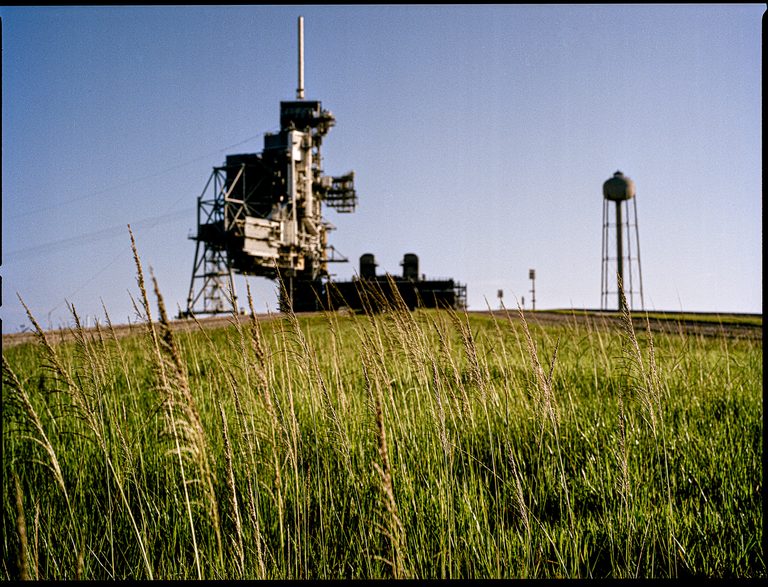
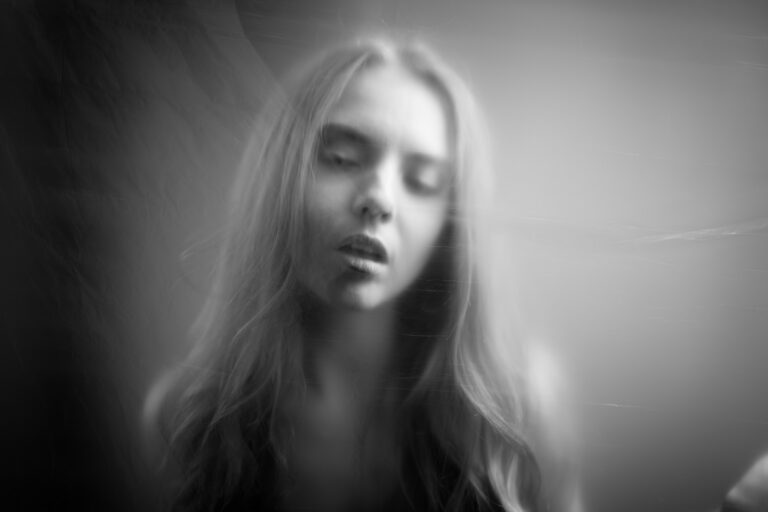
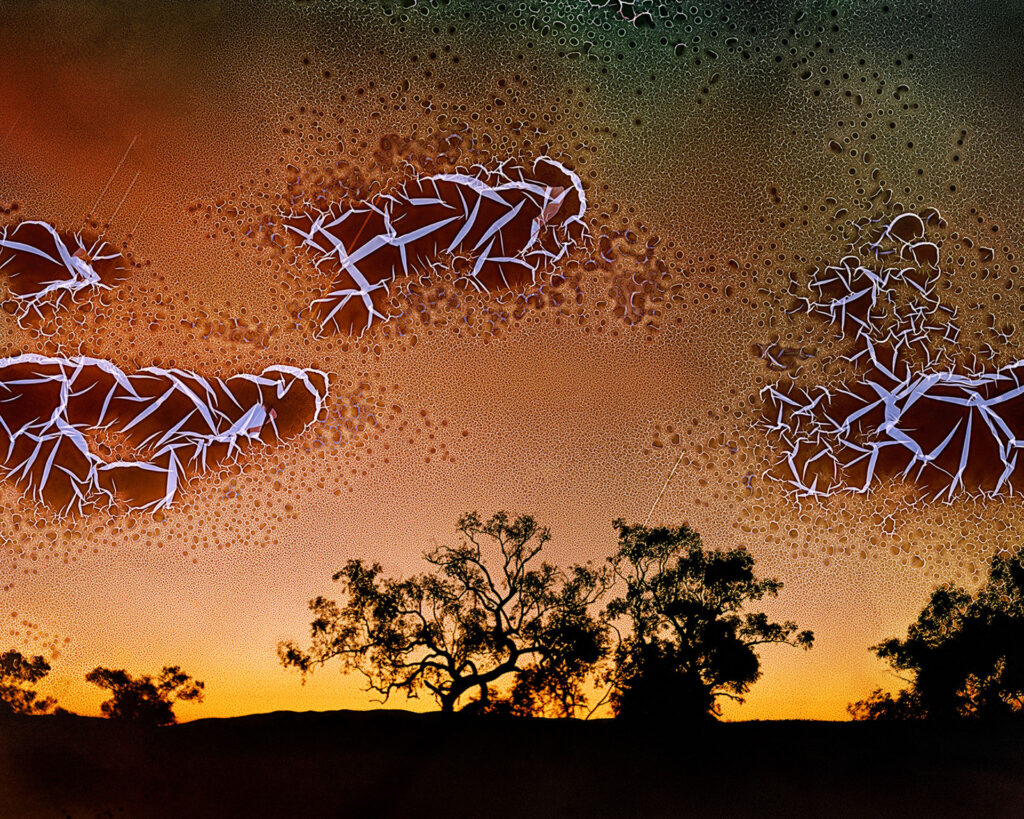
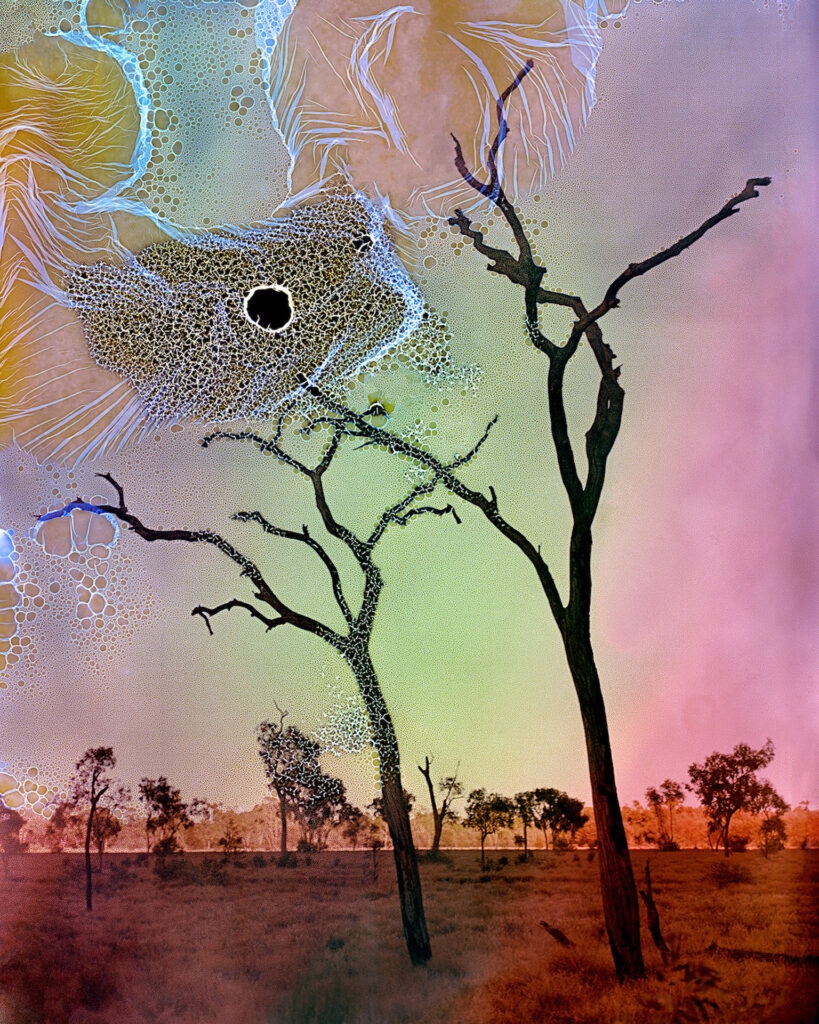
Morton’s work is not simply about showing these places. It is about showing what it feels like to love something that is disappearing. Through the use of experimental analog processes, which include deliberate chemical manipulation and emulsion lifts, she processes images that don’t look like traditional photographs. They appear more as artistic memories that grip the gaze of those that view them – connecting them to the world she cares so deeply about.
Beyond highlighting the environment and our relationship with it, she is driven by a fundamental question that haunts any photographer in the age of smartphones: how do you make an image that doesn’t already exist?
With billions of photographs generated every day, Morton believes analog processes are one answer. They’re a way of offering something new, something that shows a place more how it feels than how it looks to the naked eye.
The duality she is reaching for, beauty and grief held in a single image, is the emotional engine of her work. She describes images that sometimes carry a warm, positive quality of light, and others that seem to be cracking apart and dissolving.
“It does have those two sides,” she says. “The appreciation but also the grief for the uncertain future of the land. And I think the core message within that duality is that you appreciate it more when you go through that grief. The two are intertwined. You don’t feel the grief if you don’t have appreciation.”
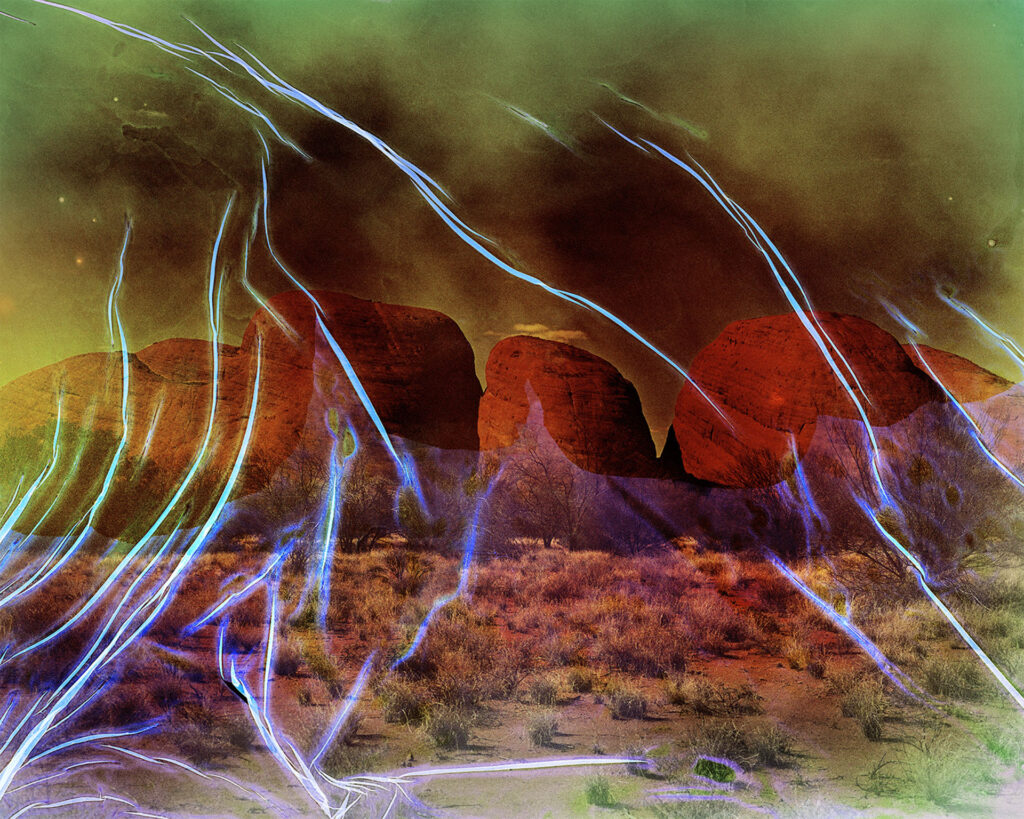
Nowhere is this more literal than in her series Procession of Ghosts, in which Morton made wet plate collodion images on glass, then broke them and glued them back together.
The inspiration came from kintsugi, the Japanese practice of repairing broken ceramics with gold pigment in the cracks. The philosophy is simple: the object is considered more beautiful after it has been broken and restored than it ever was before. The cracks are not hidden. They are the point.
“Our relationship with nature, with the environment, is really broken,” Morton says. “And some of us are trying to put it back together.”
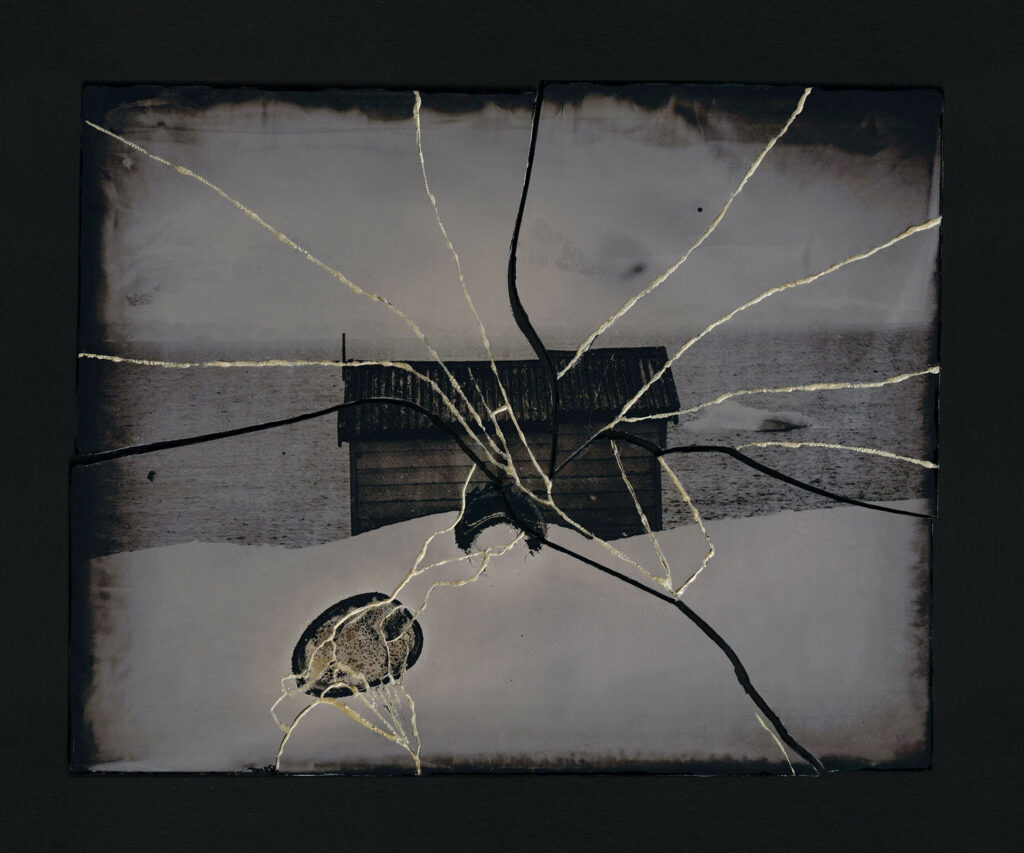
What surprised her in the making of it was how much optimism surfaced in the work, more than she personally feels when she reads the headlines and studies the data.
“If you ask me personally about the state of the climate crisis, it looks extremely grim,” she says. “We’re quickly going past so many tipping points. I don’t have much hope that governments are going to take the responsibility necessary to turn things around.”
And yet.
“Somehow there was more optimism that surfaced in the work than what I felt I had as a rational human being. And that gave me pause. Maybe I should have more hope. Maybe there is more of a place for optimism than I think there ought to be.”
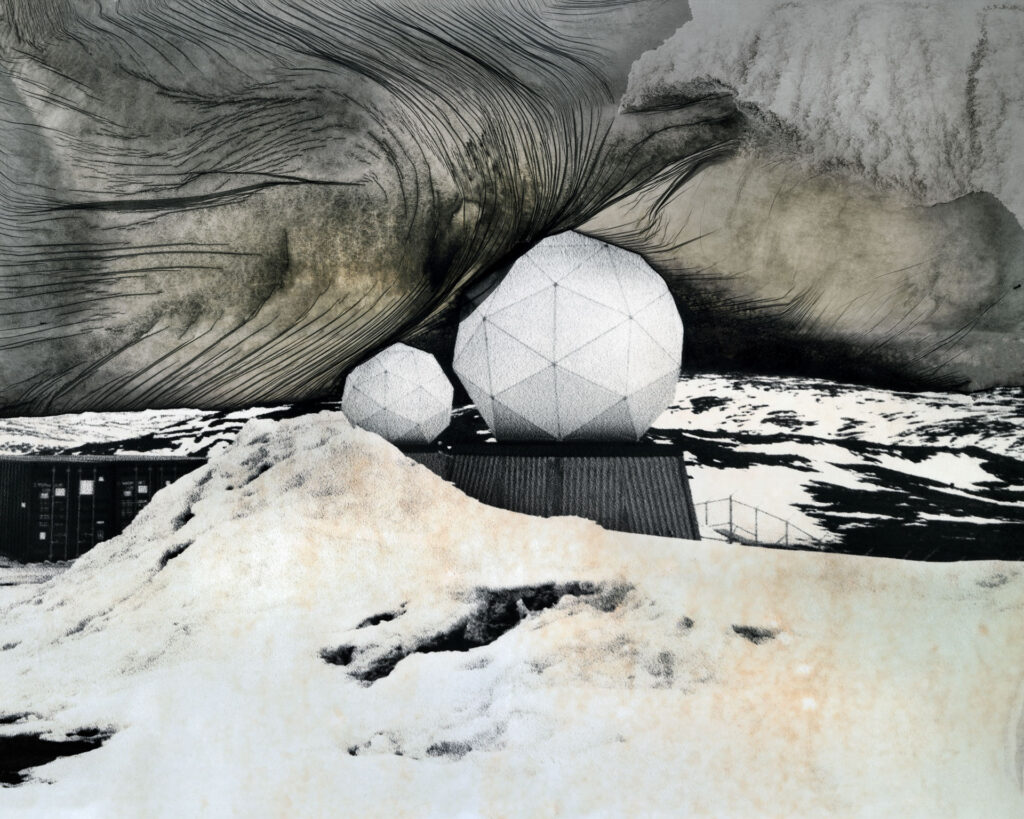
Morton shoots predominantly on a large-format 4×5 camera, a deliberate choice. The equipment forces slowness. You can’t snap and quickly move on. The camera sits on a tripod. You drape a hood over your head to look through the lens, load the negative carrier, take the picture, remove it. The whole ritual takes time, and time spent in a place changes how you see it.
After shooting, Morton works with processes like mordancage, an emulsion lift technique, in the darkroom. She knows the chemistry well enough to guide it, but much of what happens is beyond her control. She describes it as offering something to the process and waiting to see what it gives back.
“It never turns out exactly how I want it to look,” she says. “But often it turns out even better than what I could have imagined. It gives me things I can’t even imagine.”
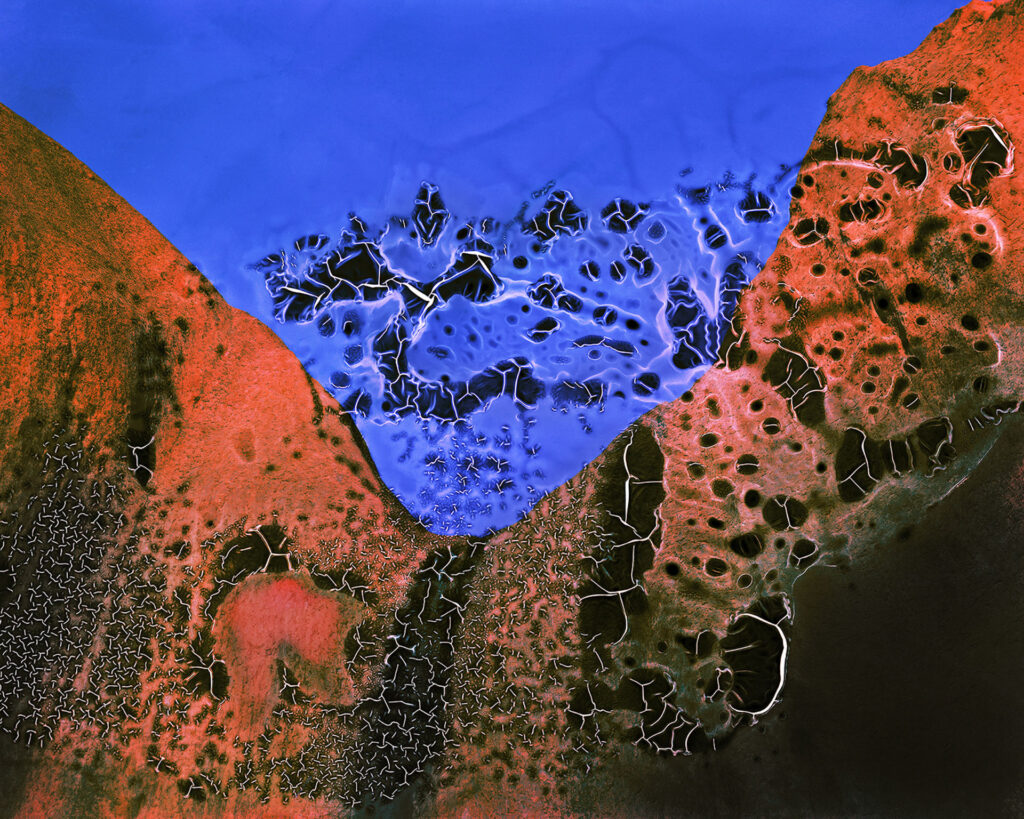
Morton laughs when patience comes up. She doesn’t identify as a patient person. She gets excited, wants things to work quickly, and admits to pouring extra acid into her working solutions when the process moves too slowly. “Loosey goosey” is how she describes her approach to timing in the darkroom.
When the chemistry aligns and the emulsion does something unexpected, the wait becomes irrelevant.
“The patience just comes from the love for the alchemy of analog photography,” she says. “When it works out, it’s so great that it’s worth it.”
When she is out in the field, her ideal is to walk through a landscape alone and at her own pace, with nothing dictating the experience. She describes it as meditative; just walking, observing, documenting whatever catches her eye. A relief from the emails and grant applications that fill the rest of life.
“There’s a simplicity about it,” she says. “You’re just walking and looking and thinking and documenting. It’s really nice to be in that space of simplicity.”
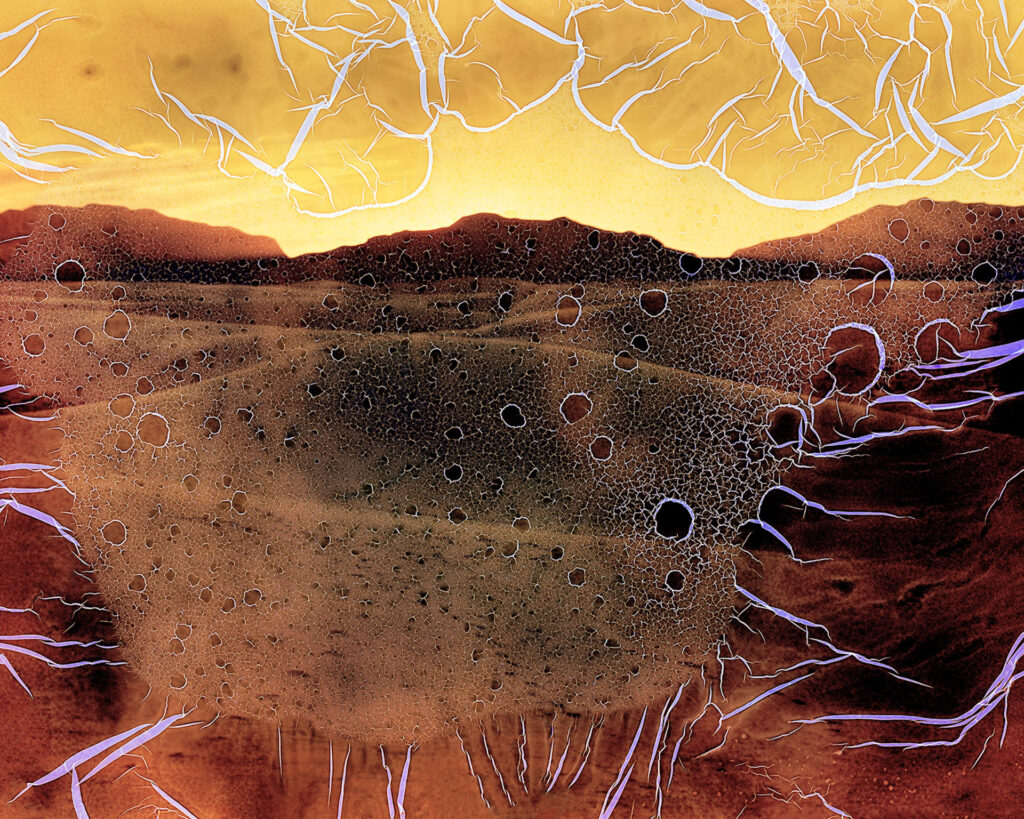
At the close of our conversation, I asked Morton to finish a sentence: I need photography in my life because…
After a brief pause. “I need surprises.”
She elaborated on both kinds. The process-based surprises of the darkroom, where chemistry delivers something beyond what you planned, and the surprises you encounter when you go out into the world: what you learn, who you meet, what a landscape shows you when you slow down enough to let it.
“Photography is the one where you need to get yourself in front of the thing that you want to photograph,” she says. “Which often means going out in the world and exploring and meeting people and learning things. And those surprises are just as rich and amazing as the process-based surprises.”
Morton is not naive about the scale of what is being lost. She will tell you clearly that she doesn’t think governments will do what is needed, that the tipping points are passing, that the future looks grim. But she keeps returning to the ice, to the darkroom, to the places where the map runs out.
The work keeps surprising her. And for Morton, that’s enough.
You can see more work from Elle Morton by visiting her website and Instagram.
More reading: Amy Herman on Family, Intimacy, and Who She’s Become