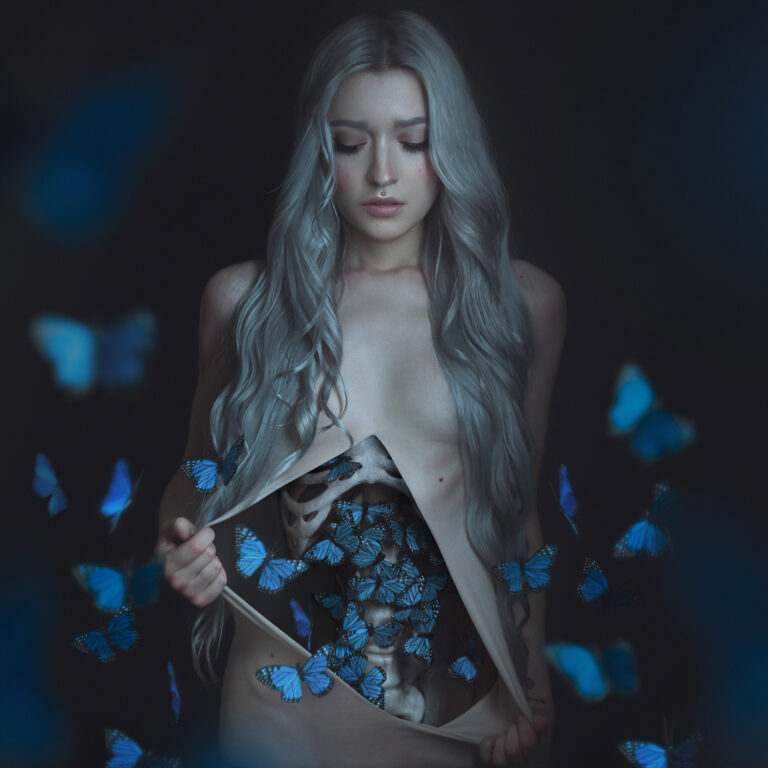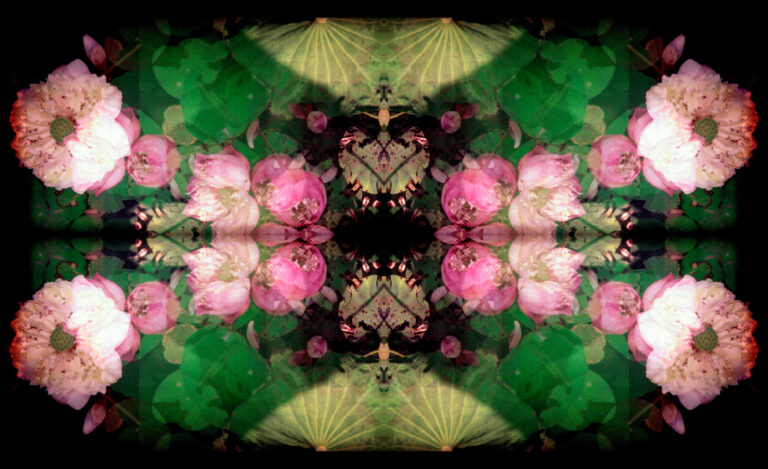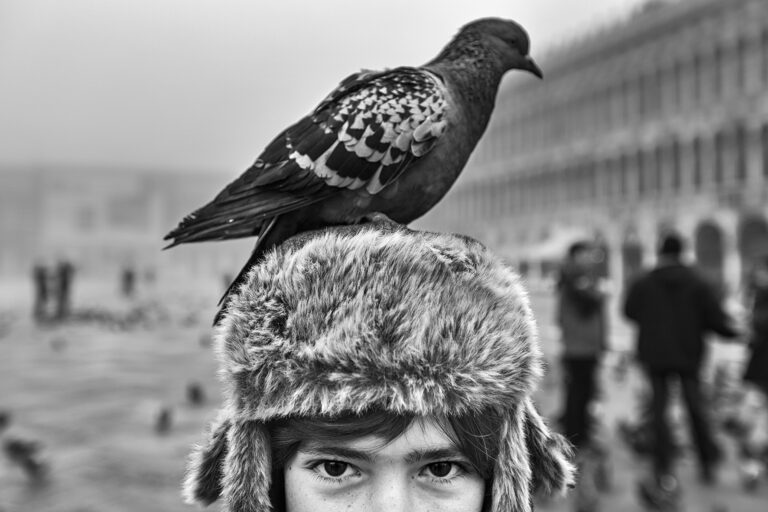

All images by Lukasz Palka. Used with permission.
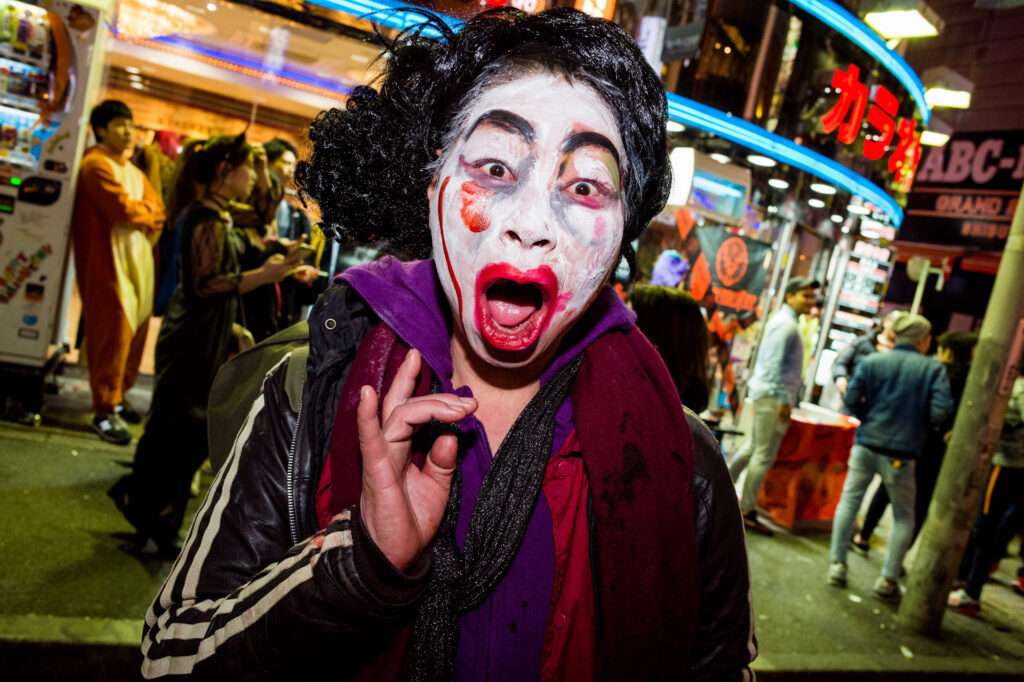
Something about bold and vibrant street photography always grips my gaze. It doesn’t matter if it’s clean, raw or grainy, if those colors pop then I’m one happy consumer. That’s what first drew me to Lukasz Palka’s street photography, as I flipped through each frame of his highly energetic Shibuya Halloween gallery – and then I kept discovering more…
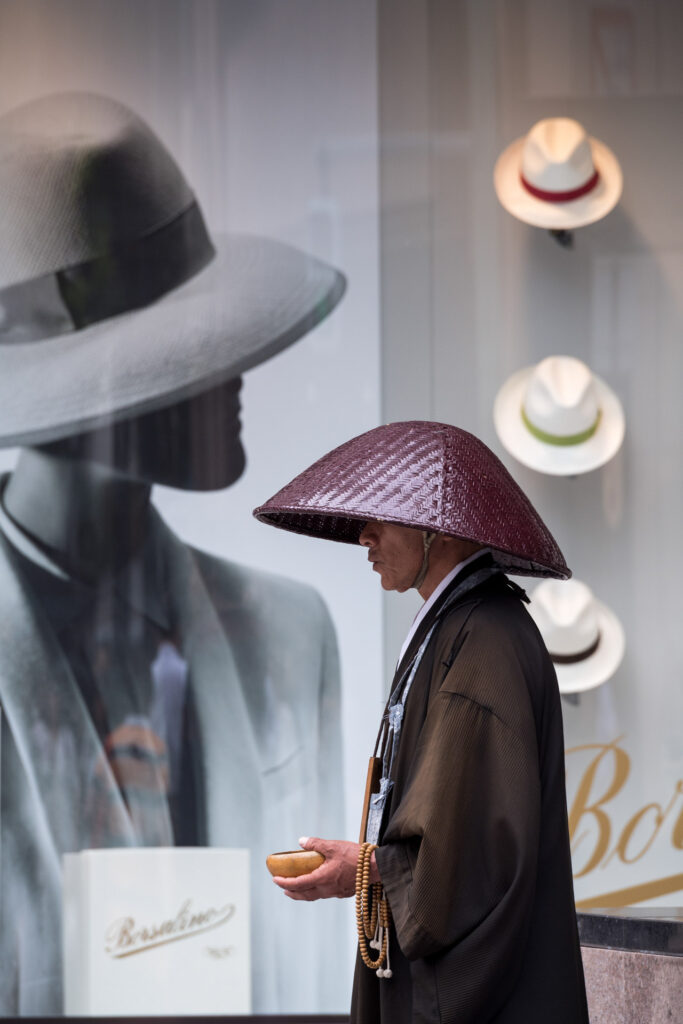
Palka refines his craft in Tokyo, Japan, a hot bed for building a street photography portfolio. However, his work doesn’t just portray the fast pace of the city. It also reflects those quiet corners, isolated moments and a slower, more methodical way of life.
Away from the images he creates, Palka is also an educator. His company EYExplore takes budding photographers through Tokyo and Osaka, passing through bustling streets, peaceful temples and a range of hotspots in each respective city.
I caught up with him to learn more about his time in Japan, his diverse portfolio and how his personal work influences his professional bookings.

Them Frames: Hey Lukasz! Talks us about early life: what was it like and how did it inspire your path into photography?
Lukasz Palka: When I was a kid, my dad had a Praktica BCA that he got in the 80s in East Germany. He used it while we were still in Poland, where I was born, but I don’t really have memories of it until we moved to Chicago in the early 90s.
That’s my earliest awareness of photography. I remember the camera being this special object, somewhat forbidden. It was something to be cherished. I’m sure I snapped a photo with it now and then, but I didn’t really find photography to be a creative outlet.
Instead I enjoyed drawing and eventually got into digital art. I really liked electronics and computers, so when digital photography came about I took a liking to it. But even then it was just in the background for me creatively. It wasn’t until I arrived in Tokyo in my early 20s that I began to pursue photography with passion.
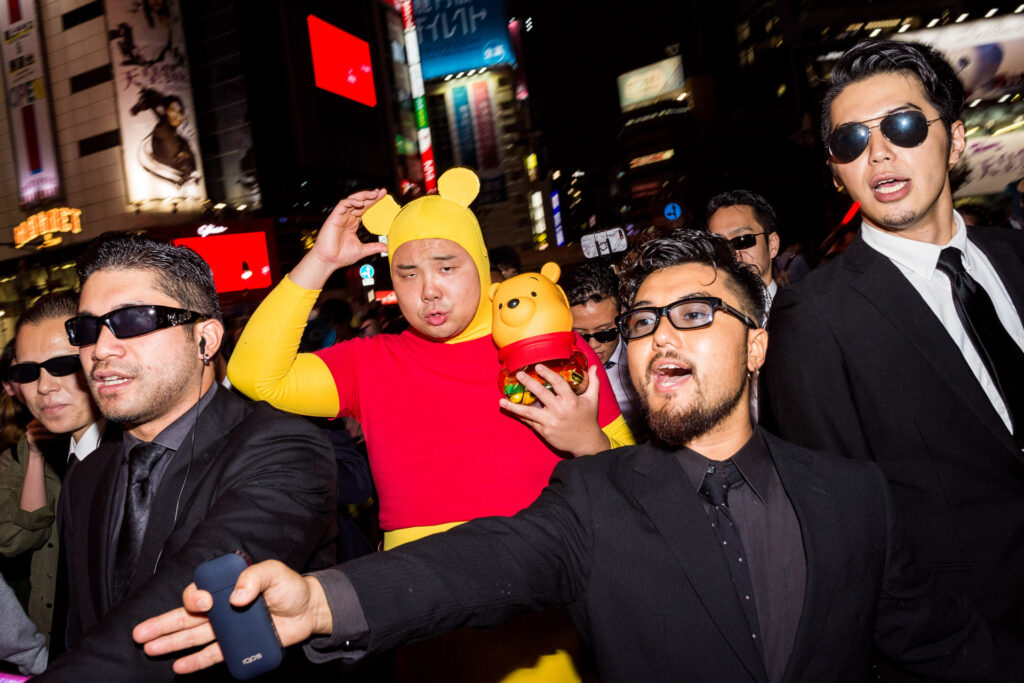
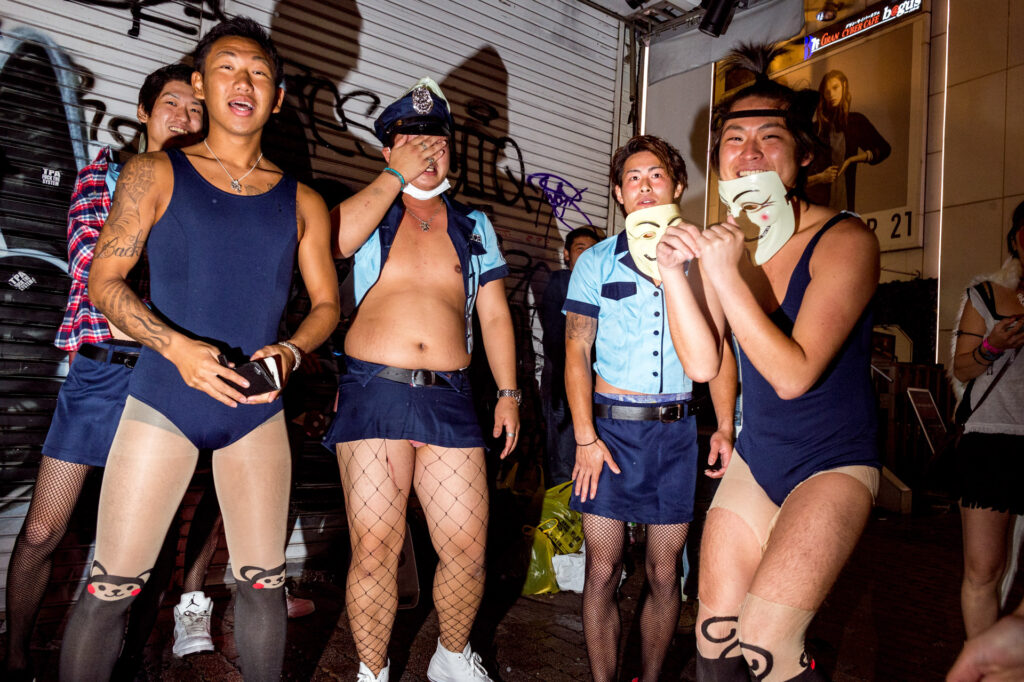
Them Frames: Shibuya Halloween is amongst my favorite works of yours. What’s it like creating images in such a fast-paced, intense environment?
Lukasz Palka: Those wild years of Tokyo Halloween were a special time for me. It was truly a golden era that has since been extinguished by the politicians, maybe for good reasons… regardless, I miss it.
I used to jokingly call Halloween in Shibuya the biggest festival in Japan. Thousands of people would descend on the neighborhood around the famous scramble crossing and turn it into a giant party. Shooting in this environment was exhilarating and liberating.

When I began attending the chaos in 2015/16 I didn’t use a flash, which made it difficult. But in subsequent years I started bringing a flash, sometimes off camera, and that made all the difference.
I was addicted and each day it was hard to go home (Halloween would often span a few days, especially if the 31st was on a Monday, then every night from Friday to Monday would be wild.) Sometimes I would stay out to the early morning photographing the people as the crowds slowly dissolved, some denizens going home, while others slept on the ground in a drunken stupor.
Them Frames: Quantum States requires a more methodical creative approach. How does this feel compared to the fast pace you tend to experience in street photography?
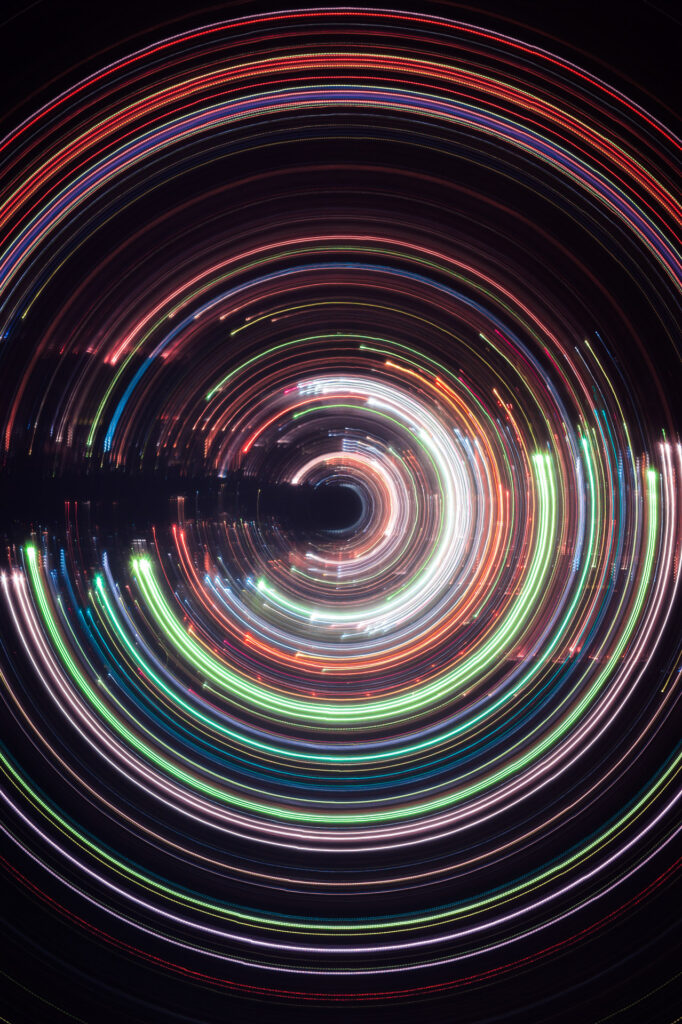
Lukasz Palka: In general I enjoy having projects that just sort of evolve gradually over years. I am never in any hurry to complete things. Instead I just casually add to the pile when the opportunity presents itself.
Quantum States started with some experimentations with ICM (intentional camera movements), but once I discovered the ‘spin’ method it became a ‘thing.’ I remember that clearly. I was in Kyoto on the roof of Kyoto Station. I wanted to shoot the city view at night but didn’t have a tripod and only an 85mm lens. But I knew if I pressed the lens flush against the glass of a window I could hold it like that, even for a few seconds, to do a long exposure.
That was my intention, then on one attempt my camera slipped a bit, but it did so in just the right way – it rotated slightly while remaining perfectly flush with the glass, resulting in a flawless arc of lights. I spent the next 20 minutes rotating my camera pressed against the glass while trying different shutter speeds, spin rates, and starting angles. That was fun!
Them Frames: Utility Poles feels rather different to the rest of your work. What inspired this series?
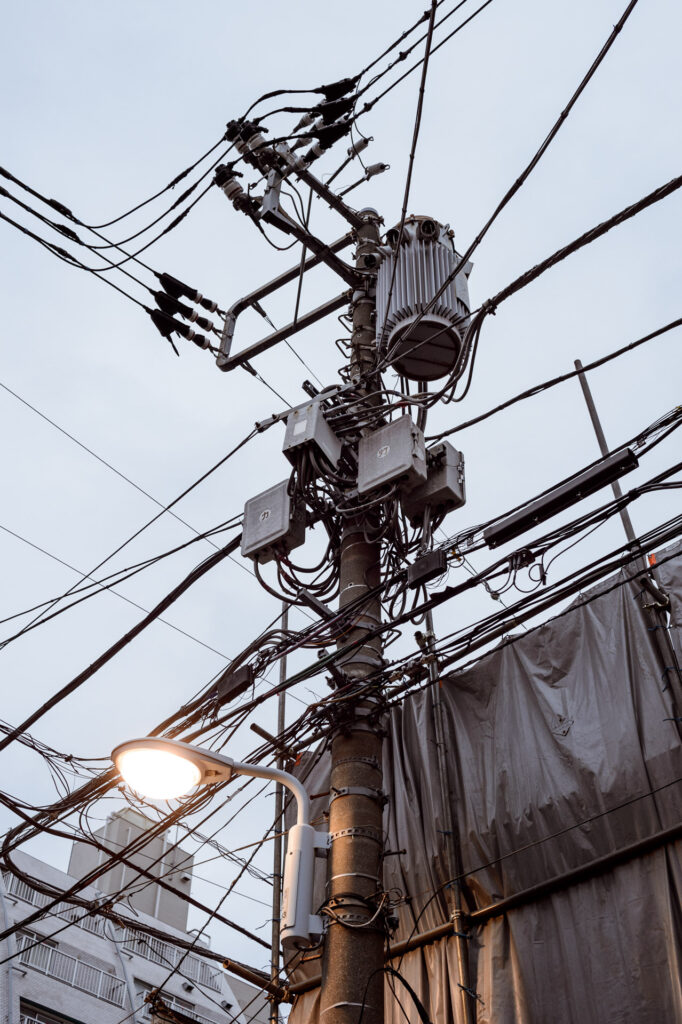
Lukasz Palka: This Utility Poles gallery is a subset of my Urban Organics project. One day I had this idea of the city as a multi-faceted superorganism – something like a fungus or perhaps a rainforest – with layers upon layers of biomechanical ‘growth’.
It’s probably not such a novel idea, but I kept spinning it around in my head. At the same time I was often shooting wires, pipes, conduits, and other minutia of the metropolis.
Eventually I started calling these things ‘Urban Organics.’ And perhaps the largest of these techno-organic constructs is the utility pole. It’s kind of like a synthetic tree in a sense. Since I shoot them so often they get their own gallery on my site. Like with all inanimate objects that I like to photograph (including bicycles), for me it’s not just the object itself but also the light and scene it’s found in that captivate me. When it all comes together it becomes art.
Them Frames: The Tokyo Photo Spot Map is a great idea. How much time and effort did it take to create this and what inspired the guide?
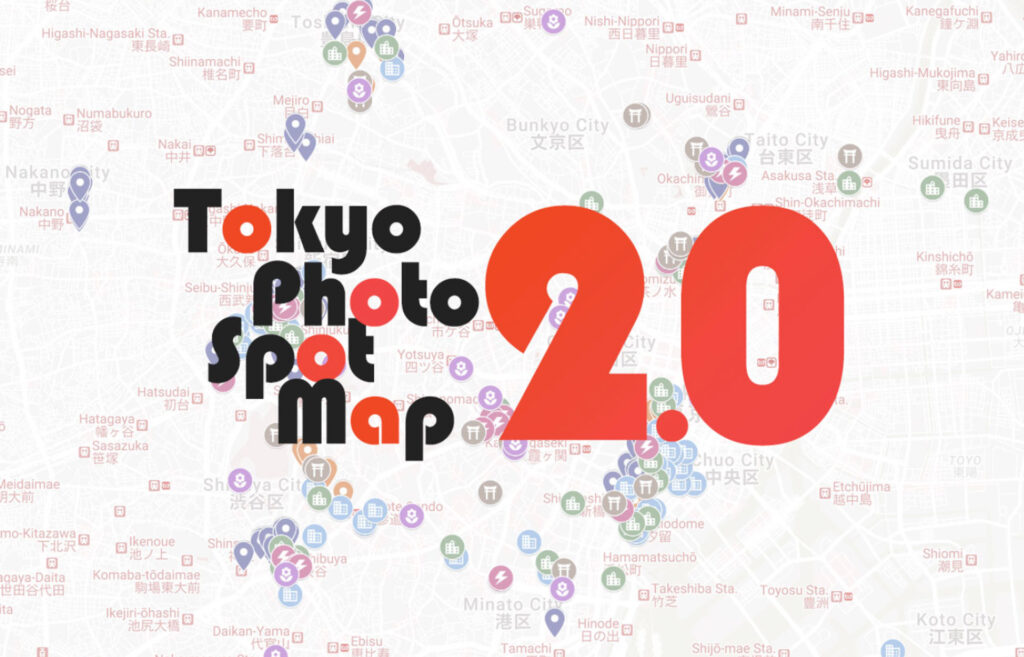
Lukasz Palka: I don’t remember when exactly the idea came about, but it was during the pandemic, when I suddenly found myself with a lot of free time, that I began compiling the map.
The initial version probably took a few months to complete. I had a lot of locations (and the images) already in mind, but I wanted to go beyond that, so I also spent a few weeks hunting down locations I had only heard of or stumbled upon online. Since then we’ve added even more locations in Tokyo and expanded the map to include Kyoto and Osaka.
We also added some categories that are tangentially related to photography: camera shops, galleries, and book stores. The map now boasts over 500 locations!
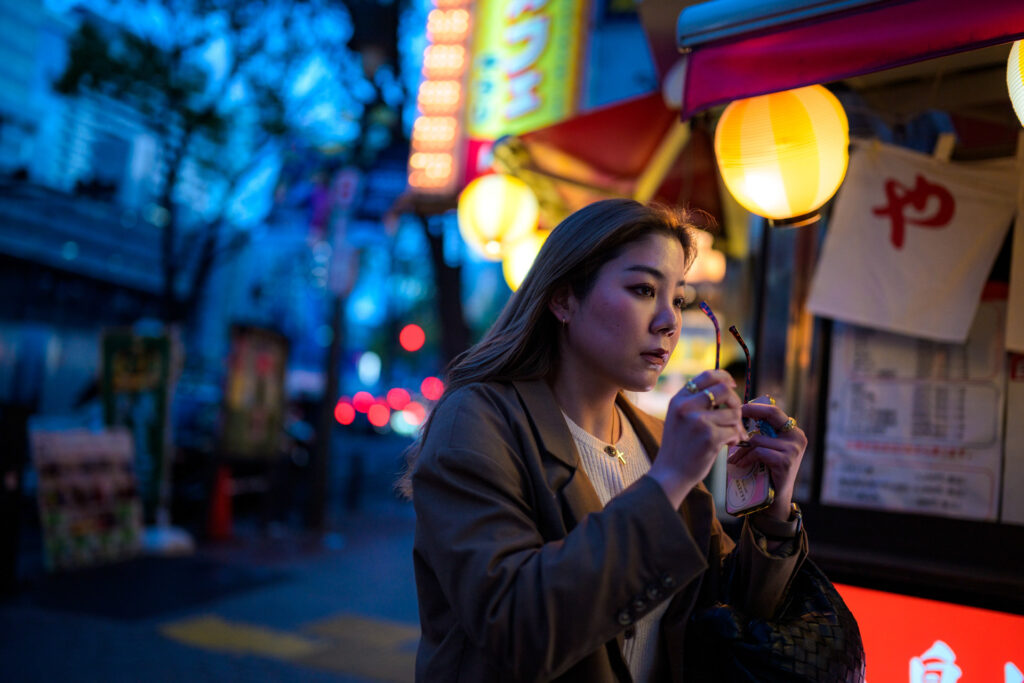
Them Frames: You also do client work. How do you blend in your personal creative workflow with the expectations of your client?
Lukasz Palka: That’s a great question! Actually, I used to hide my true self when shooting for clients. When I was more green I lacked confidence in my voice (or perhaps didn’t even realize I had a distinct visual voice) and would just kind of shoot in a way that I felt was more ‘commercial’, whatever that means.
But over the years I’ve recognized that my personal work is the reason clients are hiring me in the first place. They want that style, not something watered down or safe. So, nowadays I give them exactly that. I basically treat it all like street photography. Whether I’m being paid or not, I’m looking for candid, decisive moments. I compose in a way that I enjoy, not trying to overthink what the client wants. After all, they hired me.
This even impacts mundane technical things like my gear selection. Whereas previously I would bring a bunch of zoom lenses (24-70mm, 70-200mm, etc.) to be ‘ready for anything’, now I just bring the same prime lenses I like to use in my own street work: 28mm, 35mm, 85mm, and maaaaybe an utra-wide ‘just in case.’
This is all not to say I don’t try to deliver my best work for clients. It just means that I know what I want to create and I’m confident the client will be happy with it because it’s authentically me.
Them Frames: If you could blend a song or album with your creative portfolio, what would it be and why?
Lukasz Palka: This is very hard to answer, it’s difficult to even select a genre. So, perhaps it’s a bit of a cop-out to go with Jazz. But I would say Cat by Hiroshi Suzuki is an album that suits Tokyo well, and therefore my work might have some synergy with it, when looked at from certain angles. To me, it is a small masterpiece.
Them Frames: Please finish this sentence: I need photography in my life because…
Lukasz Palka: It’s one of the only things I do that allows me to completely, mindfully absorb myself in the moment without distractions, judgments, or preconceptions – it sets me free.
You can see more work by Lukasz Palka by visiting his website, Instagram and Youtube.
More reading: Photographer Bends Reality to Explore Identity and Human Form
Want your work featured on Them Frames? Pitch us.