
All images by Henriette Sabroe Ebbesen. Used with permission.
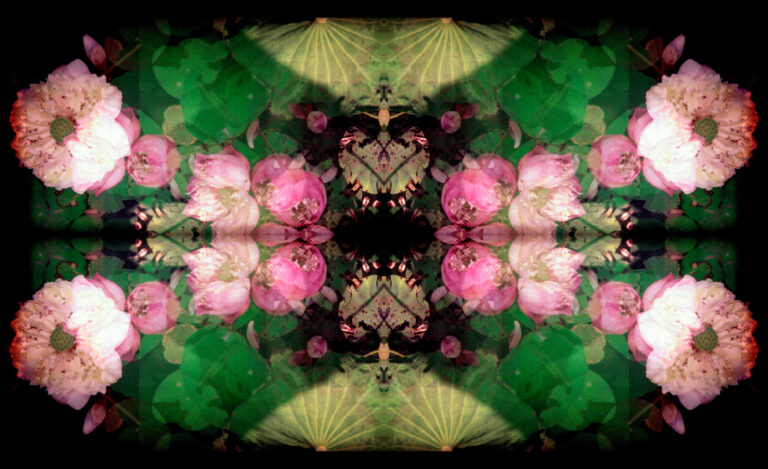
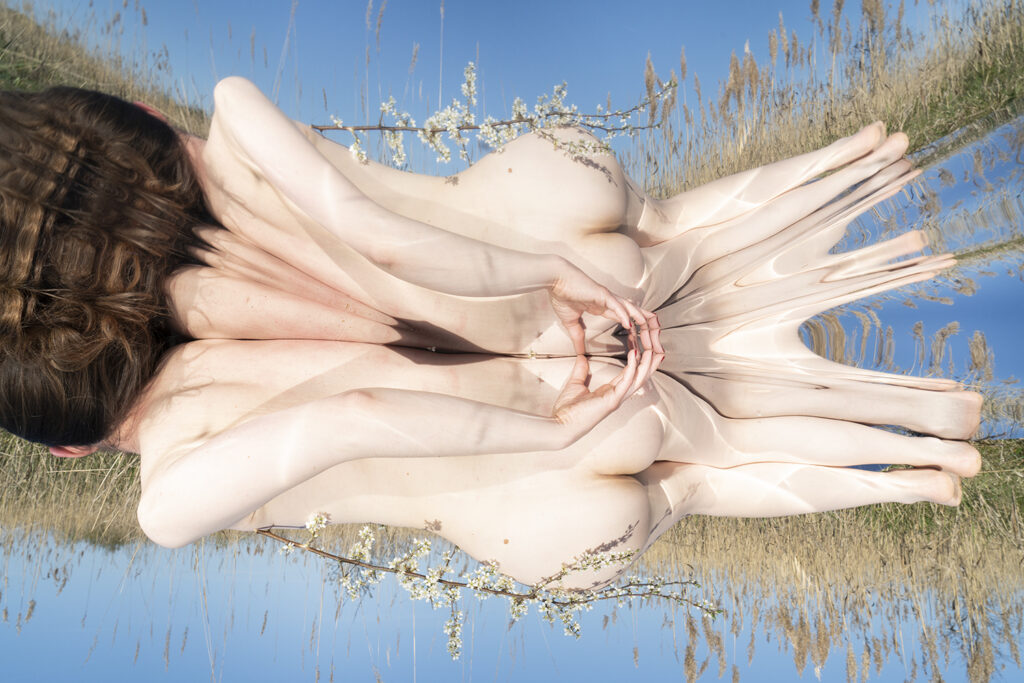
Henriette Sabroe Ebbesen is an artist I’ve been hoping to speak to for quite some time. She bends reality through wide-angle, distorted, and reflective imagery, a style that has led to commissions with the likes of Apple, Dolce & Gabbana, and other high-end clients. Though she’s far from your average editorial photographer.
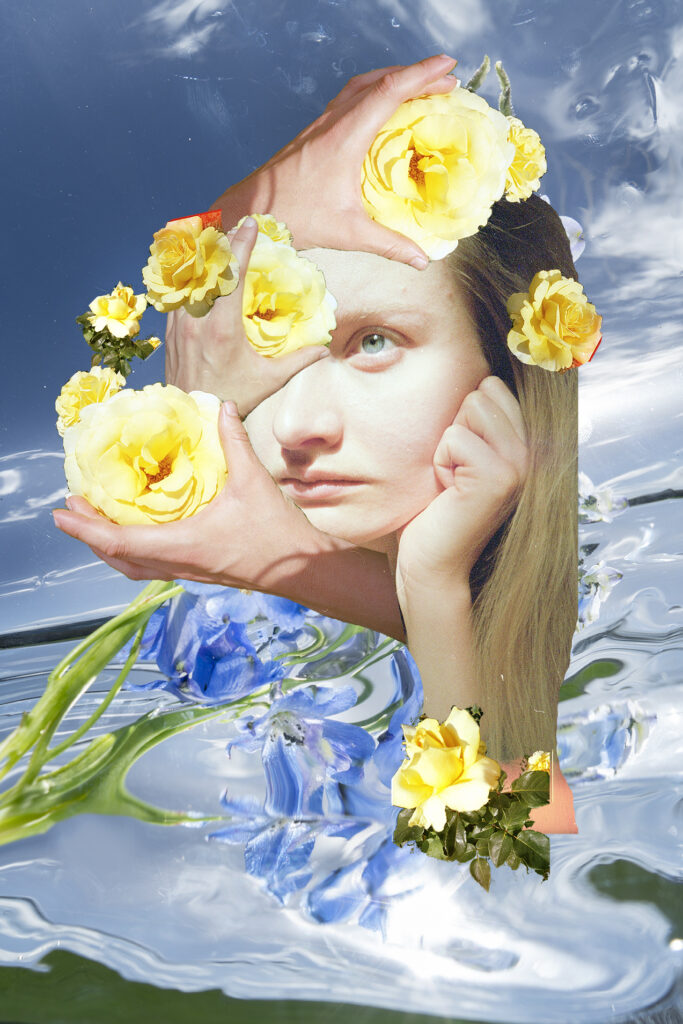
Henriette Sabroe Ebbesen.
When I think about large brands and the work they commission, I often feel they play it safe. The photography is usually strong, but it tends to sit comfortably within familiar expectations. Clean, balanced, and easy to digest.
Ebbesen’s work does the opposite. Her style pulls apart those expectations and pushes the image beyond what feels familiar, sometimes quite literally. While this interview focuses on her personal projects, the same creative approach runs through them, giving her the space to explore identity, perception, and the ideas she wants to communicate more deeply.
In this conversation, we look closely at two of her series, Feminine Development and Modern Masculinity, both of which examine identity through her female gaze. We also talk about her background as a trained medical doctor, and how her analytical way of thinking continues to shape her creative work, and how she feels when creating self portraits.
Them Frames: Hey Henriette! Please can you tell us about your early life experiences and how they shaped your creative personality…
Henriette Sabroe Ebbesen: I grew up with my parents and two younger siblings. I have many good memories from my childhood, as I felt loved and cared for. My family is still very important to me and I love them very much.
My parents are both doctors, so I imagined myself studying something academic too and chose medicine like them. My grandmother was very creative though, and taught me how to paint and encouraged my creativity since I was a child.
When I chose to do art as well, my parents were very supportive and told me I could definitely do both art and medicine. Everyone else told me I had to choose, but I’m very happy how they made me believe in myself to be capable of doing both.
Them Frames: You’re a trained Medical Doctor – how does your scientific mind influence the creative work you make?
Henriette Sabroe Ebbesen: I think on a subconscious level, both careers influence one-another. It really fascinates me what is going on in the brain when you create art, because I don’t really understand what goes on in my own head when I create my own artwork.
It’s a process that at least to me seems very subconscious and connected to feelings rather than the logical and conscious mind. For my bachelor’s thesis for example I wrote about how we all see colors a bit differently due to genetic variations in the cones (receptors in our retinas detecting the wavelengths of the light).
I got the idea because I always subconsciously end up choosing colors from the same color spectrum for my artworks, whereas other artists always use a different color spectrum unique to their own works. I thought we might see colors a bit differently for this reason, and it turns out we do.

Later I dug into a research project based on my master’s thesis, where I interviewed a group of artists from a psychiatric point of view. I tried to determine overlaps in ways of thinking between creatives and people diagnosed with a mental illness, as it turns out there is a genetic overlap between the two groups.
It might seem like a cliché that the minds of mad and genius are not far from each other, but when I was interning at the psychiatric department it was really an eyeopener to me talking to people diagnosed with schizophrenia: I thought that the difference between an artist making up their own universe for their art is not that far from someone living with schizophrenia and experiencing a surreal world happening to them.
This is not to romanticize mental disorders or describe artistic minds as something pathological. However, I think a better understanding of the links and differences between the two could both be interesting in terms of where creativity comes from, and possibly help people suffering from mental illness with better diagnosing and treatment.
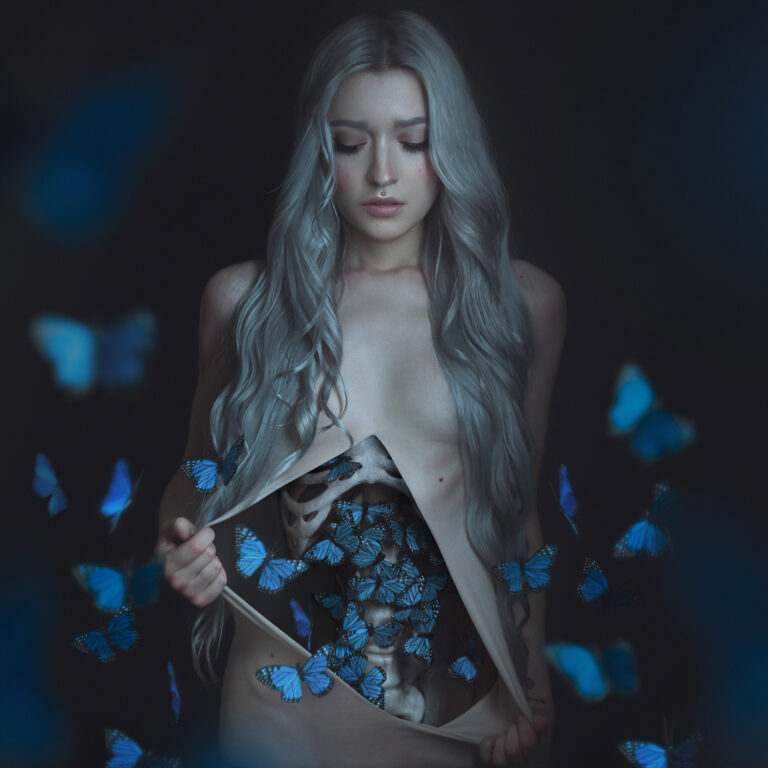
Something I realized recently is that it’s interesting how I work a lot with the body in my photography. Maybe that comes from my experience in medicine. Having worked as a doctor and doing interns also taught me a lot about anatomy and being comfortable around and interested in the body.
In many ways I think the way I examine a patient as a doctor is similar to how I work as a photographer: I see the body as shapes, colors and forms, but always with respect for the individual.
Them Frames: You’re also willing to step in front of the camera. How was the experience of confronting your relationship with your physical identity? How does photographing yourself help you to understand how to photograph others?
Henriette Sabroe Ebbesen: I felt like I needed to add some self-portraits to my body of work to make it more complete. I like making self-portraits, since I feel like I can be one of the characters in my fantasy world.
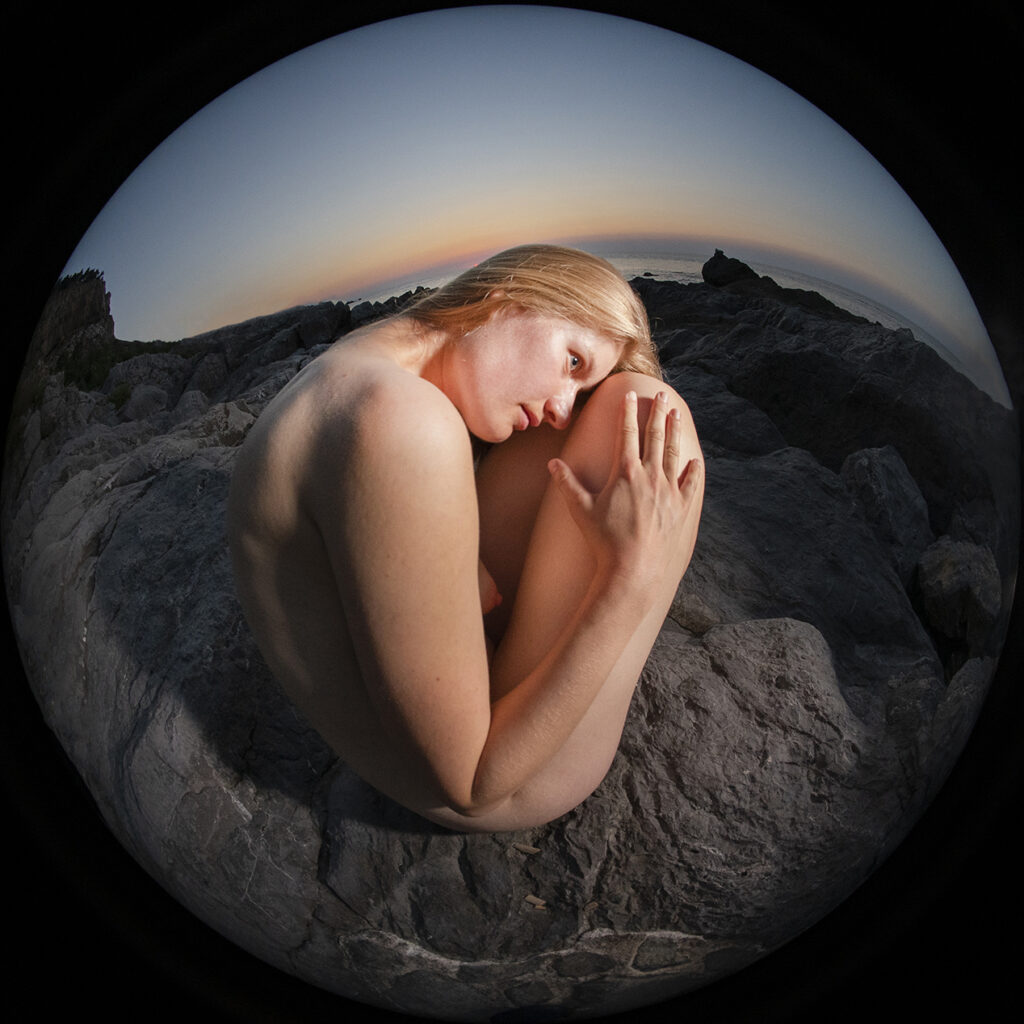
It even feels a lot easier doing self-portraits than having a regular portrait taken by a friend. Knowing how it feels to be in front of the camera I think is important information to have, when I photograph others. Poses can become painful, cold or hot depending on the position, the weather and so on. I tend to forget that when I’m photographing, because I get so concentrated about making the best possible picture.
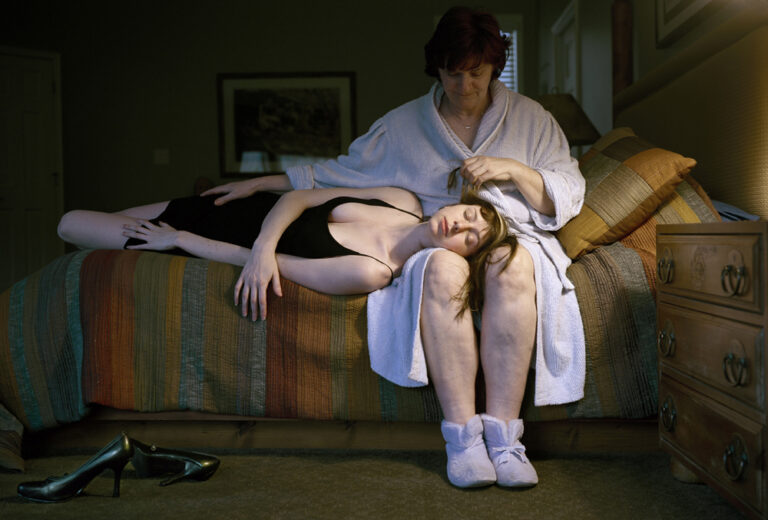
Them Frames: Maternity is a common theme in your works – why is that?
Henriette Sabroe Ebbesen: I think it’s a beautiful motive and I also find it very fascinating how a female body can build a human being. A dream of my own is also to be a mother some day.
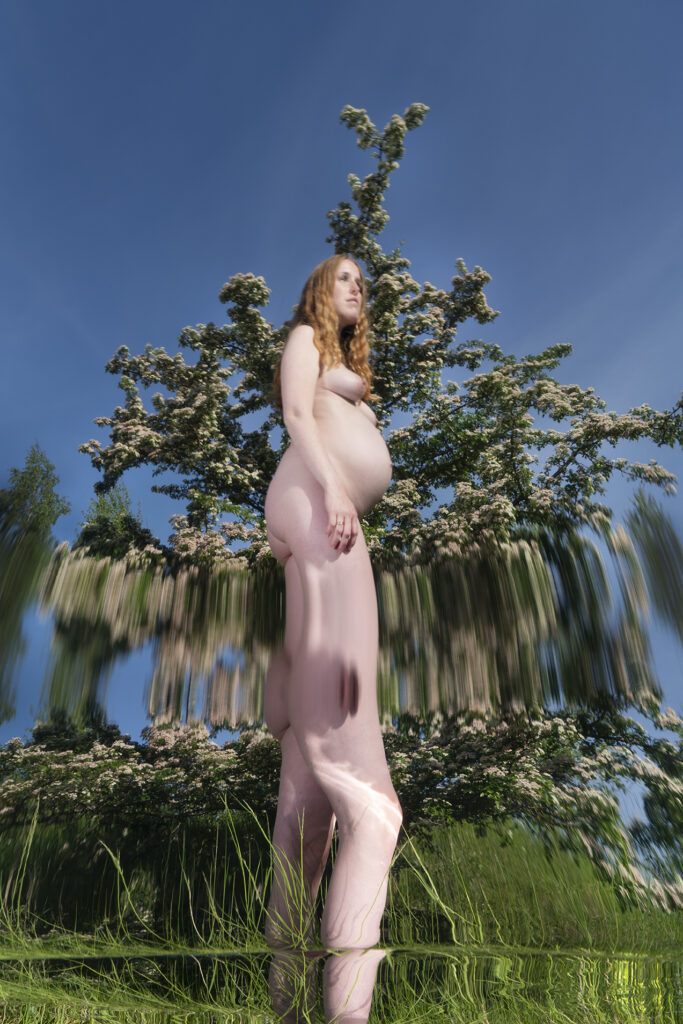
Them Frames: In Modern Masculinity you talk about photographing men through your female gaze. Can you expand on what that gaze is like from your personal perspective and how it shapes the work in this series?
Henriette Sabroe Ebbesen: I like when men are soft, gentle and know how to show emotions. I think these characteristics are important to be cherished among men today. This is what I try to capture among the men that I photograph.
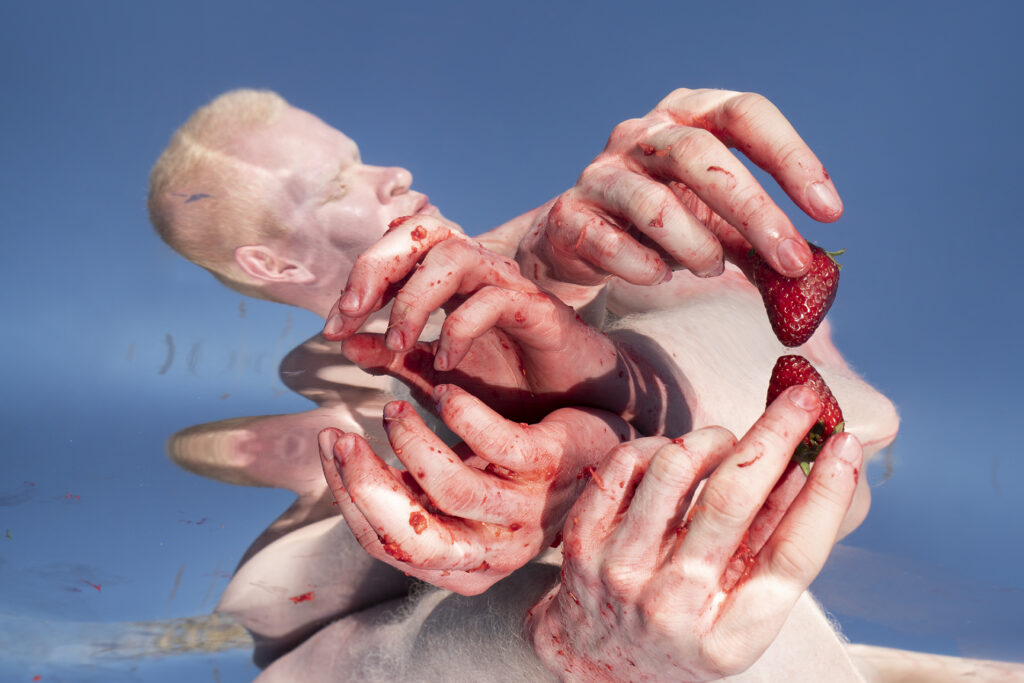
Them Frames: I love the dreamy, wide-angle, reflective elements of your work: How did you develop this style and why do you think it’s been a huge success in terms of client work and exhibitions?
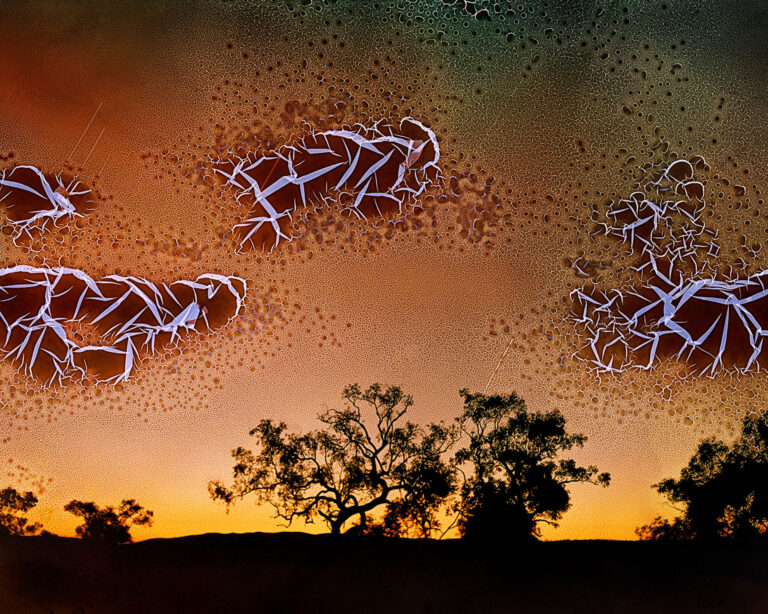
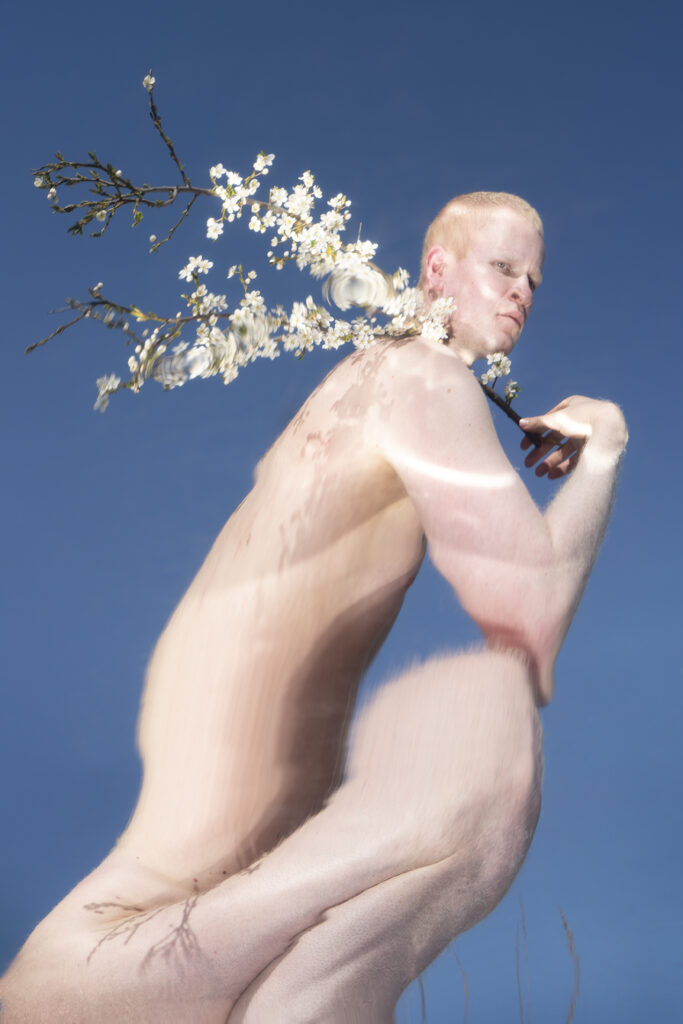
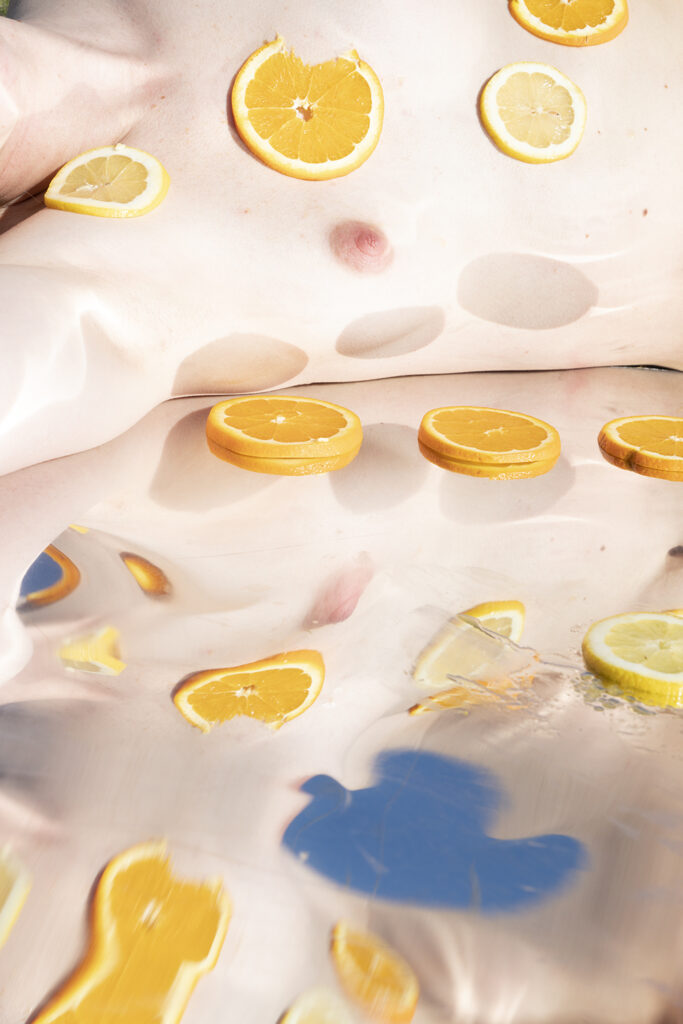
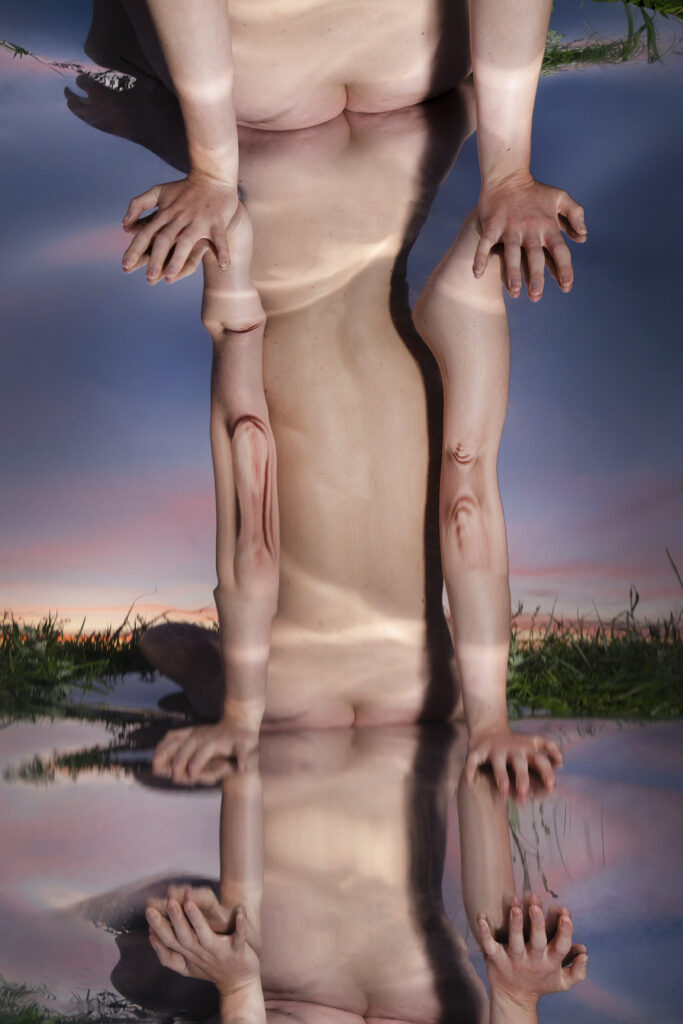
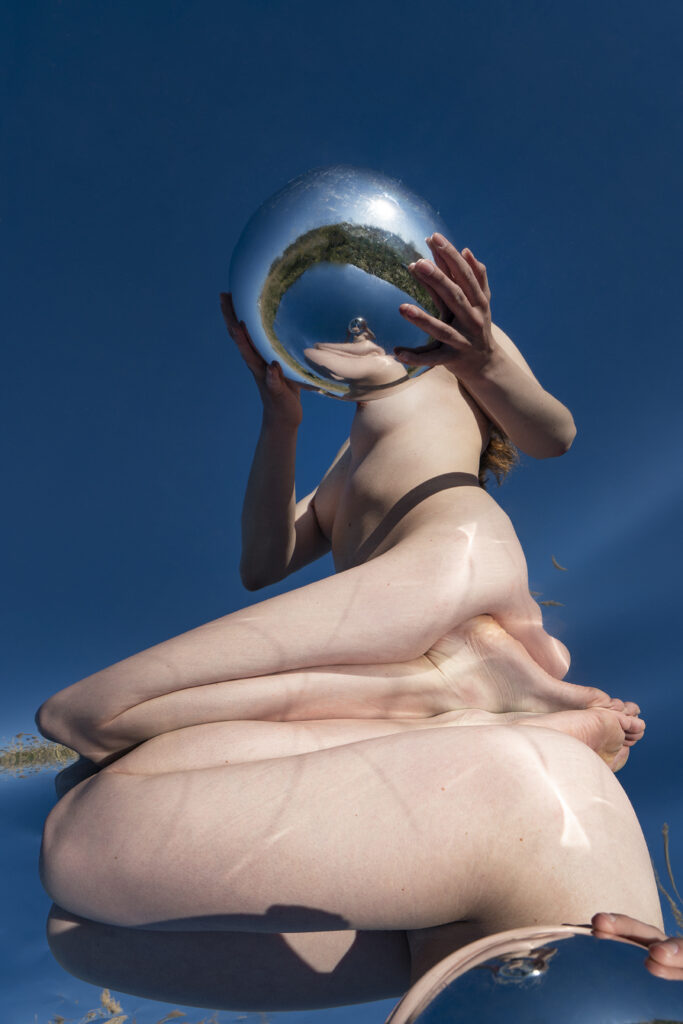
Henriette Sabroe Ebbesen: I developed the style a little by chance and a lot of experimentation. I use different kinds of mirrors and reflective material to create the distortions and illusions in my work. What you see in the final image is what I saw in the camera.
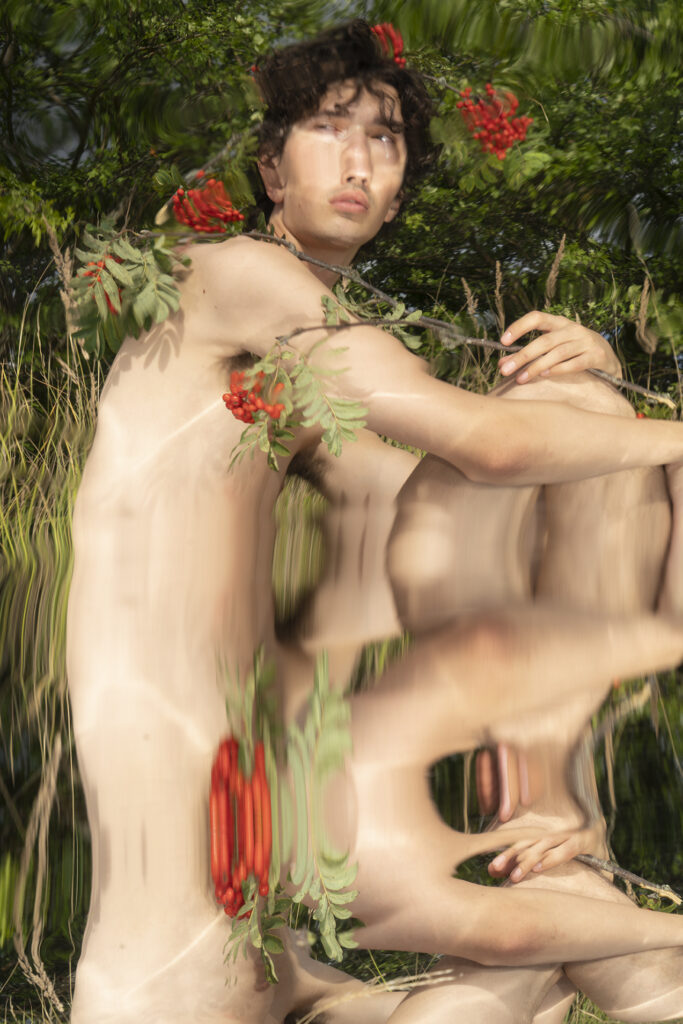
Practically speaking, I try to bend reality and capture it with my camera for the viewer to experience a different reality than they are used to. I sometimes use Photoshop for editing the light, but never to create the distortions.
Often the creations of my works feel like an experiment to create. I try to always challenge myself when creating, otherwise I become bored, and my art becomes uninteresting. As soon as I feel safe in an area of my creative work I try to move on to the next challenge and create something new. It could be in the form of trying out a new technique or exploring a new theme.
Them Frames: I’d love to know more about the location you shot Modern Masculinity and Feminine Development. Why did you choose this spot for the projects?
Henriette Sabroe Ebbesen: I always shoot outdoors in nature with no buildings in sight. I think the surreal element to my work needs the natural surroundings as a contrast and I love the colors of the blue sky and the green grass and trees, and they go well as a background I think.
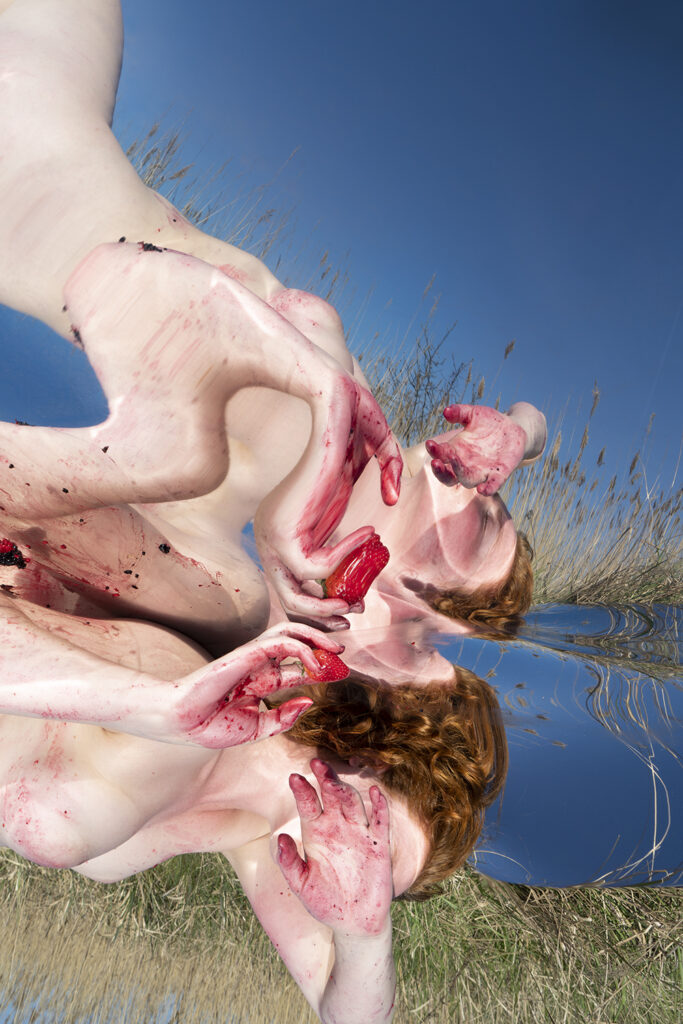
I don’t want a ceiling from a studio to show up in my works, since that would likely show up in the reflections if I shot indoors. The strong sunlight is also very central to my work, and it is hard to achieve the same intensity in the light, if I would shoot indoors in a studio.
Them Frames: We love music here. If you could blend a song or album with your body of work, which would it be and why?
Henriette Sabroe Ebbesen: Joep Beving
Them Frames: Finally, please finish this sentence: I need photography in my life because…
Henriette Sabroe Ebbesen: I could not live without creativity.
You can see more work from Henriette Sabroe Ebbesen by visiting her website and Instagram.
More reading: Photographer Captures the Softer Side of Powerful Wildlife
Want your work featured on Them Frames? Pitch us.