
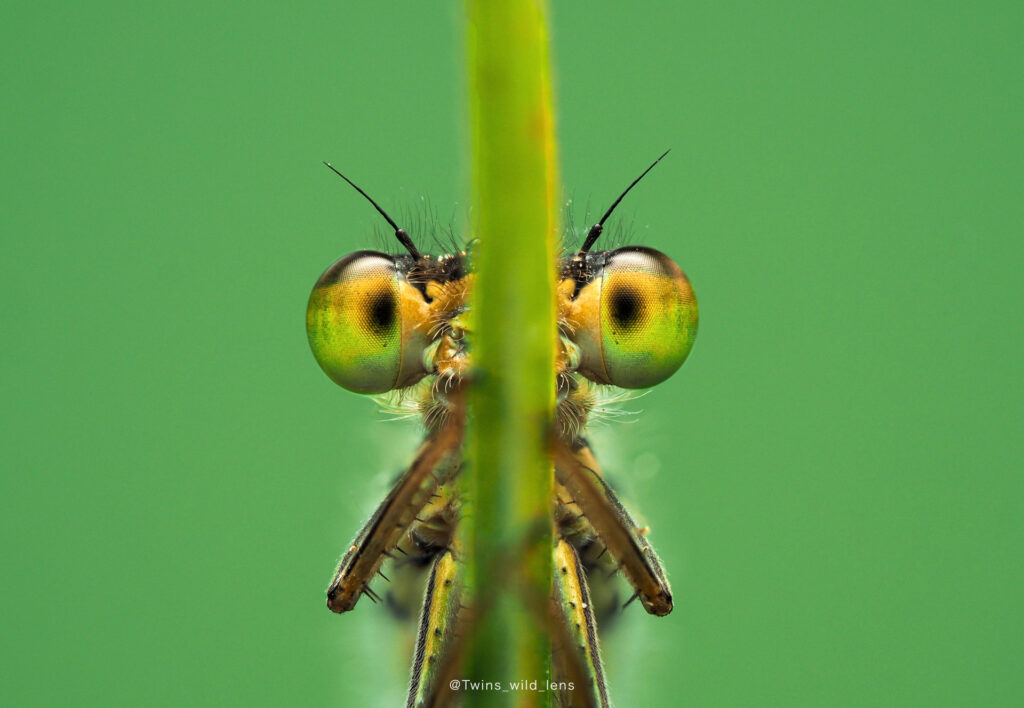
Damsefly Verte. All images by Twins Wild Lens. Used with permission.
Bugs get a bad reputation. As small as they are, most people either overlook them entirely or panic the moment one drifts into their personal space. Two French photographers – known online as Twins Wild Lens – take the opposite approach. They actively seek out earth’s tiny creatures and give them an impromptu portrait session.
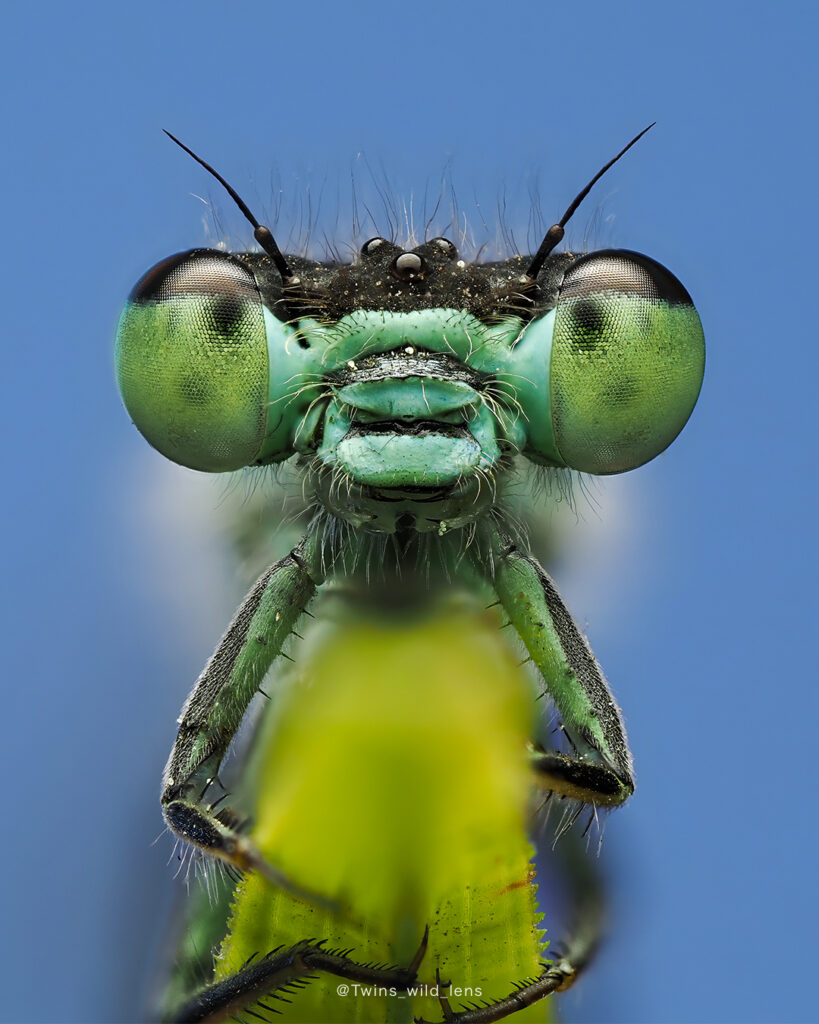
Coenagrion-Puella.
The clue is in the name and this photography duo really are twins. We often hear about sibling rivalry but here the dynamic is reversed. They combine their talents with a shared creative instinct that has turned them into a rising force in the photography world.
I love the vibrant, razor-sharp images they create. On a simple level they make insects and reptiles look genuinely adorable. Look closer and you see something more. The pair are educating viewers about the countless species we share the planet with, highlighting fine details and reminding us of each creature’s place in the wider ecosystem.
I caught up with the twins to discuss their work and to gain a behind the scenes look at how they create these remarkable portraits.

Them Frames: Hey both! Can you begin with telling us how you first started photographing together, and how tiny creatures became your main subject?
TwinsWildLens: We’ve both been passionate about animals since we were kids. That’s what naturally led us to study biology at first, it felt like the most direct way to stay connected with nature and understand it better.
Spending so much time outdoors during our studies made us want to capture what we were seeing. About five years ago, we started experimenting with photography using our dad’s old Canon camera and a 50–250 mm lens. That’s really how it all began!
At first, we photographed pretty much everything we came across, birds, landscapes, mammals, but over time we found ourselves drawn more and more to insects. There’s something fascinating about macro photography, it reveals an entire hidden world that’s invisible to the naked eye.
Seeing those tiny details, the textures, colors, and behaviors, feels almost like discovering a parallel universe right in front of us.
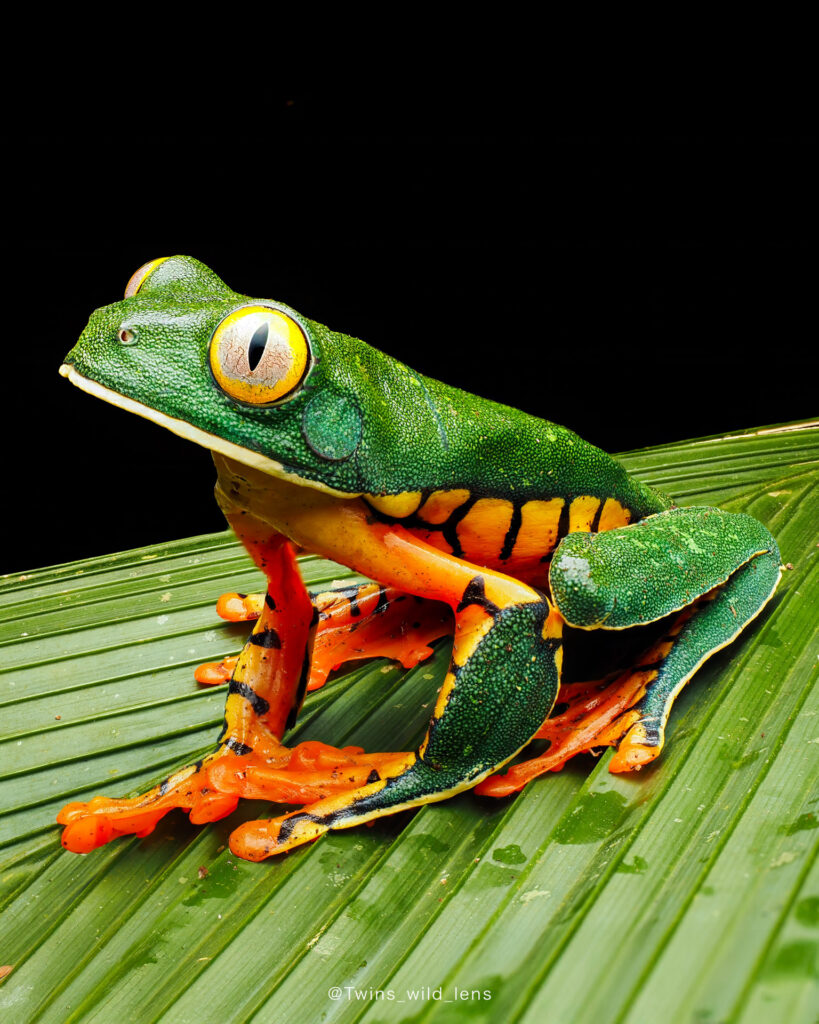
Cruziohyla Sylviae.
Them Frames: We know siblings can have their moments. Creatively speaking, what are some of the positive parts of working together, and some of the challenges?
TwinsWildLens: One of the biggest advantages of working together is that we never get bored, there’s always energy and motivation between us. If one of us feels a bit less inspired or tired one day, the other naturally keeps things moving.
Being two also makes the whole process easier and more fun. When we’re out in the field, one can focus on finding insects while the other sets up the shot, so everything goes more smoothly.
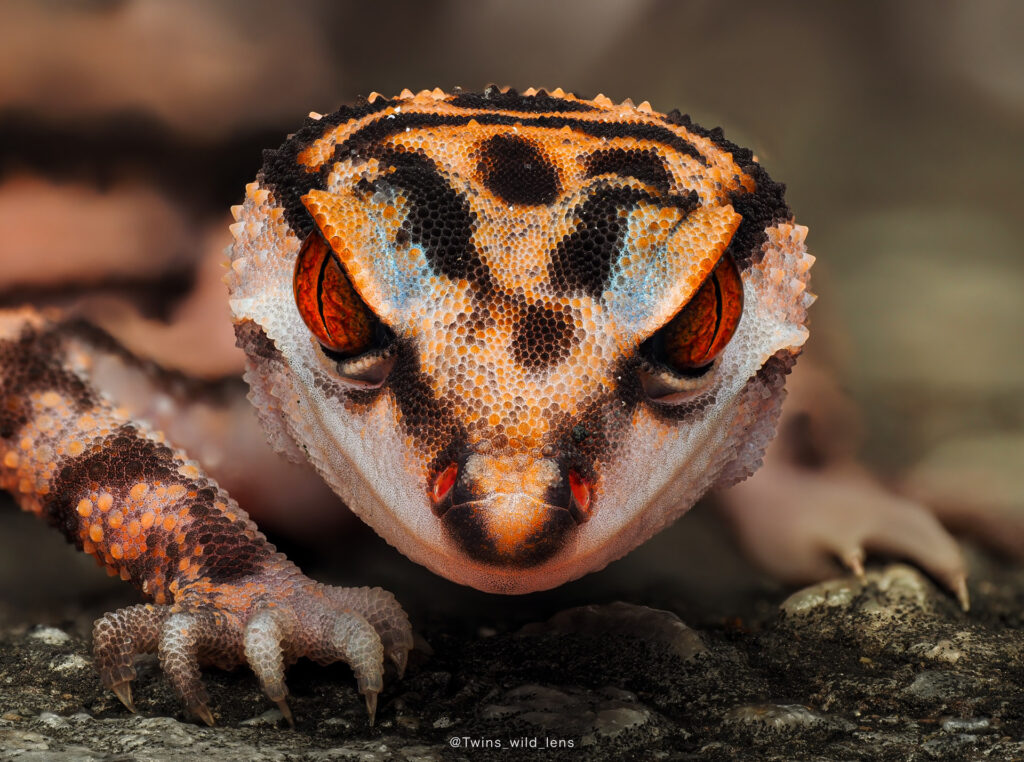
Gecko Tokashiki.
As for challenges, there really aren’t many. We’ve always been used to doing things together, so we understand each other almost instinctively.
The only tricky part sometimes is making decisions for our social media, since we run them together, we have to agree on everything, from photo selections to captions. But even then, it usually leads to good discussions rather than real disagreements.

Them Frames: What’s the most challenging part of photographing small insects, and what tricks of the trade do you use to overcome them?
TwinsWildLens: Photographing small insects can be quite challenging because everything happens on such a tiny scale. The slightest movement, a breeze, a change in light, or even our own breathing can completely affect the shot.
Since we work with very small subjects, the working distance with our lenses is often quite short, the more we zoom in, the closer we have to be to the insect. That increases the chances that it will move or fly away, which makes patience and careful planning essential.
One trick we often use is to go out early in the morning, before the sun is fully up. At that time, insects are much less active, waiting for the first rays of sunlight, which makes photographing them much easier.
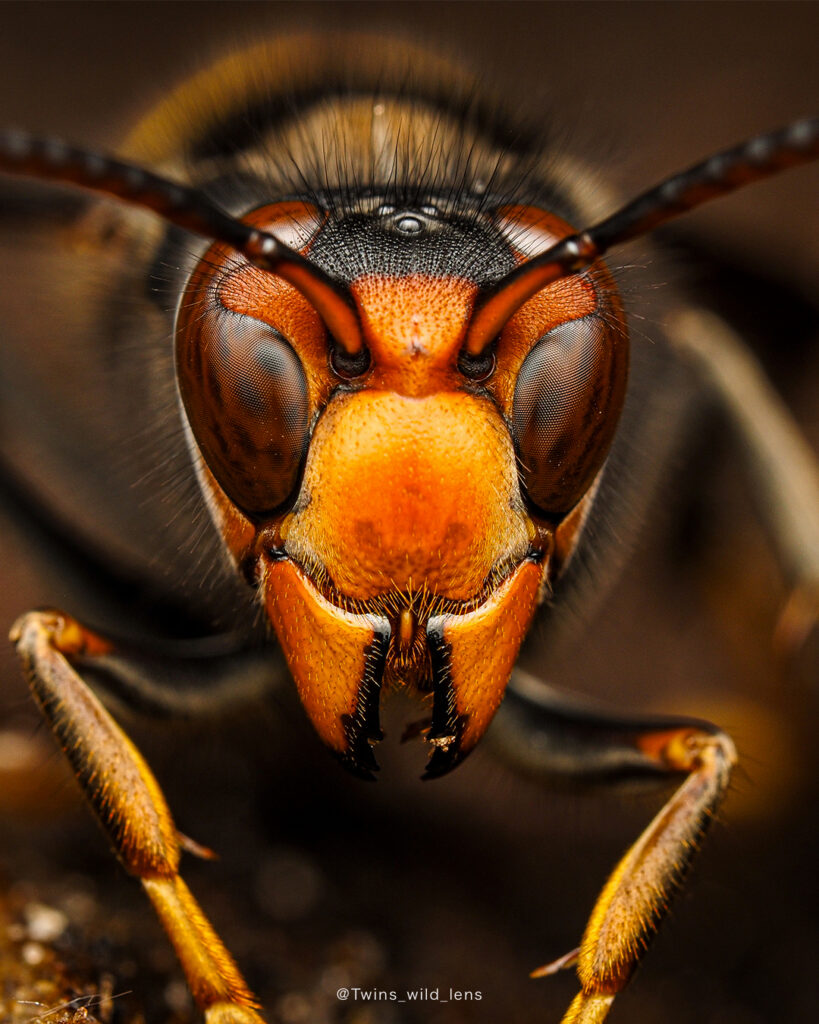
Vespa Velutina.
Them Frames: Is there a dream subject you’re yet to find in the wild, what would it be?
TwinsWildLens: Wow, that’s a tough question, there are still so many insect species out there yet to be discovered! But if we focus on France and Europe, our dream species would be the male Eresus kolaris, a type of ladybird spider.
The male is strikingly colorful, with bright red and black markings, and it only appears in the autumn, from late September to the end of October. It’s very rare to find.
We’ve spent entire sessions and hundreds of hours searching for it without success. We’ve managed to see a female once, but the male remains our ultimate target species, the one we dream of photographing.
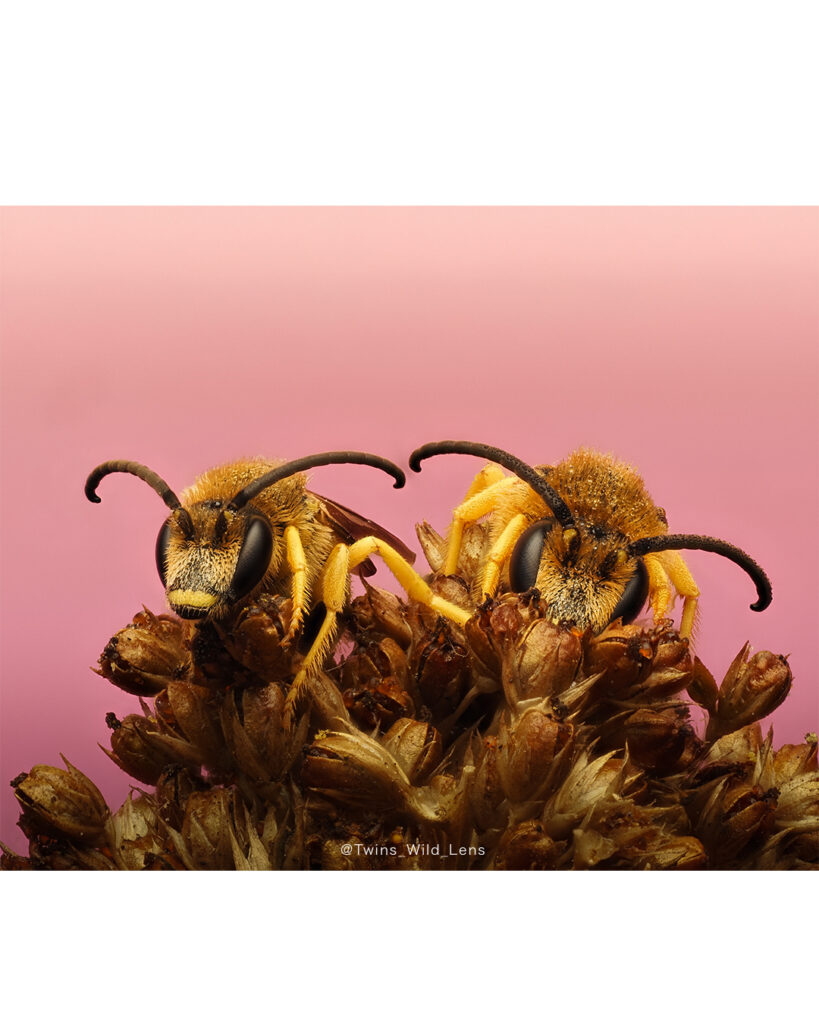
Colletes Halophilus.
Them Frames: People are often scared of insects and other wildlife, yet your work makes even a fly look beautiful. How important is it to you both to change public perception of some of the world’s creatures?
TwinsWildLens: We’ve always believed that fear often comes from a lack of knowledge. When people are afraid of certain insects, it’s usually because of myths or rumors, and not understanding these creatures only reinforces that fear, even though insects are absolutely essential for life on Earth, from pollination to maintaining ecosystems.
That’s why, for us, photography is not just about making insects look appealing or “cute.” We think it’s equally important to share accurate information about these species, their behaviors, and their roles in nature. Many insects even have features or behaviors that seem almost supernatural, which makes them fascinating once you really take the time to look.
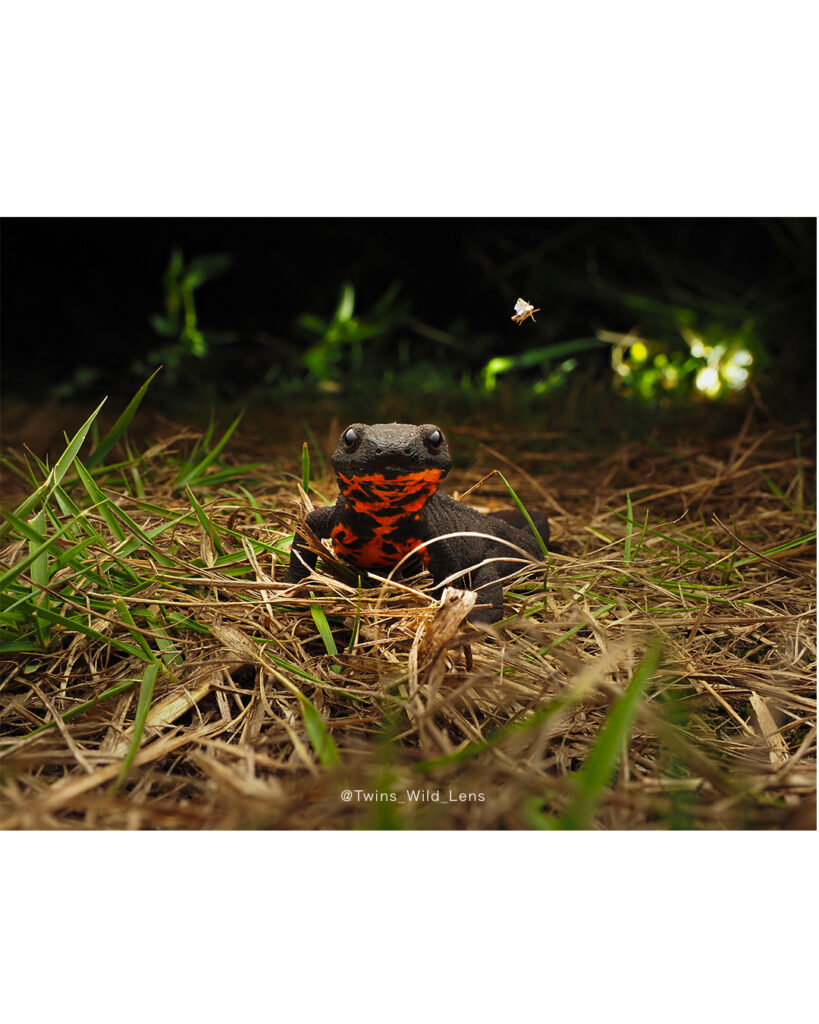
Hallowell.
Them Frames: You’ve recently had a reel go viral, reaching over 3.5 million viewers. How does it feel to get your work out there to the world?
TwinsWildLens: It’s pretty amazing to see a reel perform so well. Sometimes we create reels that we think are incredible, but they don’t get the same response. We think it’s really a matter of timing sometimes the right music, paired with the right photo and editing, can make a reel resonate more with people.
Either way, it’s always really rewarding to see our work being appreciated and shared with so many viewers.
Them Frames: If you could select a song or album to accompany your photography portfolio, what would it be and why?
TwinsWildLens: It would be Vaitimbora by Trinix and Mariana Froes. There’s something so delicate and gentle about the track that perfectly mirrors the beauty and fragility of insects and the ecosystems around us.
It evokes the subtle rhythms of nature and the small wonders that we try to capture in our work, giving a sense of calm and appreciation for the world that often goes unnoticed.
Them Frames: Please finish this sentence. We need photography in our life because…
TwinsWildLens: it allows us to pause, suspended from the rush of everyday life, and find a moment of calm in nature, while constantly learning something new. It also gives us a reason to venture into the forest every week, something that has become increasingly rare for people living in the city.
You can see more work from Twin Wild Lens by visiting their Instagram.
More reading: This Photographer Turns Sacred Spaces into Fine-Art.
Want your work featured on Them Frames? Pitch us.