
All images by Sophie Harris Taylor. Used with permission.
When a child is born, understandably people want to support the mother and make sure she has everything she needs to move back into life after pregnancy. Often unspoken, there is a quiet expectation that the father simply steps up and supports his family, and fatherhood seldom gets the consideration it deserves. Photographer Sophie Harris Taylor is aiming to change that narrative.
Present Fathers is a photo project born out of curiosity. Having largely focused her photographic work on maternity and postnatal life from the female perspective, Harris Taylor decided to look more closely at what men go through after their child is born.
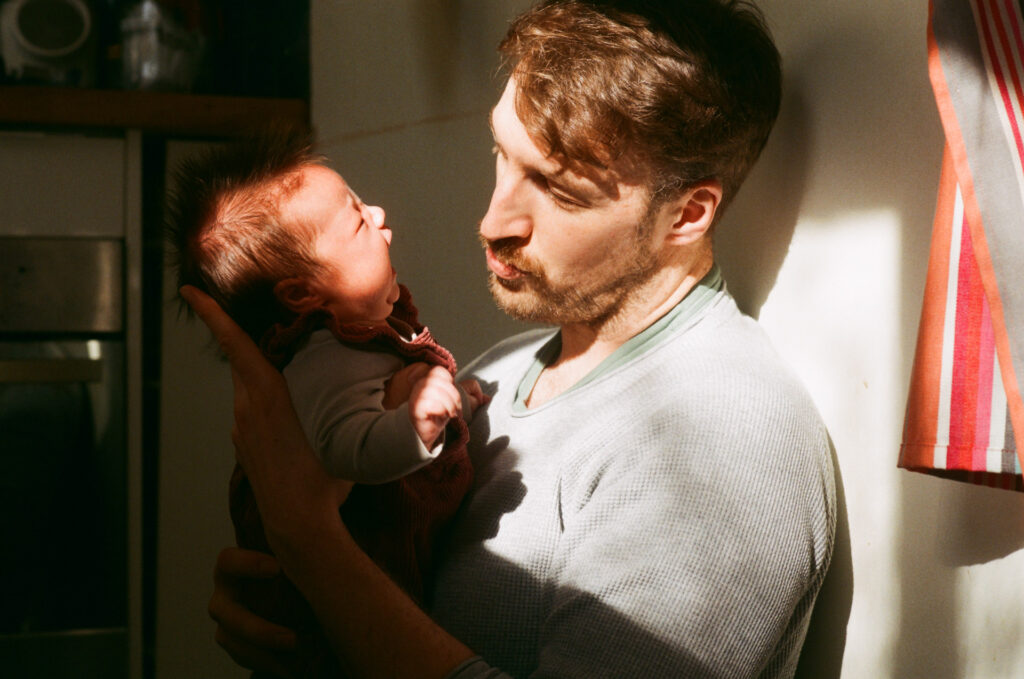
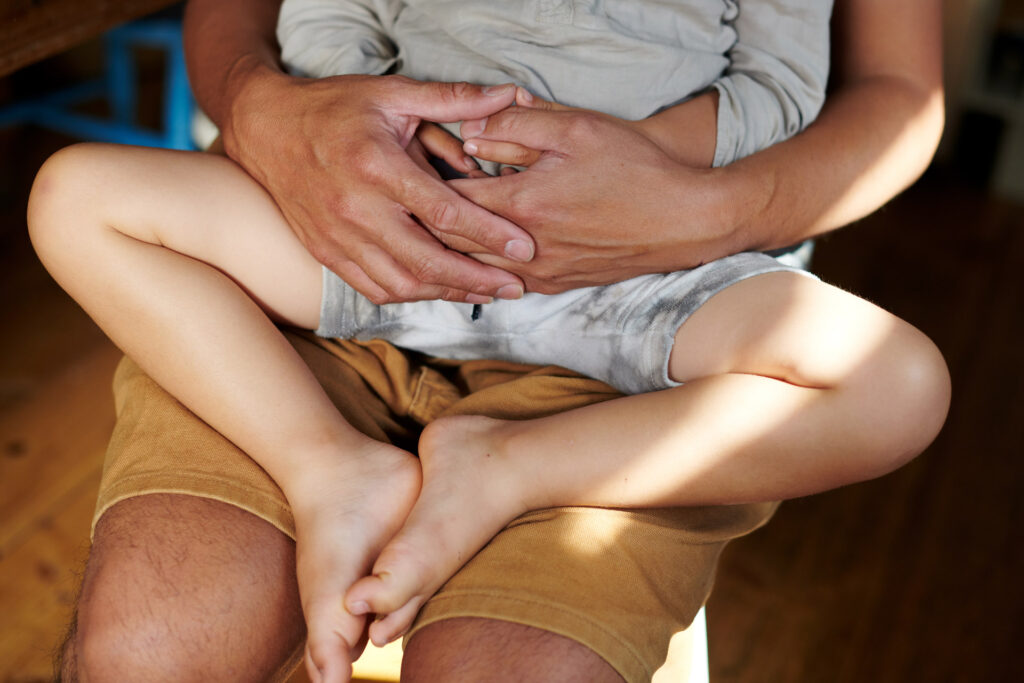
It is a series that gives men a voice without diluting the reality of mothers. It empowers fathers to share their struggles, their joys, and their insecurities. The result is a deeper understanding of early fatherhood and a set of images that highlight the wonderfully vulnerable bond between father and child.
After spending hours in therapy unpacking my relationship with my own father, while never fully appreciating his perspective, Harris Taylor’s work spoke to me. As a result, I asked to speak with her to learn more about the project and her process behind creating the work.

Them Frames: Hey Sophie! You note that you tend to start a project from the foundation of personal experience. What made you go out of this comfort zone and why were Fathers your go-to topic?
Sophie Harris Taylor: Even though it wasn’t directly from my personal experience, I still came at it with a sense of connection. After the birth of my first child, I began making work around motherhood, breastfeeding in particular and quite quickly became absorbed in that theme.
I soon realized though there was a lack of work and information for Fathers out there. I also noticed with my own partner, he was absent in the eyes of health workers and midwives (often ignored when present in the room) and I don’t think this helped him at the time.
There were naturally a lot of ‘mum and baby groups’, all over the place and I just didn’t understand why fathers were being left out, especially in today’s society when we’re trying to bridge the gap between men and women.
Nowadays there are so many more women in the workplace and more fathers than ever before staying at home, sharing paternity. I’d heard a statistic that a number of men were struggling with postnatal depression – I guess this series came from all of those things combined.
I wanted to make a space and a body of work for new fathers to enquire about their experience and allow them to shed light on what it feels like becoming a father, the good, the bad, challenges, expectations etc.
Them Frames: This isn’t simply a photo series, you encourage men to talk about their early experiences in fatherhood. How did you approach conversations and were there any challenges to guiding men to open up?
Sophie Harris Taylor: I did find it more challenging to navigate the interview. Not wanting to put words into their mouth but also wanting them to feel it’s ok to share their experience and be as truthful and open as they can be.
I actually found that a lot of men felt they didn’t have the ‘right’ to complain or speak of their own challenges – because of what their wives/partners went through with say pregnancy, birth and breastfeeding. And often anything they did say it was cavitated with of course nothing in comparison to what she went through. Like we need to compare them really. I don’t think that’s healthy.
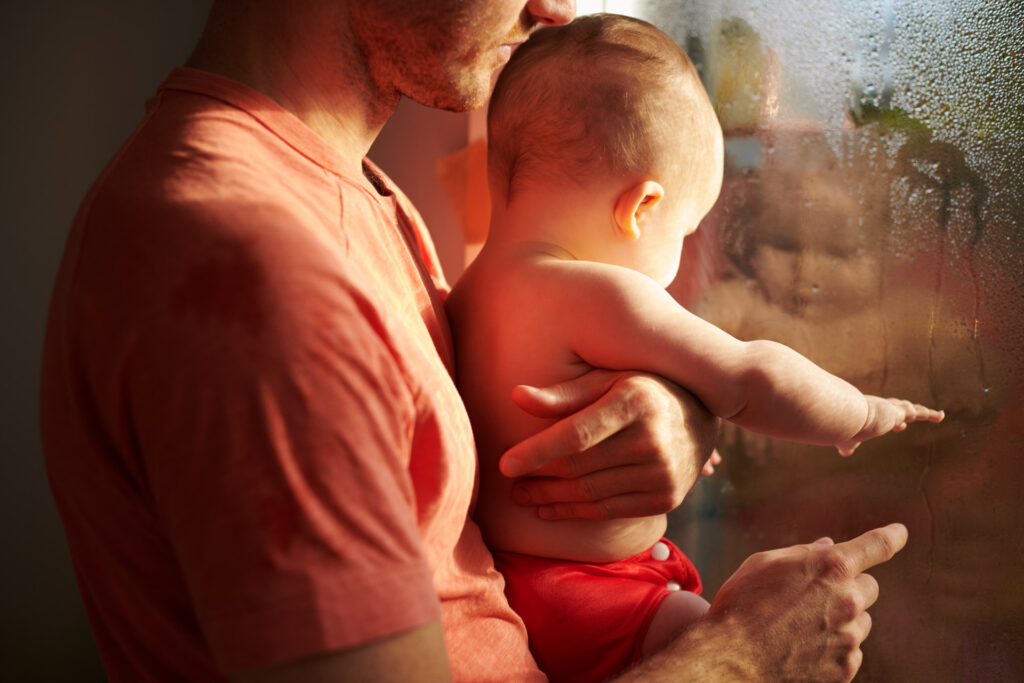
When I exhibited the work last year I went back to record some interviews with some of the fathers in the series and I actually found these really interesting. They shared what they had learned, what they had been able to reflect on and what they wished they’d known back then – plus advice for other new fathers.
Perhaps time meant they were more comfortable with talking about how they really felt then now they had some distance from that period.
Them Frames: How did you find people to participate in the project? What was your thought process in terms of locations to shoot?
Sophie Harris Taylor: I wanted to photograph the fathers within their own home environments. Mainly to make them more comfortable, none of them had been in front of the camera in this way before.
I figured being in their own space gave the images some context but also allowed the fathers and babies to be as comfortable as possible with me there. On their sofas, beds, corridors and kitchens, the work is somewhat documentary portraiture.
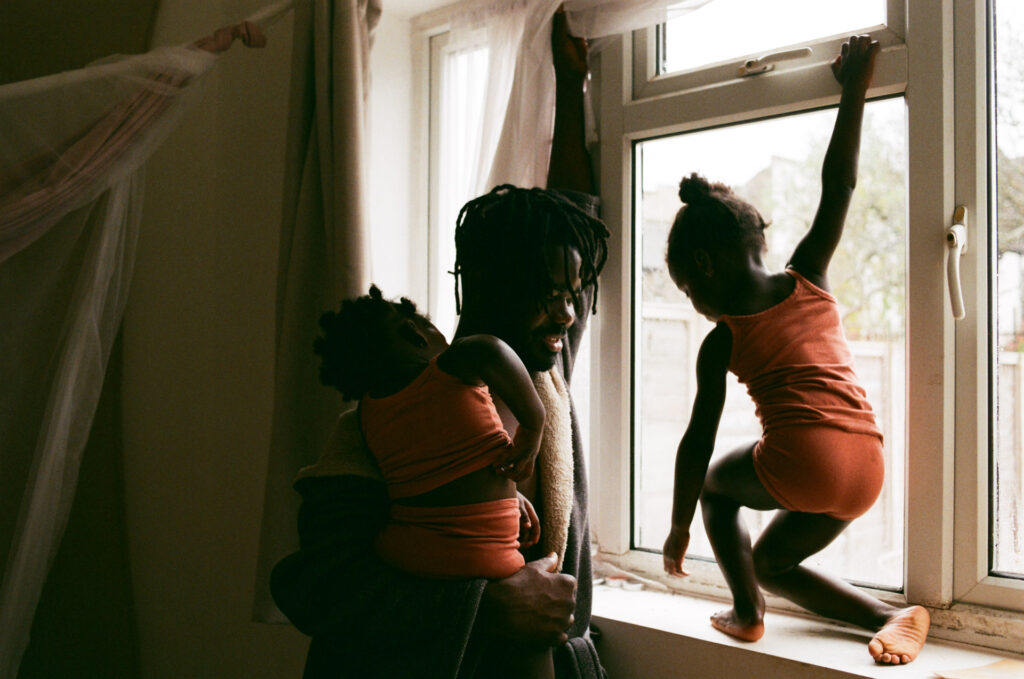
Them Frames: I imagine the children were too young to understand the scope of the project. How did you interact with them and help them feel comfortable in front of the camera?
Sophie Harris Taylor: They say never work with babies and children! Actually the babies were in a way the easiest as we could hold and comfort them if they cried (they did cry). Actually, capturing that in a way that shows an honest depiction of parenthood: it’s hard, emotional and not always smiles and laughter.
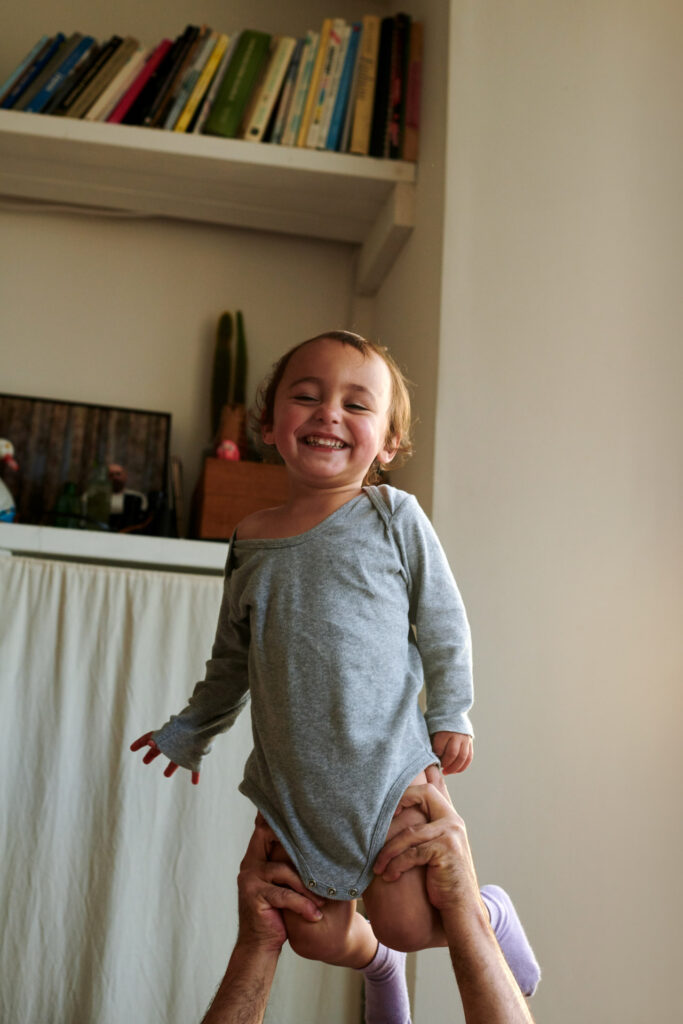
The toddlers were the hardest! Obviously not ever staying still (enough), jumping up and down, grabbing the camera and running into the lens. They’d bribe us for lots of snacks, knowing they’d get another potato chip or cracker for one more shot.
Also I made the project in and around covid/lockdowns when we were just out of isolation. So a lot of the toddlers were just so excited to see another person in their house even if I was masked up, it was quite a fun experience for them.
I captured the work when I had a toddler of a similar age so I knew what I was getting myself into really.
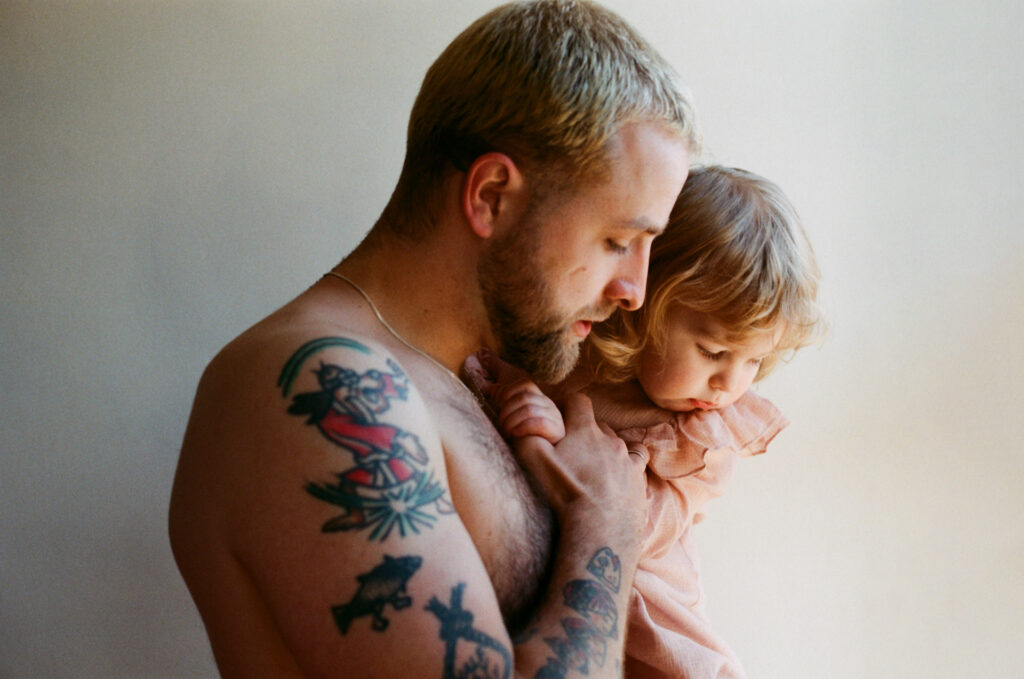
Them Frames: Did creating Present Fathers change any preconceived ideas you may have had about a man’s experience as a parent? Did you learn anything that surprised you?
Sophie Harris Taylor: I think I learned that a lot of men tend to go through a similar experience of not quite knowing what their role is during the very early stages, and how they can be of help whilst also trying to bond and build their own relationship with their baby.
I also heard from many that they didn’t necessarily have a group of other people they could turn to at the time and didn’t want to burden their partner with their own feelings.
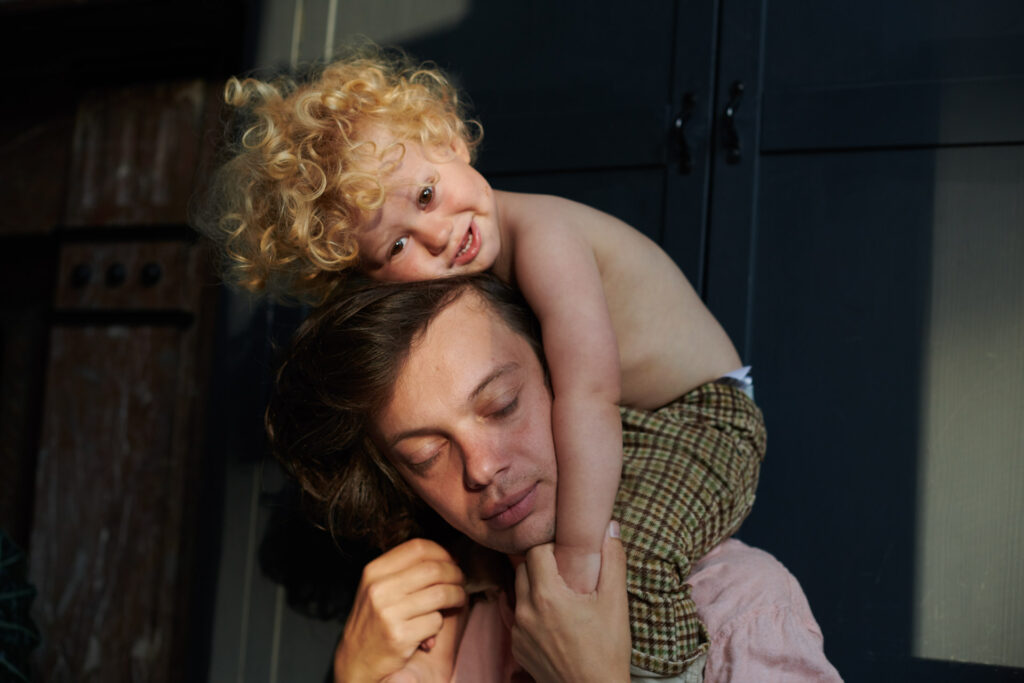
Them Frames: I’m curious, did doing a project like this impact or change your feelings about your own father, especially in regards to your early years?
Sophie Harris Taylor: I don’t know if it was a combination of this project and also seeing my partner parent our young children that has inevitably made me reflect and think about my own father and our relationship in those early years.
Emotionally I think there’s a big difference in the way we connect and express ourselves and I think it comes out in your own parenting, both in what you find yourself doing and what you find yourself pushing against.

Them Frames: Has this experience encouraged you to do more work that’s outside your comfort zone? Is there anything you’re working on that you can share?
Sophie Harris Taylor: Funnily enough after this series I’ve actually gone back to working with women again. A project that explores the moments, hours just after giving birth. It’s taking a while, but it’s one that’s keeping me very engaged.
You can see more work by Sophie Harris Taylor by visiting her website and Instagram.
More reading: Cheer Up Luv Gives Survivors the Space to Be Seen and Heard