
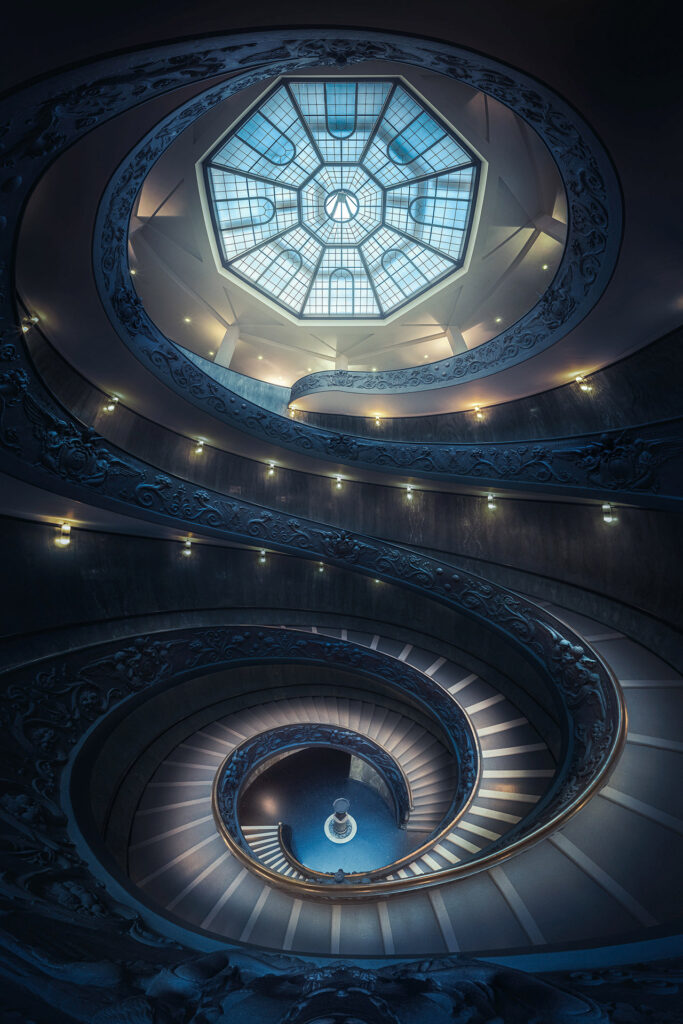
Amphisbaena. All images by Peter Li. Used with permission.
Cathedrals are fascinating spaces. Architecturally, they are masterpieces of human imagination and engineering, while also serving as places of peace and calm. I’ve spent a lot of time in religious spaces, yet my attempts to photograph them have never felt adequate. Thankfully, I know an excellent photographer in this field, so allow me to introduce Peter Li.
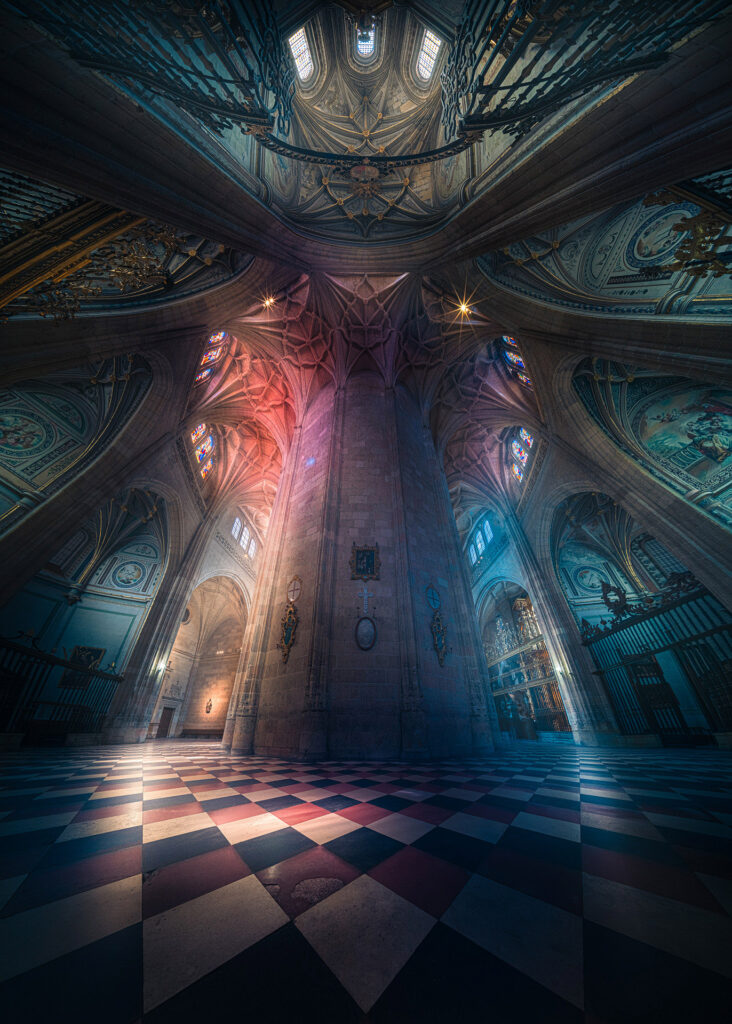
Yggdrasil.
I’ve followed Li’s work for quite some time. Even though I’ve become familiar with his style, I never cease to be amazed whenever he shares a new image. His photographs are far from simple snapshots taken in a quiet moment. They are carefully crafted works that demand patience, skill, and a strong creative vision.
One of the greatest challenges for any photographer is to give viewers the same sense of awe they would feel if they were standing in the space themselves. Li not only achieves this, he elevates the already extraordinary into something even more magical.
It comes as no surprise to me that his work has earned wide recognition. He won first place in both the 2018 and 2022 IPA awards and has been featured in The Times and The Telegraph in the UK. Li has since become an official creator for Nikon, and I expect only more success in the years ahead.
I had the chance to speak with him to learn more about his background, his projects and the dedication behind his inspiring portfolio.

Them Frames: Hey Peter! How did you first get into architectural photography and why did you have the creative choice of doing it from a super wide perspective?
Peter Li: I started photographing during my daily commutes using a single 85mm lens. Whenever I wanted a wider scene, I would create a handheld panoramic stitch; it became both a habit and a fun challenge every day before and after work. I learned to compose with depth and compression in mind, rather than simply zooming in or out.
Later, I connected with a few architectural photographers on social media who introduced me to the genre by visiting fascinating interior spaces and geometric staircases. That led me to pick up a 15mm lens and apply the panoramic techniques I’ve harnessed during my daily commutes.
Through this process, I became fascinated by the super-wide perspective, which allowed me to see beyond what the camera could normally capture. That curiosity about what lies just outside the frame continues to inspire me today.
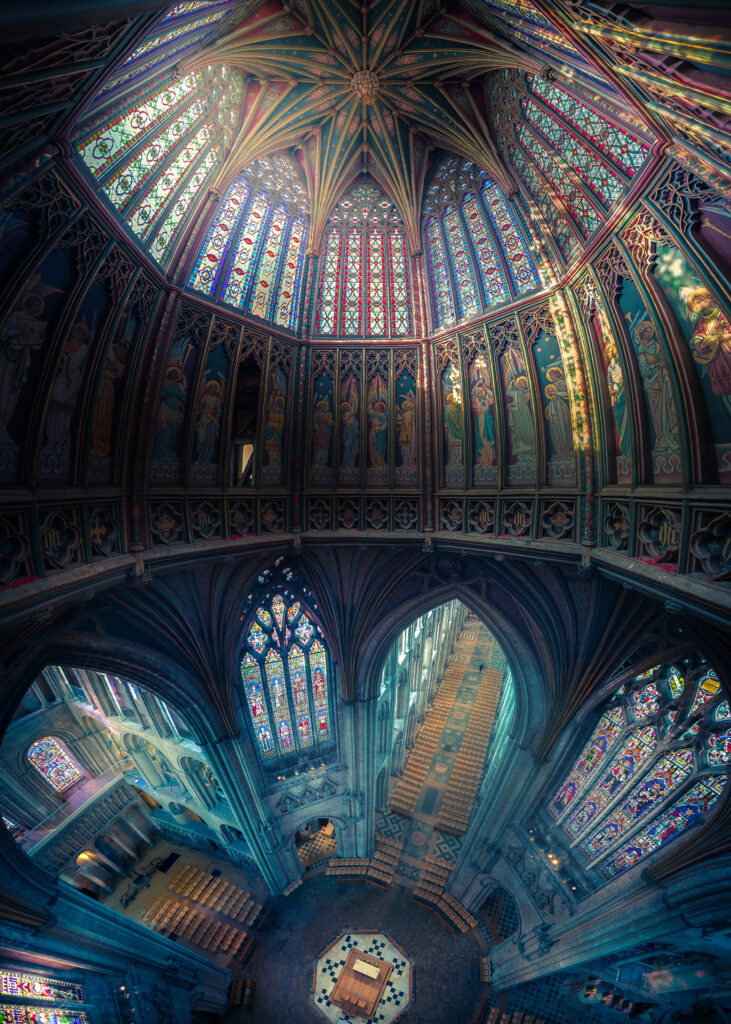
Lothlórien.
Them Frames: Your project, Omniscience, is wonderful. What was the motivation for this series and how did you decide on the locations?
Peter Li: Thank you. My fascination with historical spaces such as cathedrals began while exploring architecture around London. I remember stepping into one and being completely awed by its scale and beauty.
Growing up in Hong Kong, my first encounters with buildings like these were through 90s console video games. Those imagined worlds filled with castles, cathedrals, and ancient cities deeply influenced how I see and interpret my photography today.
Omniscience became a dialogue with that younger self, bridging fantasy and reality through these monumental relics of another era. When choosing locations, I look for spaces that evoke that same sense of awe, where symmetry, light, and history converge to create a feeling of timelessness.
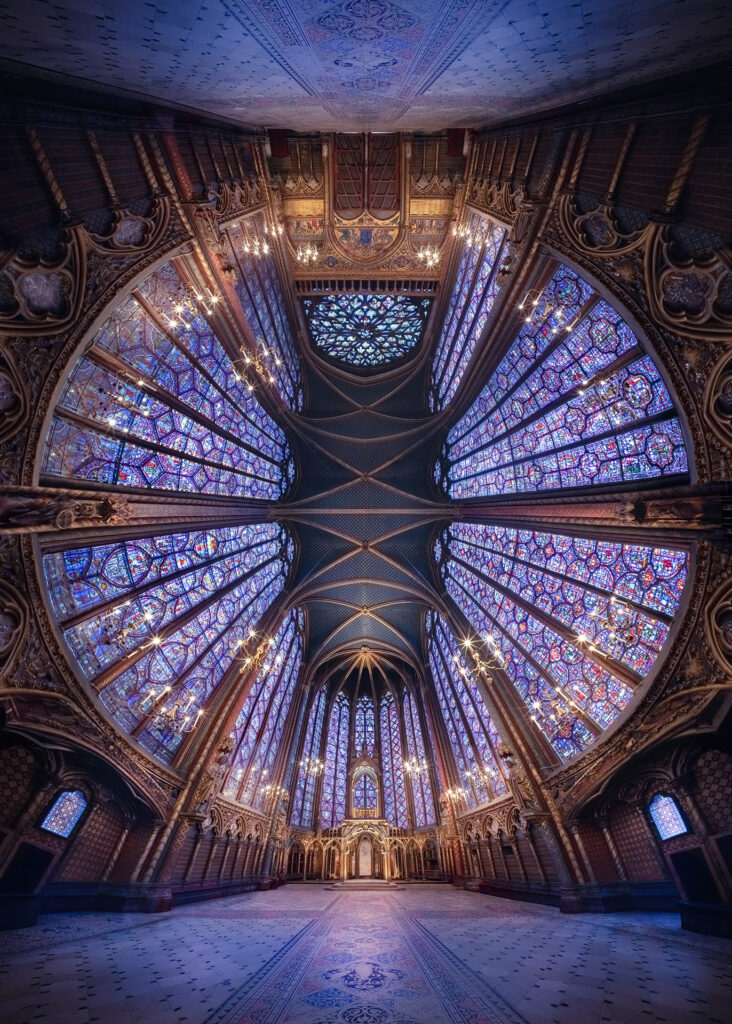
Rivendell.
Them Frames: Churches and cathedrals can be very peaceful places. How do you feel in such environments and how does that impact your creativity?
Peter Li: There’s something humbling about standing inside a cathedral, the collaboration of medieval engineers, architects and stonemasons from different walks of life coming together to create something timeless. That sense of history and devotion always grounds me and shapes how I approach documenting the space.
I’m conscious that many visitors come seeking peace, so I work quietly and respectfully. Creating panoramas can involve hundreds of exposures, but with silent shutters, I can capture the space without intrusion. I enjoy being in these spaces in silence, it helps me focus and work at my best.
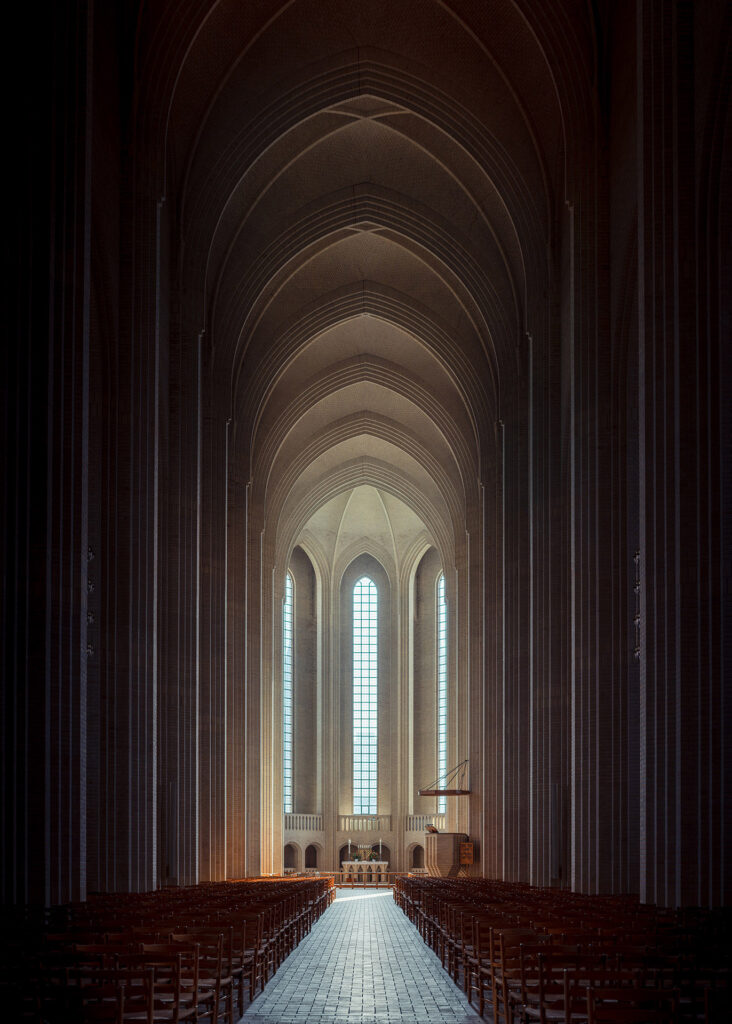
Vanishing Lines.
Them Frames: The symmetry and balance is perfect in your frames. How long does it take to set up the shot and what helps you achieve such a great level of accuracy?
Peter Li: The photographing part of the Vertorama process is quite technical and precise. Initially, it takes time to line everything up, but over time, it becomes more intuitive. I try not to overthink how I want the image to look. It’s about capturing and recording what’s there as accurately as possible.
The more detail I can capture in color and dynamic range, the more flexibility I have in post-processing, which to me is the more creative part of the process.
I think my decade-long experience in graphic design helped train my eye. I’m also fortunate to have friends who introduced me to architectural photography, they offer honest, unreserved feedback on my work, which is increasingly rare nowadays.
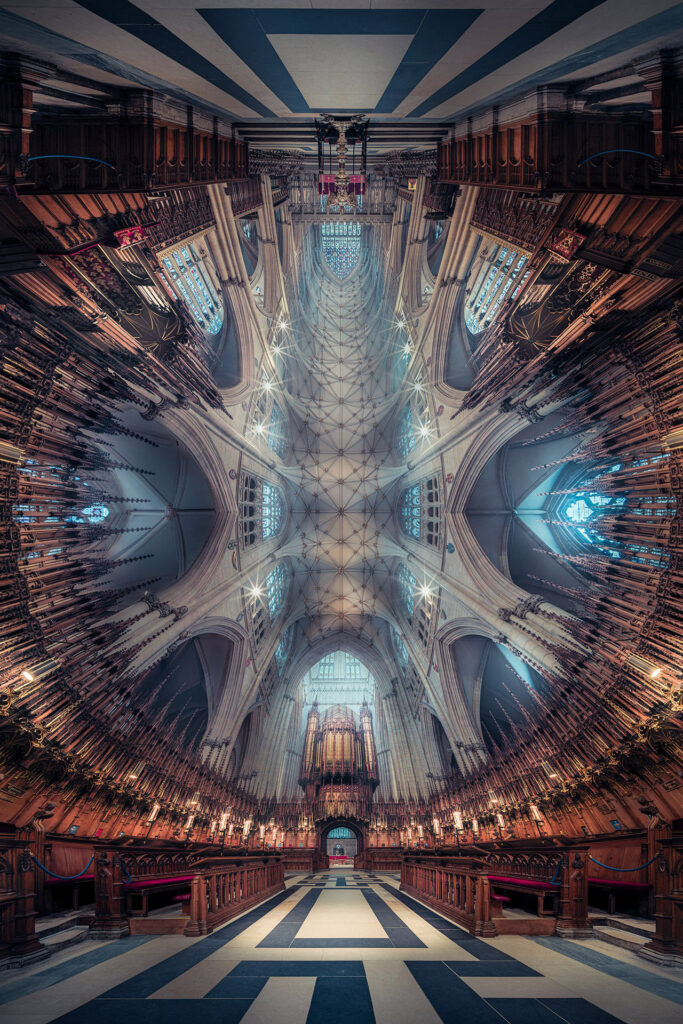
Phoenix.
Them Frames: Access is such an integral part of good photography. How do you gain access to your locations? Are there any hoops you need to jump through to get the green light?
Peter Li: Yes and no. Cathedrals are open to the public almost every day, and photography is generally allowed for personal use, but tripods are often prohibited. Gaining access to photograph the space with a tripod requires a bit more effort, reaching out, requesting permission, and building a trusted relationship with the staff team.
Them Frames: You were commissioned to photograph York Minster. How did that gig come about and what was the experience like?
Peter Li: I was contacted by York Minster after they saw some of the vertoramas I’d created for other cathedrals. They were interested in commissioning a new set of images for York Minster, and we had a great conversation about how to approach it. One thing I really wanted was to capture a smoky, hazy atmosphere through the stained glass windows, something I hadn’t been able to do before.
The space is enormous, so during Holy Week at the end of March, on the day of the shoot, incense was burned from early morning. By evening, the lingering smoke combined with the sunset light through the stained glass created a truly magical scene. It’s hard to put the experience into words, but as someone who works with imagery, I prefer to let the images speak for themselves.
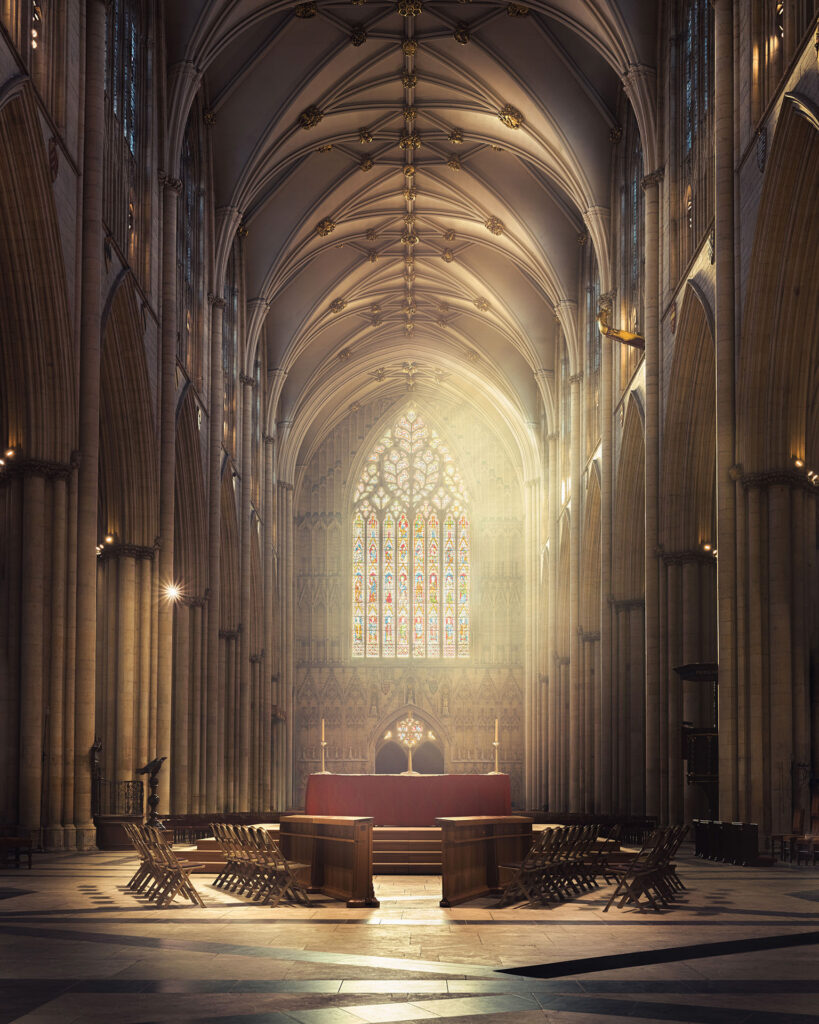
Evanescent
Having the full support of the cathedral team in creating the imagery exactly as I envisioned meant the world to me, and I’m truly grateful for the opportunity.
Them Frames: We love music here. If you could pair a song or album with your Omniscience project, what would it be and why?
Peter Li: That’s a tough one, I don’t think there’s a single piece of music that fits the whole Omniscience project. Each space feels like its own world. For example, a piece like Lothlórien from Ely Cathedral might pair well with a Lord of the Rings soundtrack, while the images from York Minster or St Paul’s Cathedral would need something entirely different.
I’ve never thought about it deeply, but I tend to work with ambient or instrumental music in the background. A lot of my visual inspiration comes from games, and growing up in Hong Kong, I was drawn to Japanese rock and the composers who collaborated with game studios. Years ago, I’d often listen to J-rock from the ’90s, but since developing some hearing issues last year, I prefer something gentler.
These days, I usually edit late at night after my kids are asleep, often with quiet piano music on loop. If I had to choose, it would be something like Arvo Pärt’s “Spiegel im Spiegel” , something calm and spacious.
Them Frames: Finally, please finish this sentence. I need photography in my life because…
Peter Li: I’m very fond of Dorothea Lange’s quote: “The camera is an instrument that teaches people how to see without a camera.”
So if I had to finish that sentence, I’d say — I need photography in my life because I want to see better.
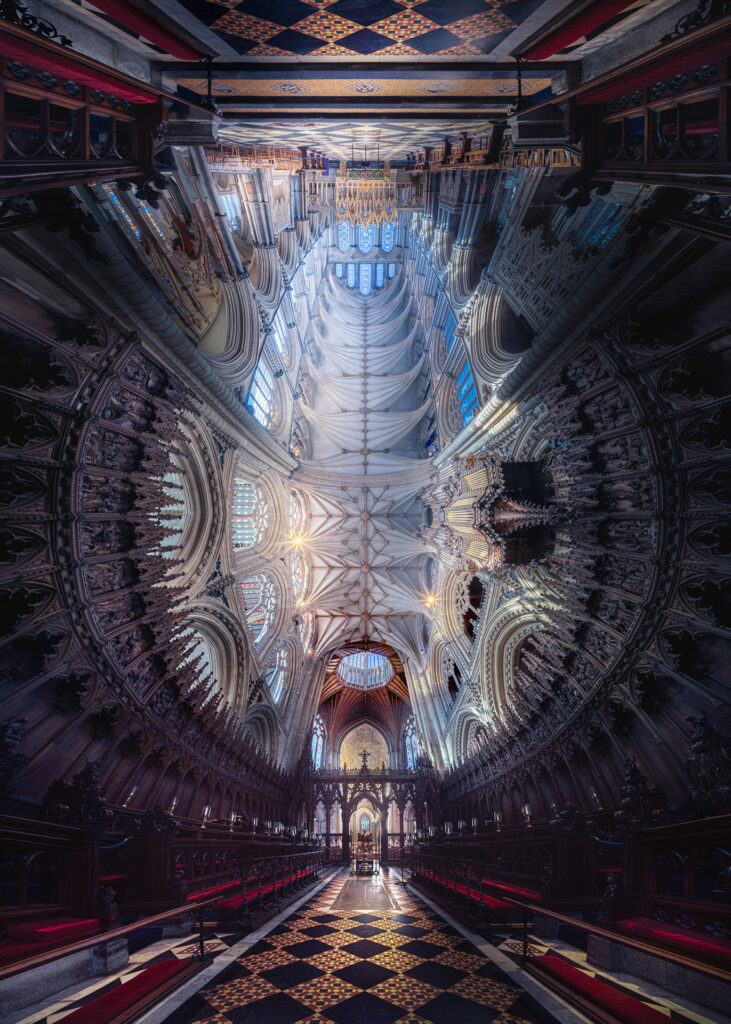
Viserion.
You can enjoy more work by Peter Li by visiting his website and Instagram.
More reading: The Church: How Photography Brought me Closer to God
Want your work featured on Them Frames? Pitch us.