
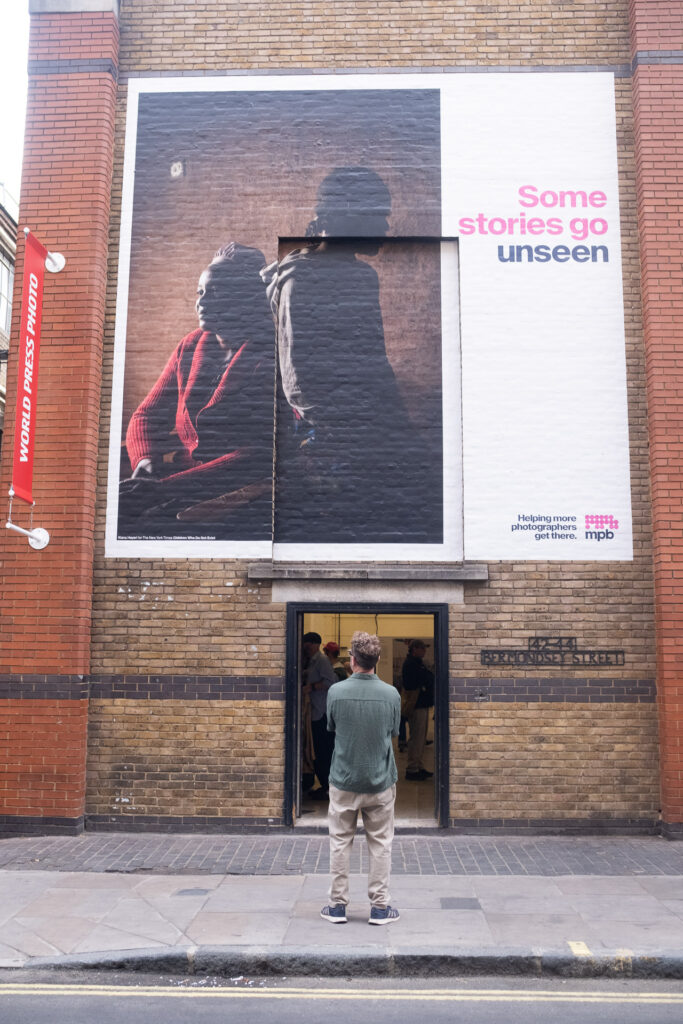
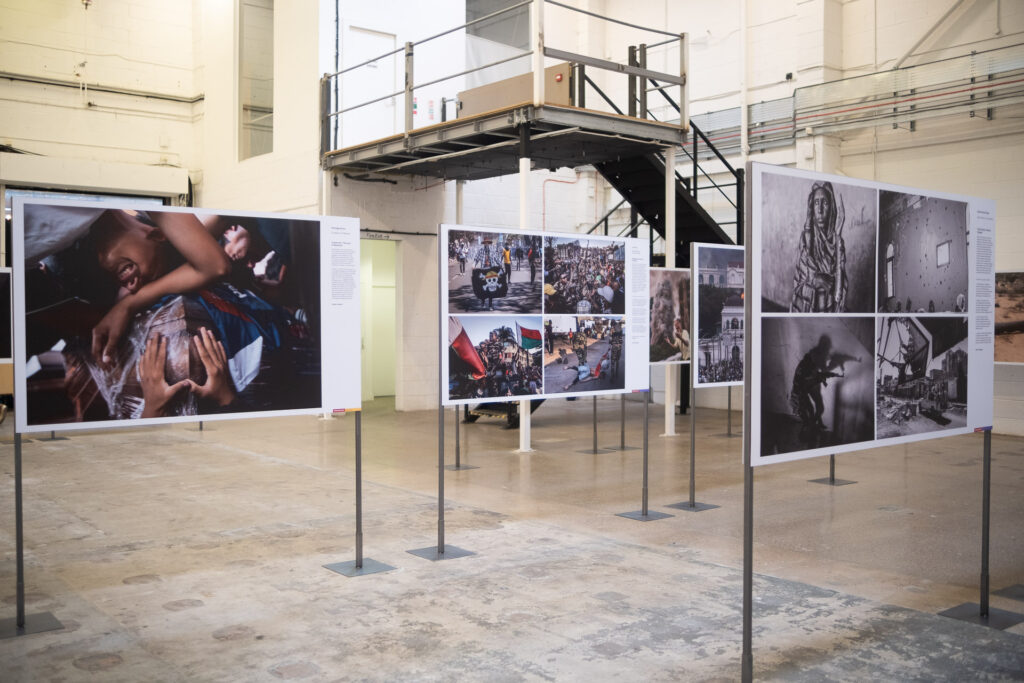
Yesterday evening I attended the press opening of the 2026 World Press Photo exhibition at the MPB Gallery, London. Row upon row of printed images filled a huge, open space, telling the most powerful stories that have occurred around the world this past year. It’s certainly not easy viewing, but suffering isn’t all that’s on these walls.
Plenty of images stopped me and held my attention. The first was Sanna Sjöswärd’s, an intimate portrait of one woman’s lifelong battle with anorexia, shot for the Swedish newspaper Corren. Engla Louise is a former dancer, and now at the age of 46, she requires full time care due to the extremity of her condition.
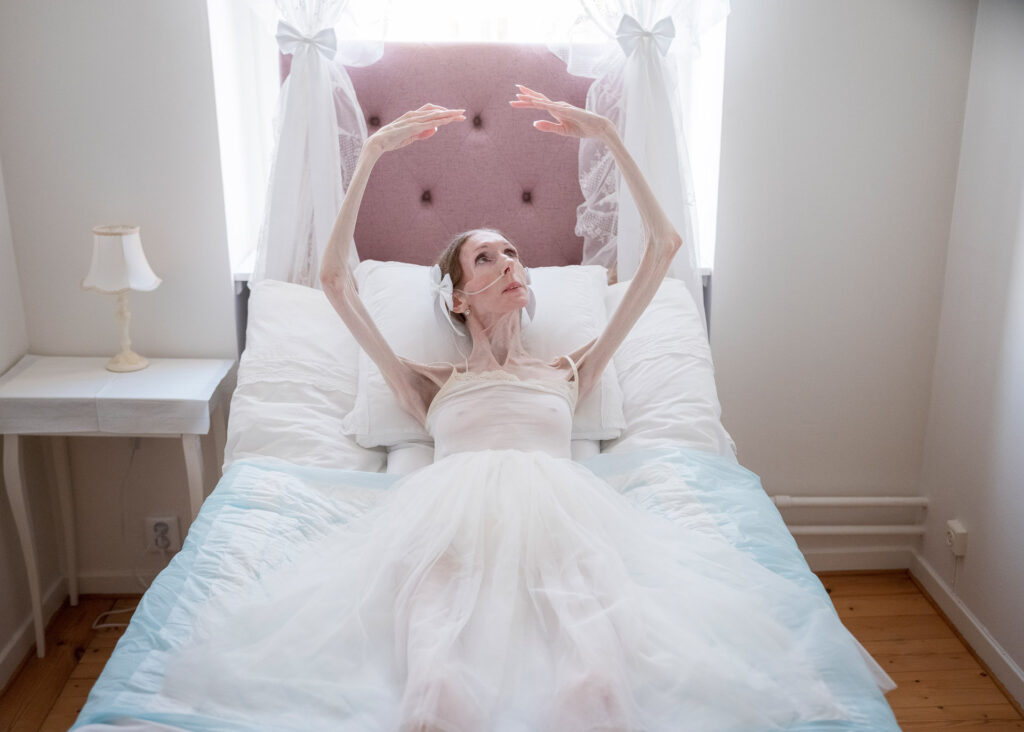
Photo by Sanna Sjöswärd.
This isn’t the first time I’ve seen this image. However, prior to last night my only viewing was on a digital screen. It was striking back then, but seeing it in such a large print really drove home what Engla Louise, and those closest to her, face on a daily basis.
Printing big changes what you take in
For this year’s installation the organizers of the exhibition opted to print big, a different approach to last year’s more compact display. Seeing the aftermath of drone attacks in David Guttenfelder’s work, the blaze tearing through a multistory apartment complex in Tyrone Siu’s, and the desperate escapes from the Los Angeles wildfires in Ethan Swope’s, all in such large print, brought me closer to the experiences these people had to endure.
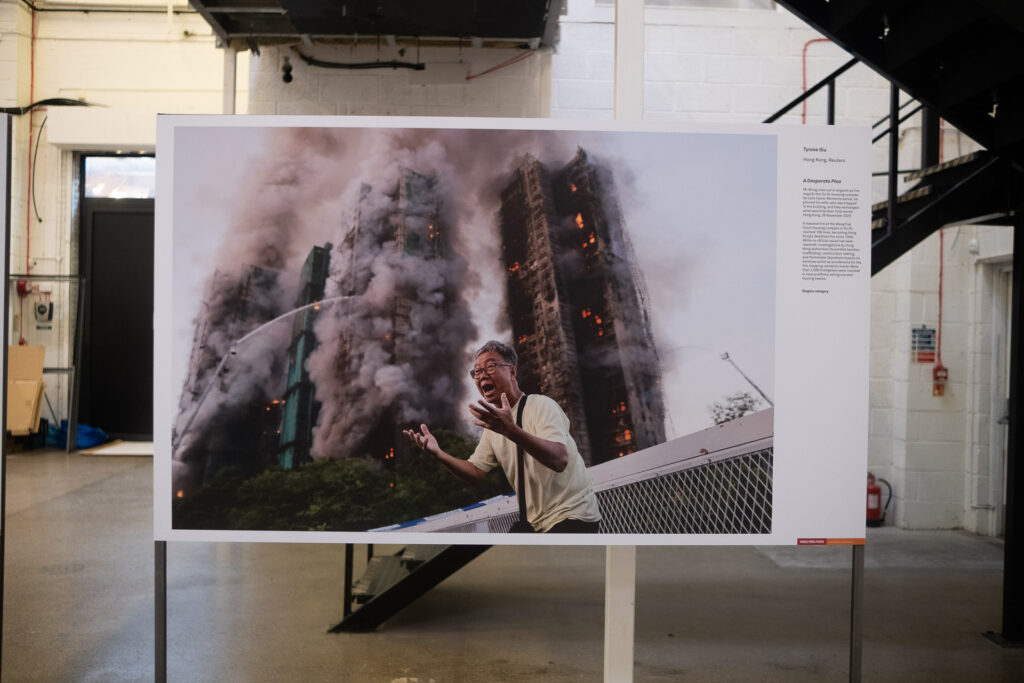
Granted, there’s no size of print that can help me truly fathom what it much be like to be in such events, but the printing in this exhibition did at least bring me closer to some kind of understanding.
As you look directly into the eyes of an elderly woman evacuating as the Eaton Fire closes in, or a child being comforted by her mother after losing their home, you can’t help but begin to realize the scale of the adversity they’ve faced.
This exhibition is heartbreaking, and it’s a heartbreak everyone should experience if they truly want to understand how the world’s most talked about stories are hurting real lives.
It isn’t purely a curated story of sadness, though…
The empathy in the frame
Something our mainstream coverage chooses to ignore is empathy. News cycles lead us to believe empathy cannot exist in a world where airstrikes are ordered, families are ripped apart, and our natural world and the wildlife within it are constantly on the brink of being destroyed. But it’s there, and the images in this year’s World Press Photo are showing it.
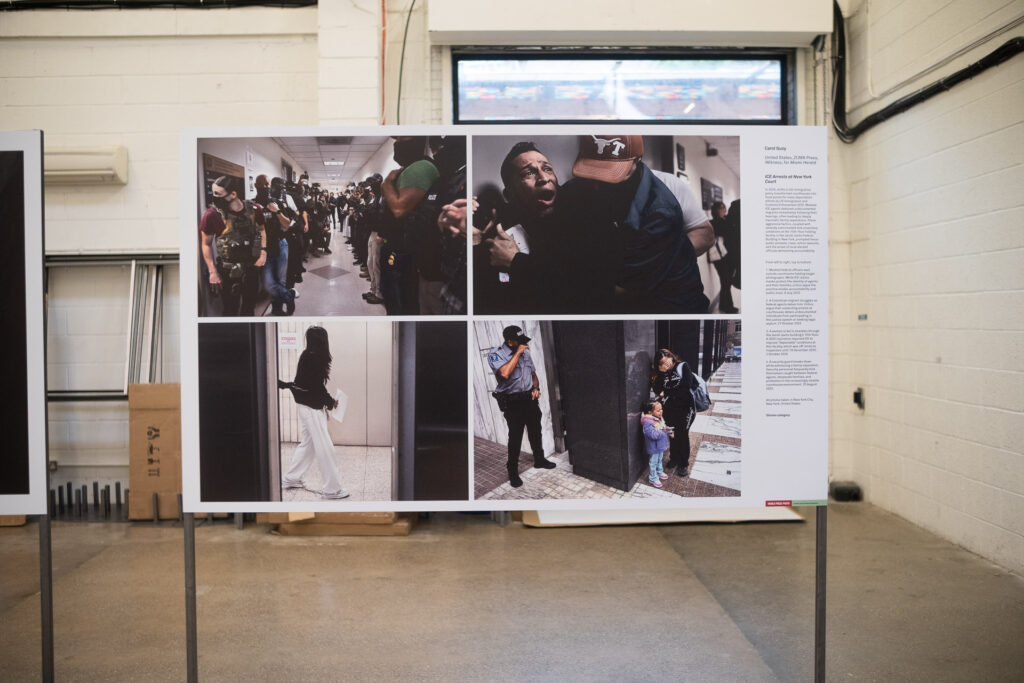
Carol Guzy’s image, from the story that won this year’s World Press Photo of the Year, is where I first noticed it. A mother comforts her daughter moments after they were impacted by the aggressive tactics of ICE agents. Next to them, a security guard, a person who is likely trained to be neutral and certainly not on their side, is brought to tears by the anguish this family is going through.
Next, in Guttenfelder’s work, Yulia Vasiakina is photographed tightly holding her horse, Kamelia, who did not survive the Russian drone strike that tore through their neighborhood in Odesa. “It’s just an animal”, some would say, but this image shows that all of us, including the animals we live alongside, are interconnected and it hurts us when they hurt.
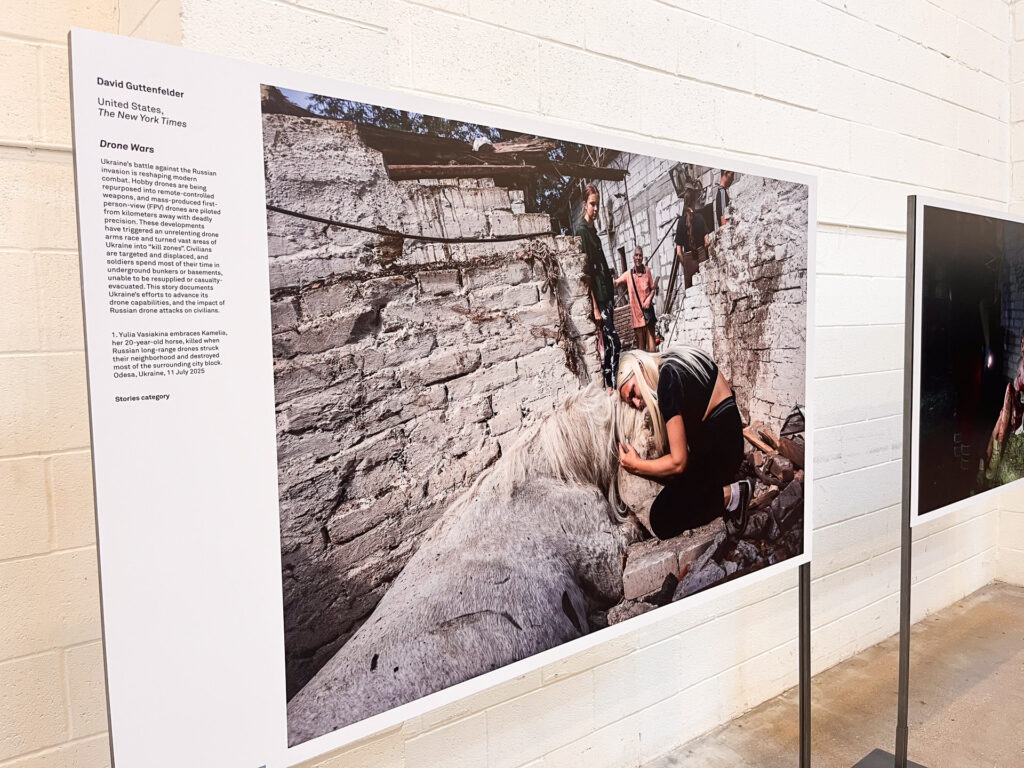
In a world that feels divided on purpose, these images keep landing on the same thing. Caring is part of the human condition, and nothing, however destructive, has managed to take it out of us.
A story of resilience
Packed within this exhibition is a story of resilience. Not resilience as a slogan, but the daily, hard work of holding a life together while it’s being taken apart.
It’s there in Saher Alghorra’s photograph of the al-Shafei family. Their neighborhood, including three quarters of their home, has been decimated by the ongoing war in Gaza, and yet there they are, sitting down together to break their Ramadan fast. Ramadan should mean a full table. What’s in front of them is whatever the shortages allowed that day, and they eat it together anyway.
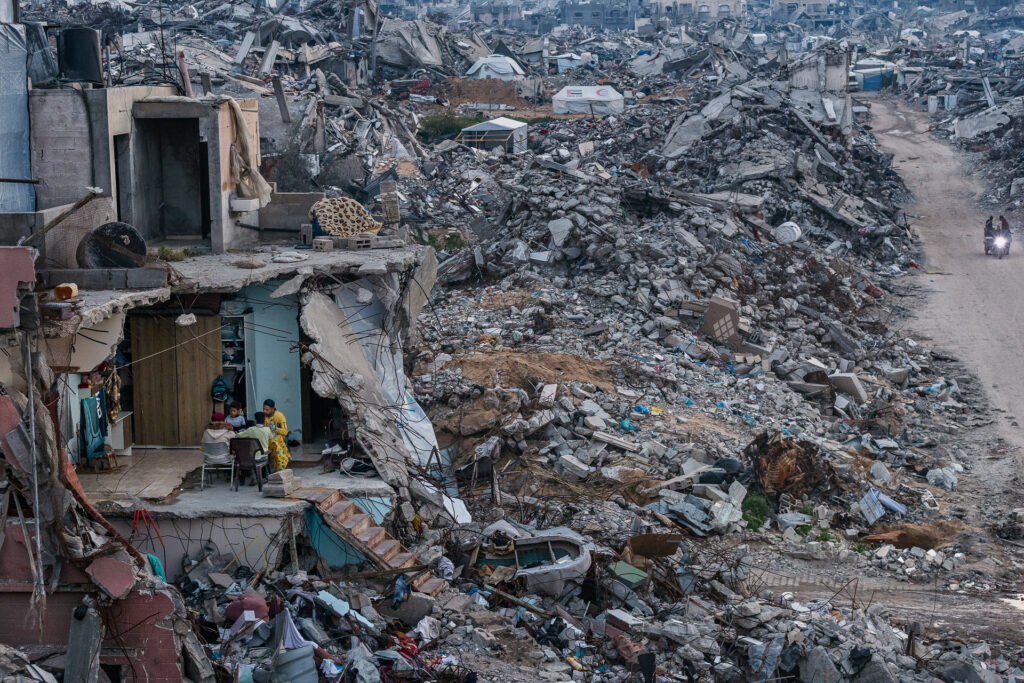
Photo by Saher Alghorra.
That resilience extends to the person holding the camera. Alghorra photographed this while living through it, one of the few witnesses left in a place most of the world’s press cannot reach, and he has said that staying silent would have meant surrendering.
This exhibition feels like an ode to the sheer resilience humans, and the communities we exist within, display in highly-intense times of struggle.
The World Press Photo exhibition shows you how cruel this world can be, and how comfortably the people who order that cruelty live with it. But it also shows that in spite of such actions, we will keep going, fighting and hoping for a brighter future, one day, even if not in our lifetime.
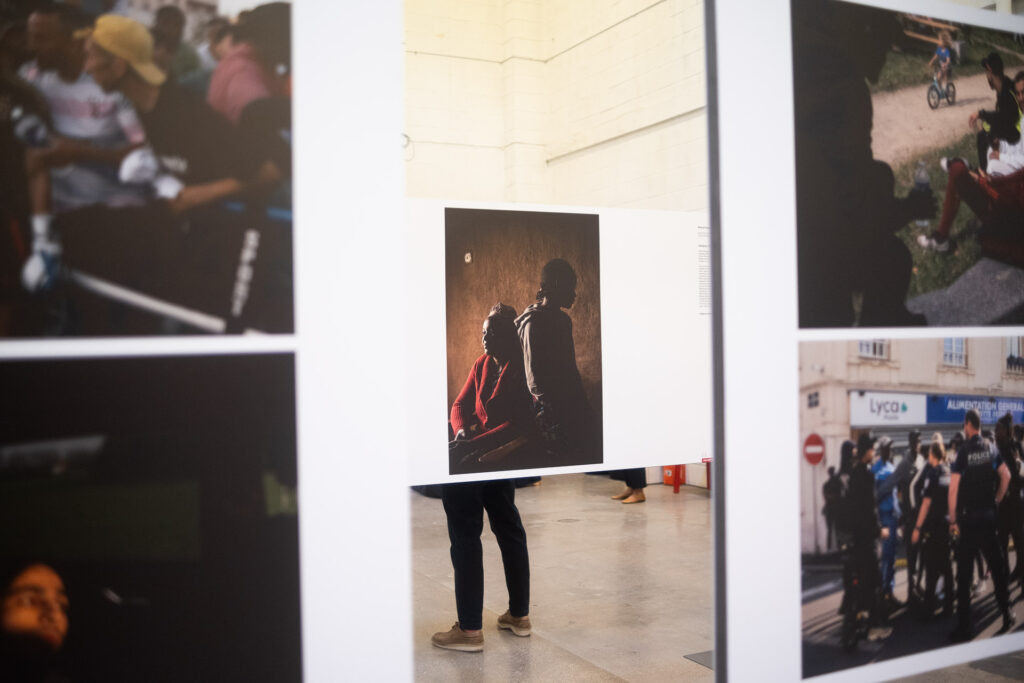
That’s the case for standing in front of these pictures rather than scrolling past them. A screen lets you look away, and most of us do, several times a day. A wall this size doesn’t give you that option.
Visiting the exhibition
World Press Photo 2026 runs from Friday, August 21 to Wednesday, September 30 at the MPB Gallery on Bermondsey Street, a short walk from London Bridge station.
Adult tickets are £13.50 midweek and £17.50 at weekends, £8.50 for children aged 12 to 16, and free for under 12s. You can book tickets and find full opening hours here.
More reading: 11 Powerful Images from The World Press Photo 2026 Contest