

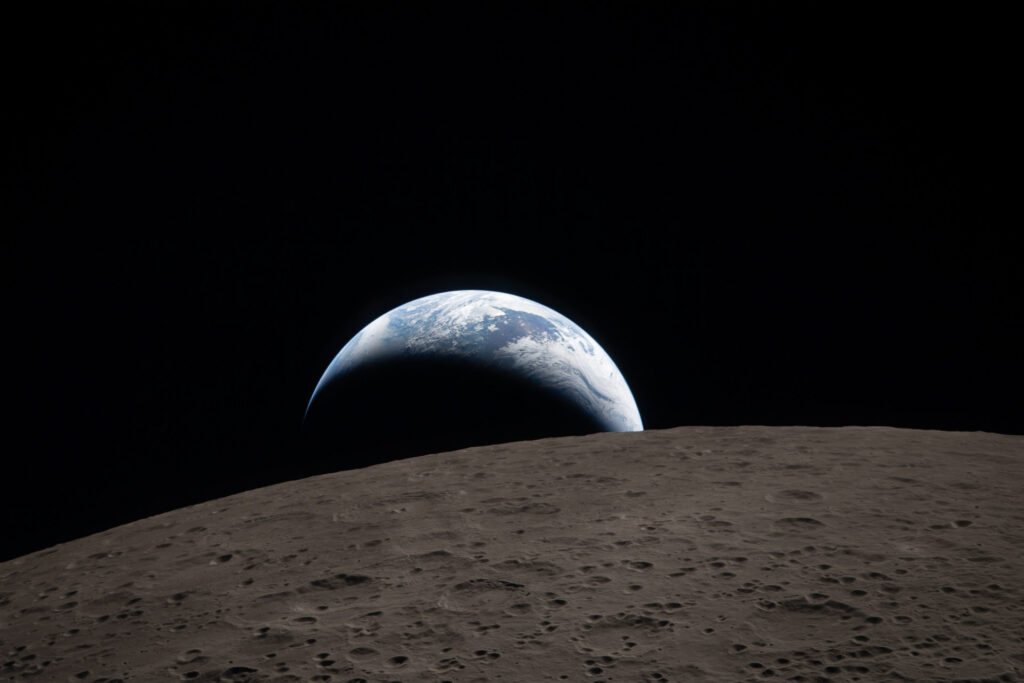
Credit: NASA.
Unless you’re in hiding, you’ve likely seen the continued coverage of NASA’s Artemis II mission around the Moon. It’s everywhere. Four astronauts — Commander Reid Wiseman, Pilot Victor Glover, Mission Specialist Christina Koch, and Canadian Space Agency astronaut Jeremy Hansen — have embarked on a mission never done before.
They’ve travelled further from Earth than any group of humans in history, breaking Apollo 13’s record at an estimated 252,756 miles from home, and the images are incredible.
I’ve become deeply invested in the latest space mission. In a time where it’s very easy to give up on humanity; daily war updates, cost of living crises and what seemed to be a group mental breakdown from those in power. This mission is a timely escape and reminder of what we’re capable of.
Some may claim it’s a planted distraction from the powers that be, while others will suggest it’s a huge waste of money – reports suggest the mission is costing billions of dollars. Those things may be true, but if we detach ourselves from that and look at the images coming from the mission, we can appreciate how awesome this feat truly is.
Photographs are slowly being fed into the mainstream. When I see the curve of the Moon, the tiny, partly lit Earth, I begin to understand just how powerless we are in the grand scheme of the Milky Way and that’s just one solar system in a larger universe.
This is where photography does something other media simply cannot. Footage, for example, moves on before you’ve finished thinking. Frame after frame, it dictates your pace, pulling you forward whether you’re ready or not.
A photograph stops the clock. It hands you a single moment and leaves you alone with it. You bring your own perspective and interpretation. The image doesn’t change, you do. That’s why an iconic space photograph can hit you differently.
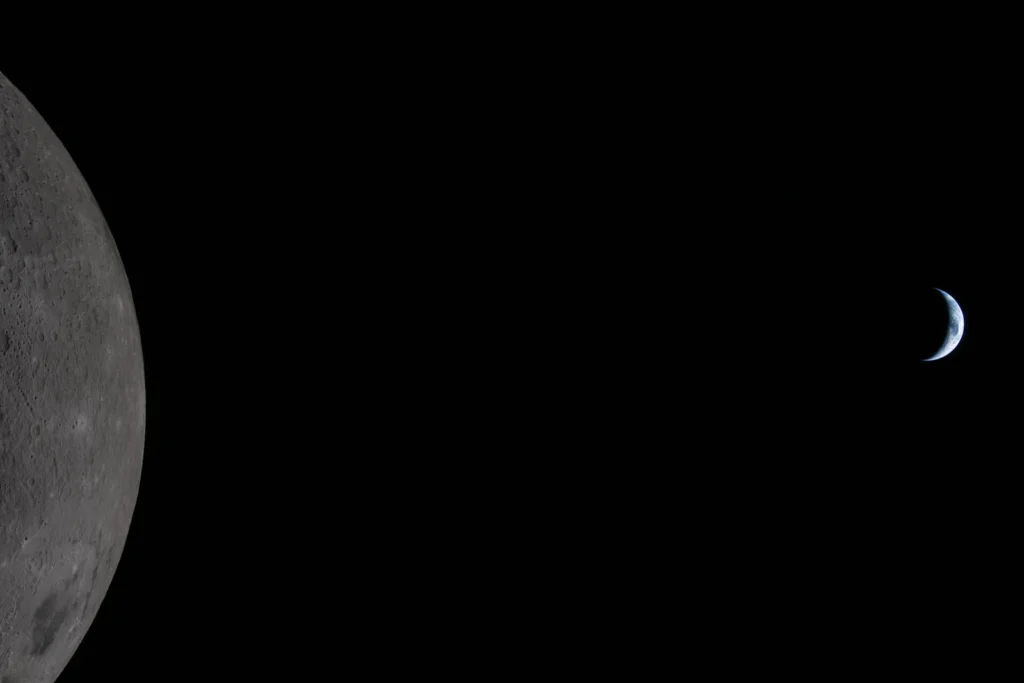
Credit: NASA
But it’s not just the landscapes that grip me. During the lunar flyby, the crew named two newly documented craters. One they called Integrity, after their Orion spacecraft. The other, Carroll, after Commander Wiseman’s late wife, a nurse in a newborn intensive care unit who died of cancer in 2020.
After making the announcement, all four astronauts embraced in tears, while a moment of silence fell over Mission Control in Houston. A moment of grief, 250,000 miles from Earth. If that doesn’t capture what it means to be human, I don’t know what does.
These images remind me just what we’re capable of when great minds come together. It’s an example of what happens when we unify instead of segregate, what teamwork achieves, rather than forces fighting against each other. Four people from different backgrounds and different nations, pointing cameras out of a window at the same pale blue dot.
When all feels lost and impossible to fix, a single photo shot on a Nikon D5 reminds me what it means to be human. That’s powerful.
You can see more photos from the mission via NASA’s website.
More reading: The Apple Engineer Changing the Way You See Nature