
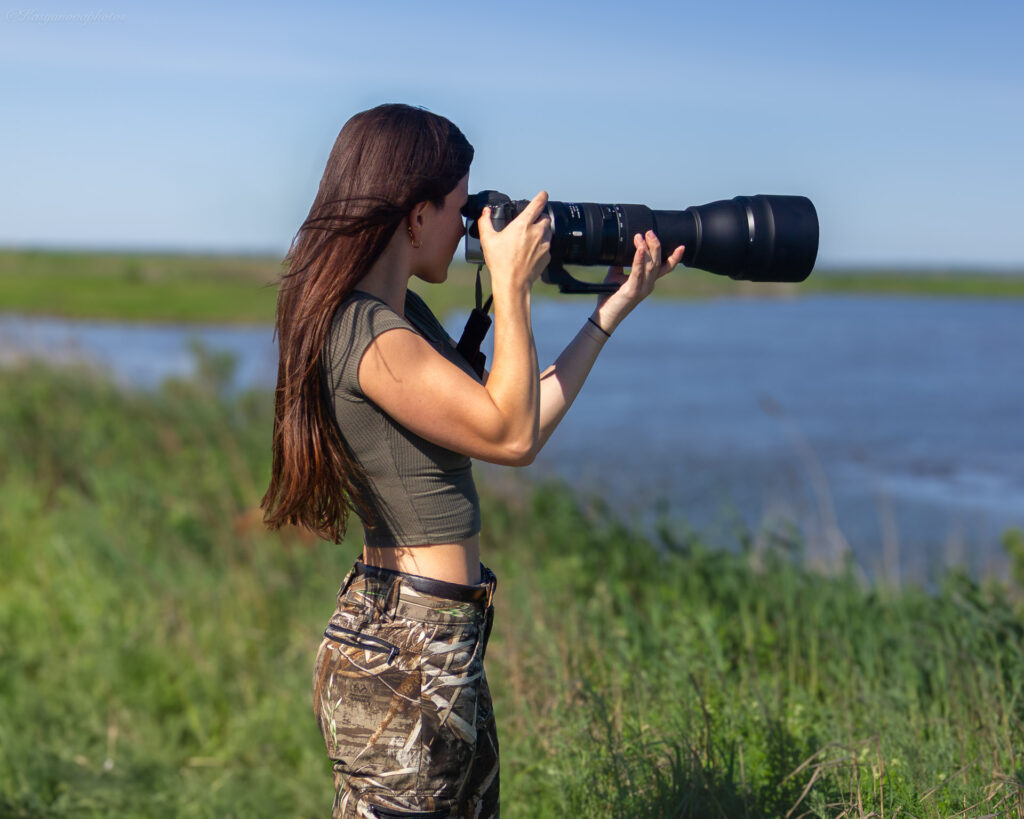
Most wildlife photography is easy on the eyes: a colorful bird, perfect crisp light, or an animal framed just right. It is usually a quiet, peaceful moment, the kind of image people pause to look at for a second, and then move on.
The more time I spend observing and documenting wildlife, the more I realize that stopping at “pretty” means missing almost everything that actually matters. For me, photography has become less about capturing something visually appealing and more about helping people understand what they’re actually looking at.
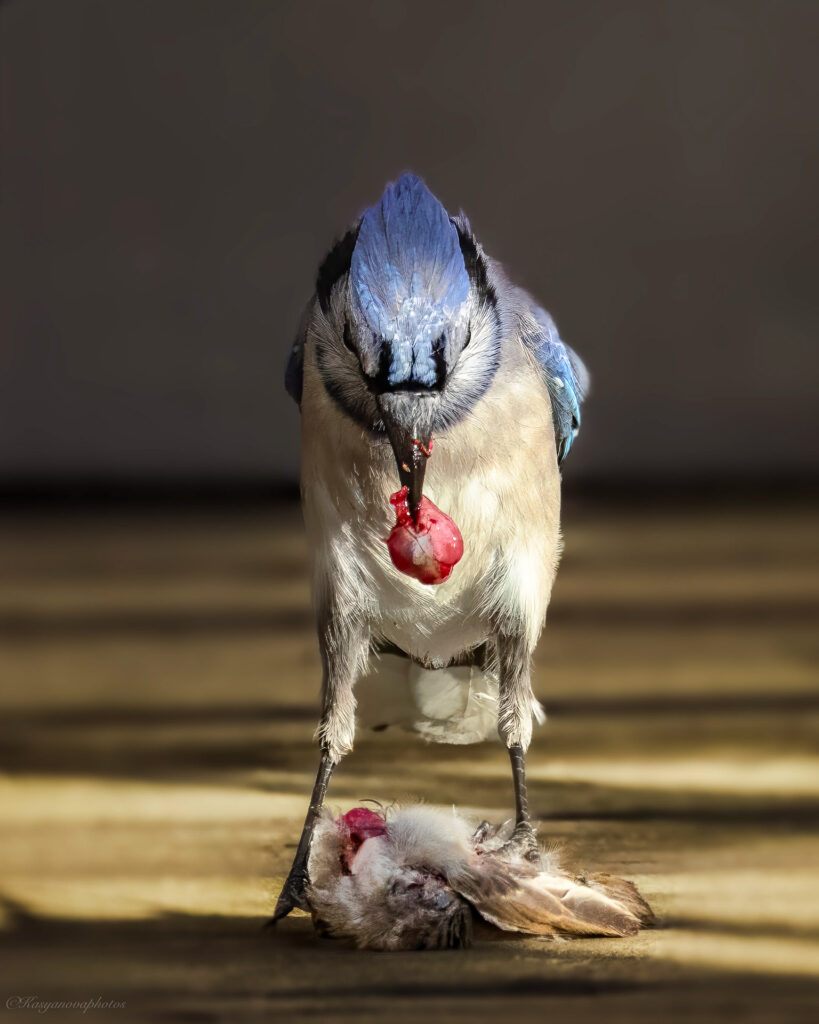
Blue Jay.
This is where that idea starts.
A Blue Jay eating a baby sparrow is not what most people expect to see. It’s uncomfortable. It challenges the idea that nature is always peaceful or beautiful. Many of us immediately try to impose human ideas onto the scene, thinking in terms of fairness or who should live.
But nature doesn’t follow our rules. The Blue Jay eats because they must; survival is all that matters.
We often think of Blue Jays as harmless songbirds, which is what makes this interaction so jarring. In reality, they are opportunistic feeders, and their diet sometimes includes other birds.
Researchers studying Blue Jays found that “a majority of reports involve predation on House Sparrows” (Saenz & Pierce, 2022). Moments like this aren’t exceptions but an intricate part of how nature works.
Looking past that initial reaction matters. When we stop trying to force human meaning onto these moments, we start to understand them for what they are: survival. When we understand that, we start to care about the system as a whole, not just the parts that feel comfortable.
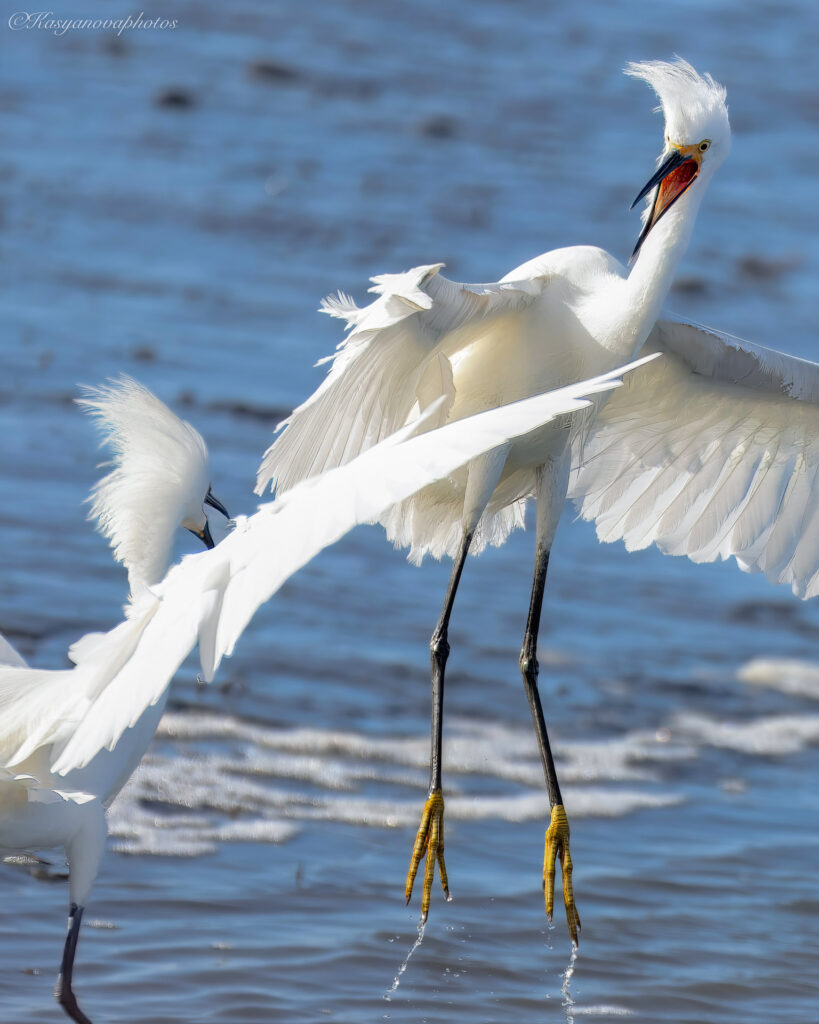
Snowy Egrets fighting.
The intensity doesn’t stop here, but it shifts. This isn’t predator versus prey anymore. This is a competition.
The above Snowy Egrets are fighting for space, access to food, and control over a specific area. In environments where resources are limited, conflict becomes part of survival; it’s not random aggression, it’s a strategy.
This moment shows that struggle exists even within the same species. Survival isn’t just about escaping danger; it depends on navigating others who are trying to do the same.
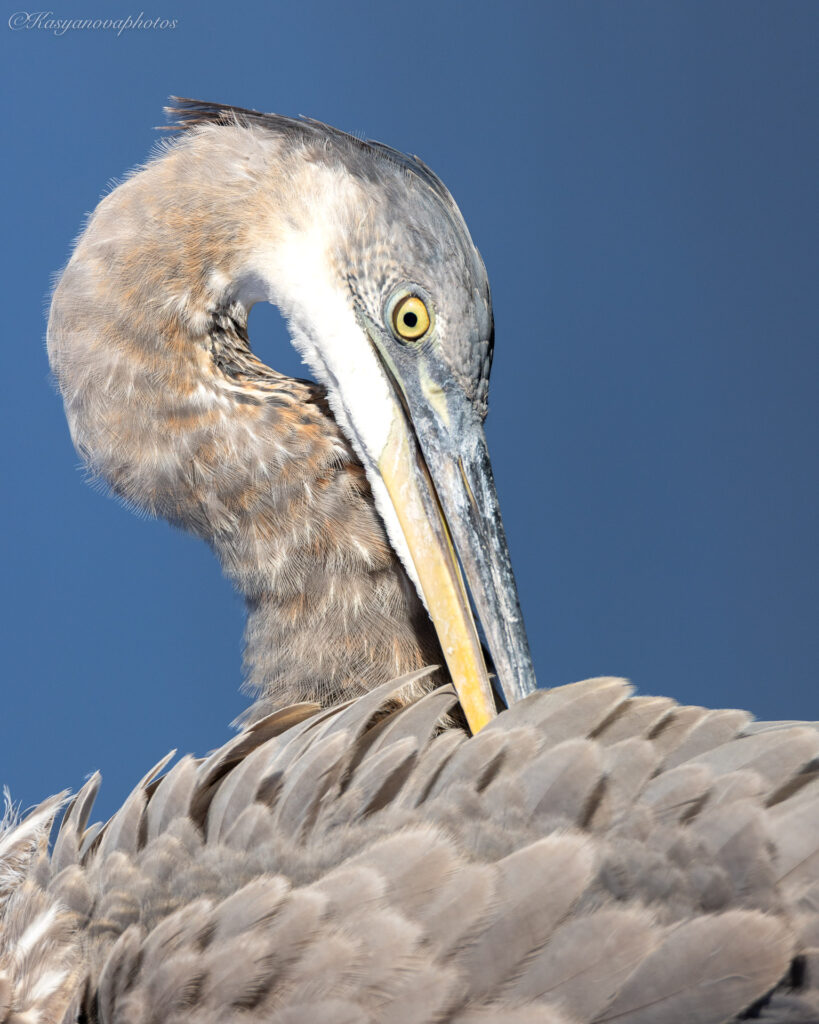
Great Blue Heron preening.
After conflict, there’s this quiet moment of a Heron preening. It’s easy to overlook compared to everything that came before, but it’s just as important.
Preening is survival. Birds rely on their feathers for flight, insulation, and protection. Maintaining them isn’t optional, it’s essential to survival.
There’s this common assumption that animals are “unclean” because they don’t follow human standards, but when you actually watch them, that idea falls apart. So much of their time is spent maintaining themselves, staying functional, and staying alive.
This was something I didn’t always notice. I used to brush past moments like this without giving them much thought. But the more I paid attention, the more I realized how much I was missing, and how important these small, quiet behaviors really are.
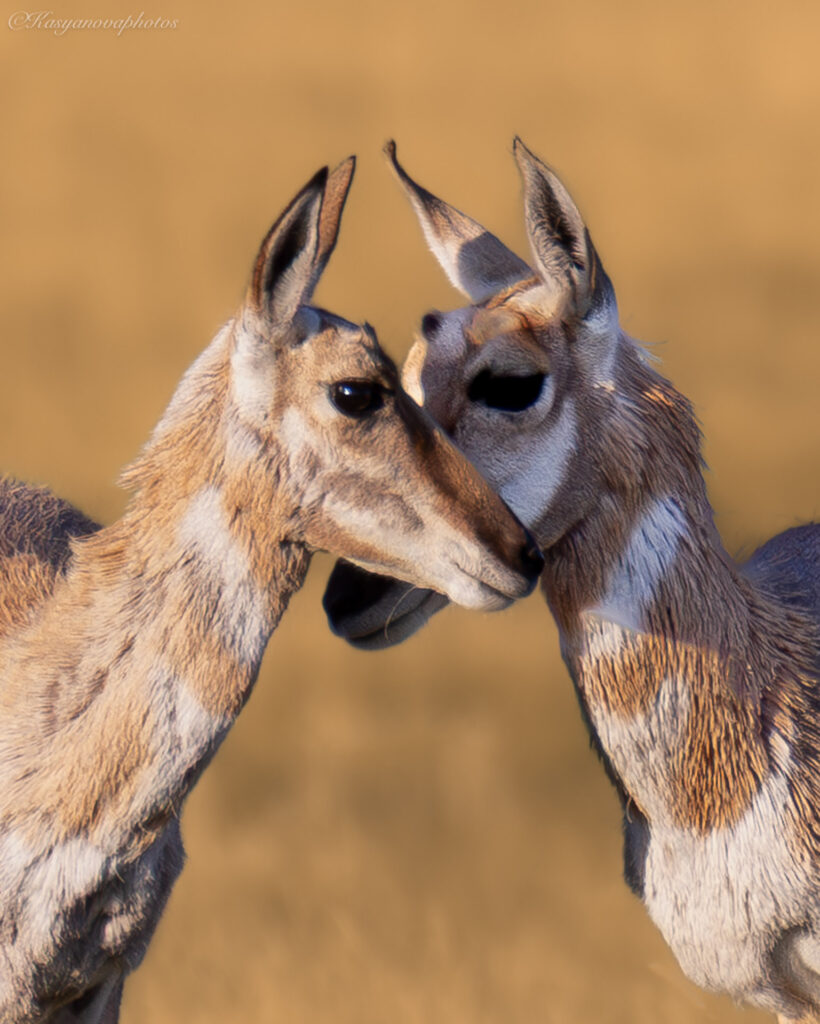
North American Pronghorn.
This is where the story softens.
Two Pronghorn gently touching heads, the stillness of it, the open silence around them, feels like you’ve stepped out of everything that came before. It’s calm and subtle, yet it carries just as much meaning.
“Pronghorns are social animals, gathering in relatively large herds”, and “depend on their eyesight and speed to escape enemies” (Schemnitz, 1994). What a moment like this makes clear is that those instincts don’t disappear when the threat does. Connection is part of the same system. It’s another way of staying aware, and staying alive.
What looks like a simple interaction is actually part of something much bigger.
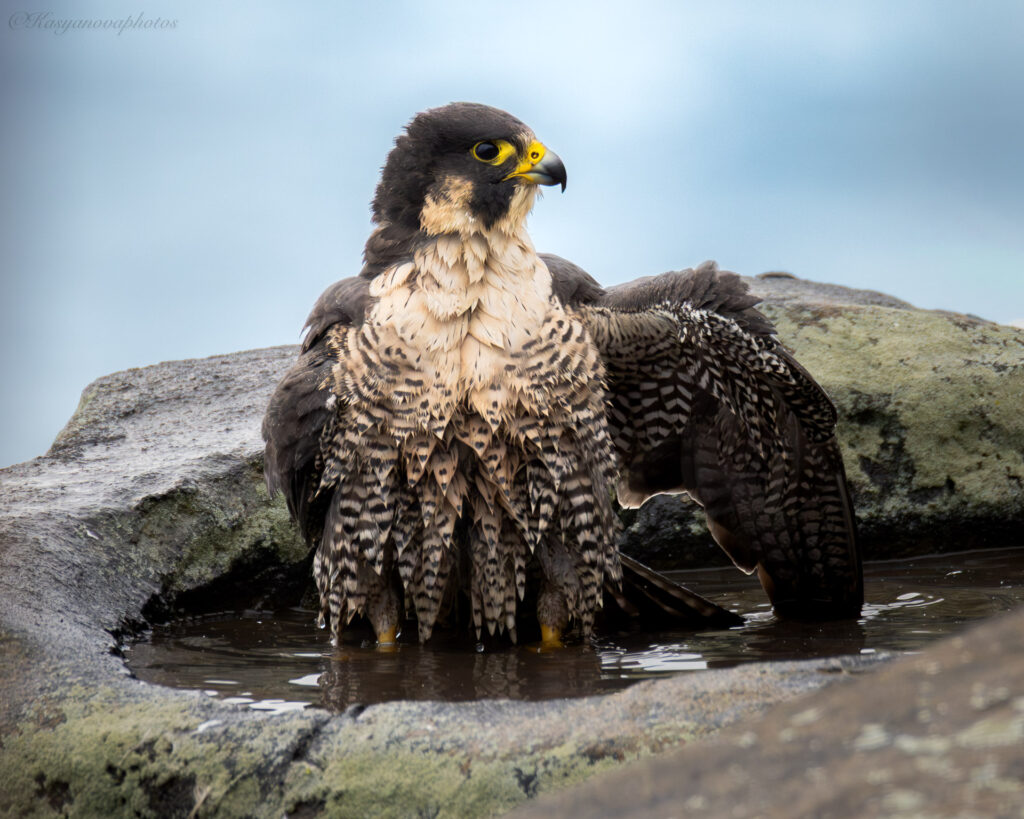
Peregrine Falcon.
Finally, a secret moment tucked away from view, a moment most people would never think to look for.
A Peregrine falcon bathing in a small pool of water tucked into a cliff. What makes this even more interesting is that the water likely wasn’t always there. It existed because of an unusually heavy winter, with snow building up and then melting into temporary pockets.
Without those shifting conditions — that specific winter, that specific cliff face, that specific thaw — this moment simply wouldn’t have existed. It’s the kind of thing you could spend years in the field and never stumble across again.
That’s what makes it important. Weather, landscapes, timing, everything connects. Sometimes those connections create small, rare windows where something like this can happen.
All of these moments are different. Some are intense, some are quiet, some are easy to understand, and some take more time. Yet, they all point to the same idea: wildlife isn’t just something to look at. It’s something to understand.
When we take the time to look deeper, we start to see that every interaction, movement, and behavior is part of a larger system. Most importantly, that system isn’t always separate from us.
Their survival is tied to the same environments we depend on.
The Falcon finds water because a winter was heavy enough to leave some behind. The Pronghorn stay together because the open land gives them nowhere to hide alone. The Blue Jay eats, and moves on. These aren’t distant things, rather, they’re happening in the same landscapes, under the same pressures that shape our lives too.
So, for me, photography is about creating something that makes people pause long enough to see what’s really going on.
It is no longer just a photo once you truly understand it.
More reading: Photography Opened My Eyes To Beautiful Local Ecosystems