
All images by Joakim Stolt. Used with permission.
A lot of us are trying to break free. Free from our insecurities, the masks we wear daily to prevent people judging us negatively. That’s not because we’re bad people, but because life puts a fear within us that stops us from being who we truly are: there’s a barrier we’re desperate to move past. Photographer Joakim Stolt’s work reminded me of this constraint.
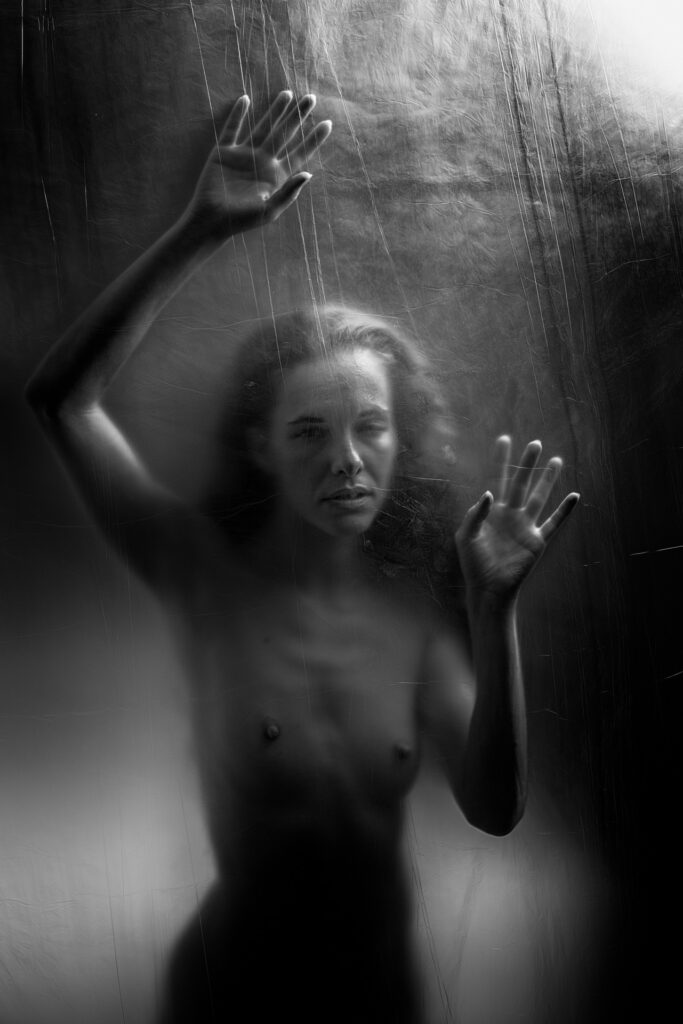
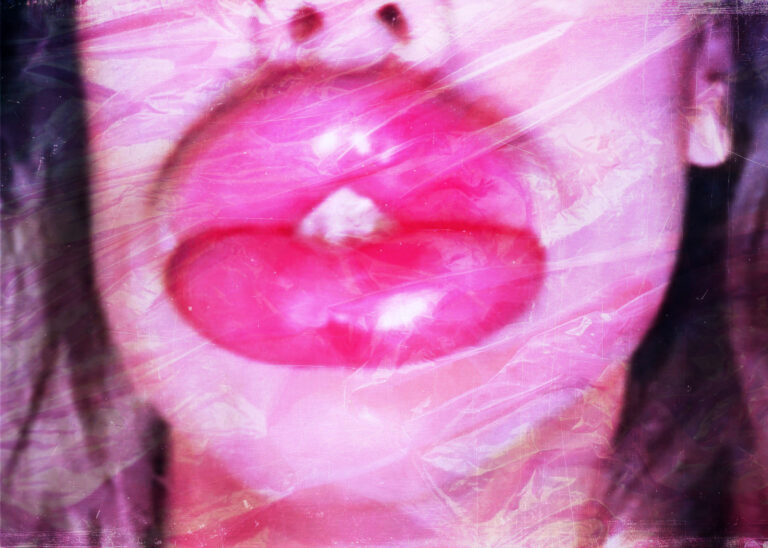
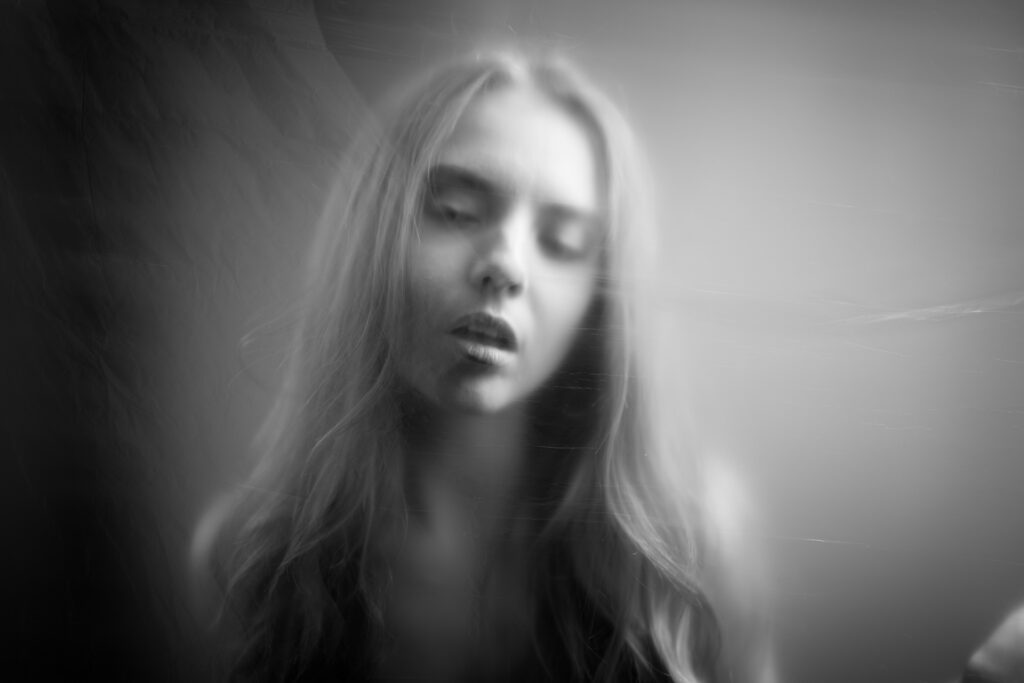
Beneath the Surface is a portrait photography project shot in small, claustrophobic hotel rooms. His subjects, illuminated by a small pocket of light, pose behind a clear piece of plastic. In many ways the models look free, but it’s that thin, transparent wall that’s preventing them from fully showing the world who they are.
They’re shouting to the world, but nobody can hear them.
That’s my interpretation after viewing the work. But I wanted to learn more from the project’s creator, and Stolt was more than happy to answer some of my questions.
Them Frames: Hey Joakim! What was your motivation to start this series?
Joakim Stolt: Initially, Beneath the Surface grew out of another series, On the Other Side. Many of my model sessions take place while I am travelling for work, usually in small hotel rooms rather than in a conventional studio.
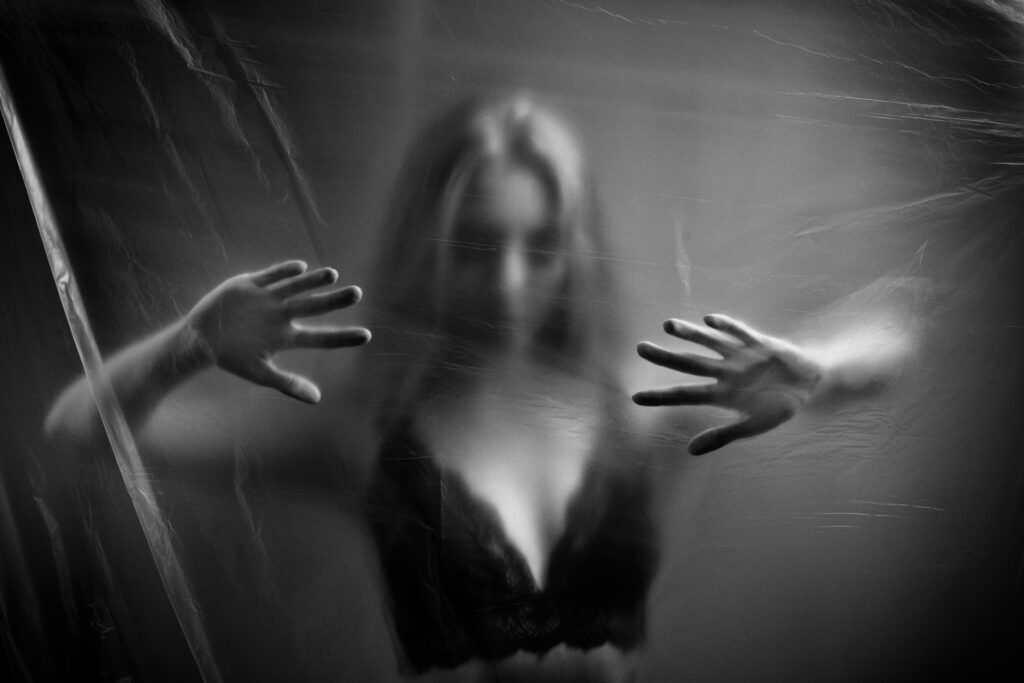
I wanted to place the model behind a thin, transparent plastic cover. My initial intention was partly to use the plastic as a diffusion material, but also to create a sense of mutual inaccessibility: the model and the viewer could see each other, but there would always be a physical barrier between them.
During one of the sessions with Frida, she looked upwards towards the light and reached her hand towards it. Combined with the reflections and distortions created by the plastic and the light, the image suddenly reminded me of someone beneath the surface of water, reaching towards the light and fresh air above.
That was when the idea of Beneath the Surface began to emerge. The plastic was no longer simply a technical device or a barrier. It had become a surface — something separating two spaces while still allowing us to see through it.
From there, the project began to develop into something of its own.
Them Frames: Can you tell us more about the models in the work? Who are they and how did they initially respond to the idea?
Joakim Stolt: I don’t really see this kind of photography as something created by the photographer alone. It is a collaboration. I explain my ideas to the model, set up the scene and the lighting, and then the model is free to pose and explore. We look at the results together and decide what might need to be changed, adjusted or developed further. Some of the images emerge from that process rather than from a pose I had planned beforehand.
The two models I worked with on Beneath the Surface were Anna and Frida. I worked with both of them in 2018 and 2019.
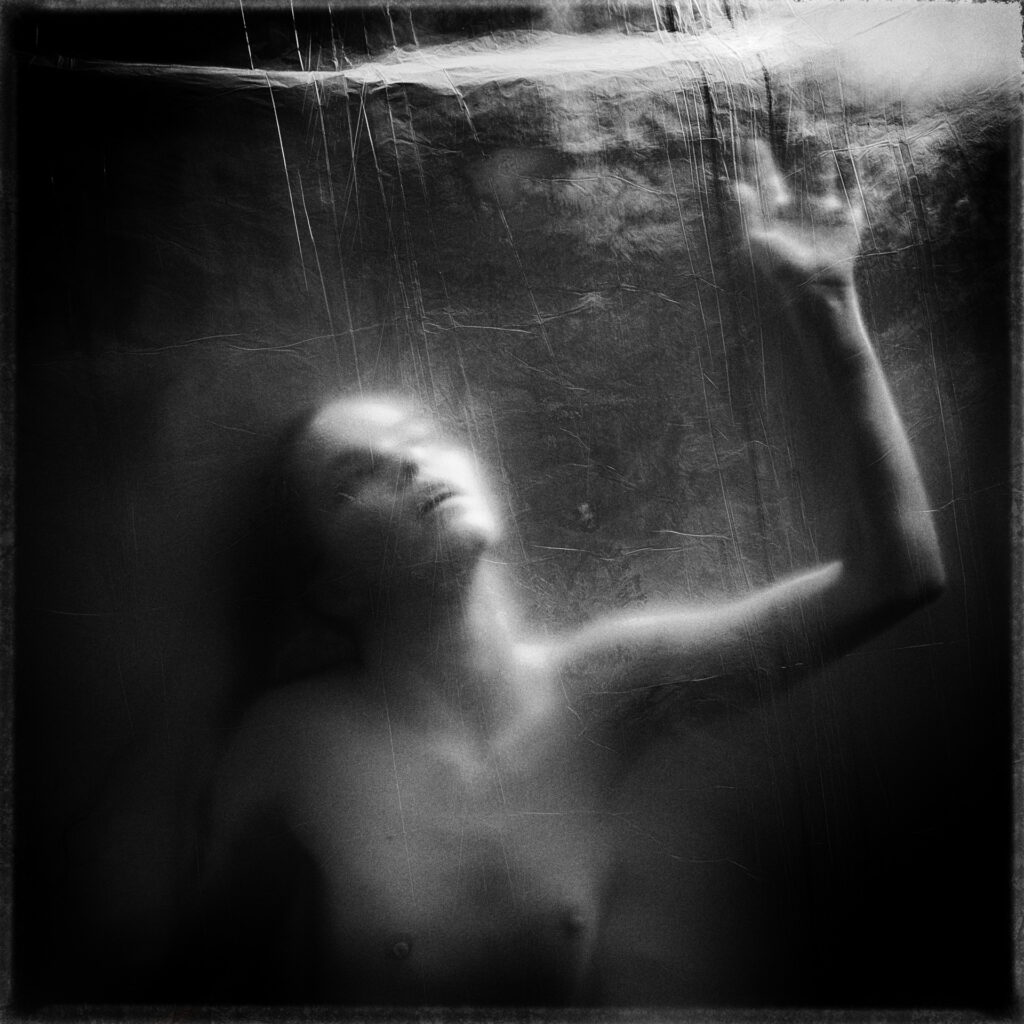
Frida.
At the time, Anna was relatively new to modelling, at least from my perspective. She was mainly working with fashion and some boudoir. Frida was more experienced and was already an established actress in Hungary. She was also very creative and brought her own ideas and interpretation into the sessions.
They approached the work somewhat differently, but both were very engaged with the idea and contributed to how the project developed. For me, that contribution is an important part of the work. The final images are not simply photographs I have taken of them; they are the result of a dialogue between the model, the material, the light and my own ideas.
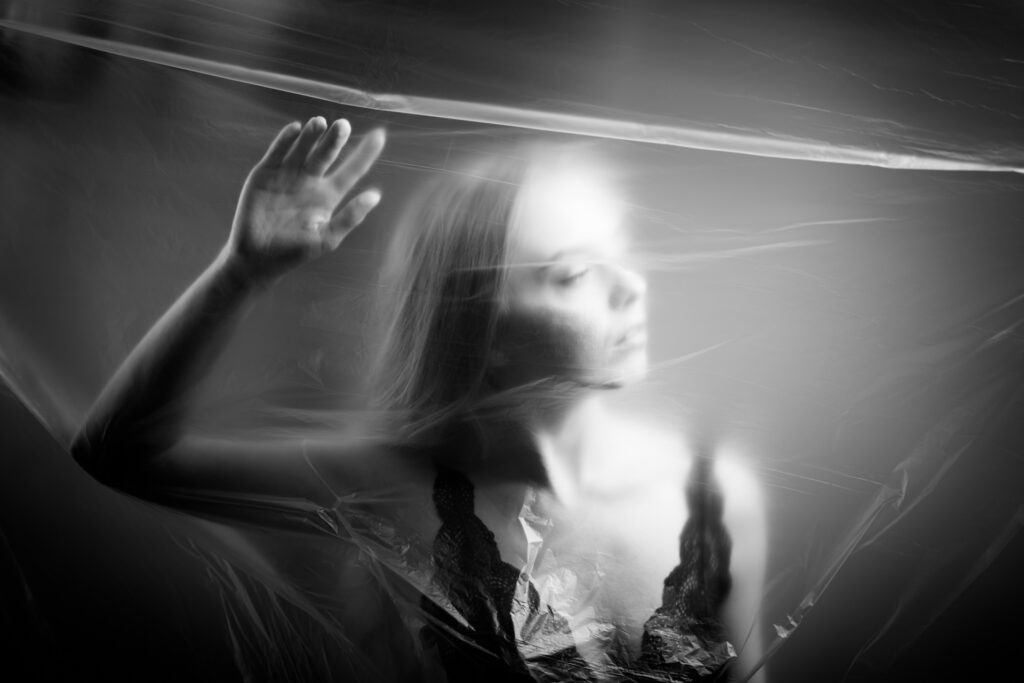
Anna.
Them Frames: What are some of the challenges to creating this work and getting the message across to your audience?
Joakim Stolt: One of the main challenges is the lighting. If too much light comes from the camera side, the reflections in the plastic disappear and what remains can simply look like a person wrapped in a plastic sheet. The reflected light is therefore essential to creating the surface and the sense of depth.
The distance between the model and the plastic is also critical. To get the effect I am looking for, the model needs to be very close to the material, almost touching it. But if the skin actually touches the plastic, it can create unwanted dark areas where the plastic no longer reflects light back onto the skin.
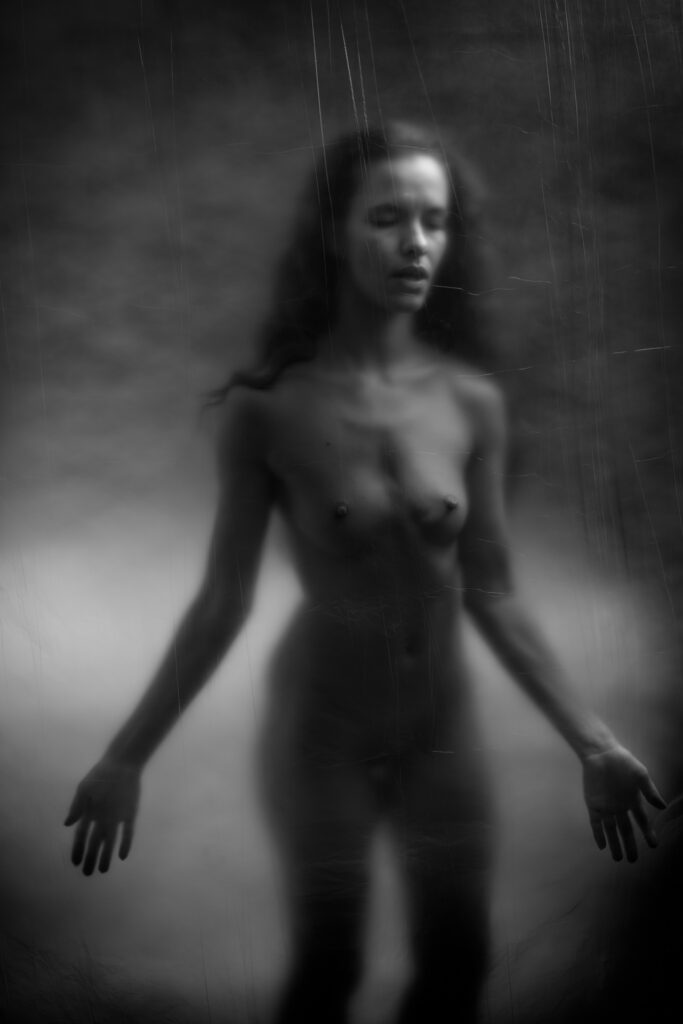
There is also a less technical challenge: time. Because the work is a collaboration between the photographer and the model, the images develop through experimentation. We try different poses, positions and movements, look at the results and then adjust and develop them. That process needs time, and I think it is an important part of the work.
As for getting the message across, I don’t necessarily want every aspect of the concept to be immediately understood. I would rather the images create a feeling of separation, restriction or being beneath something, and leave room for the viewer to find their own interpretation.
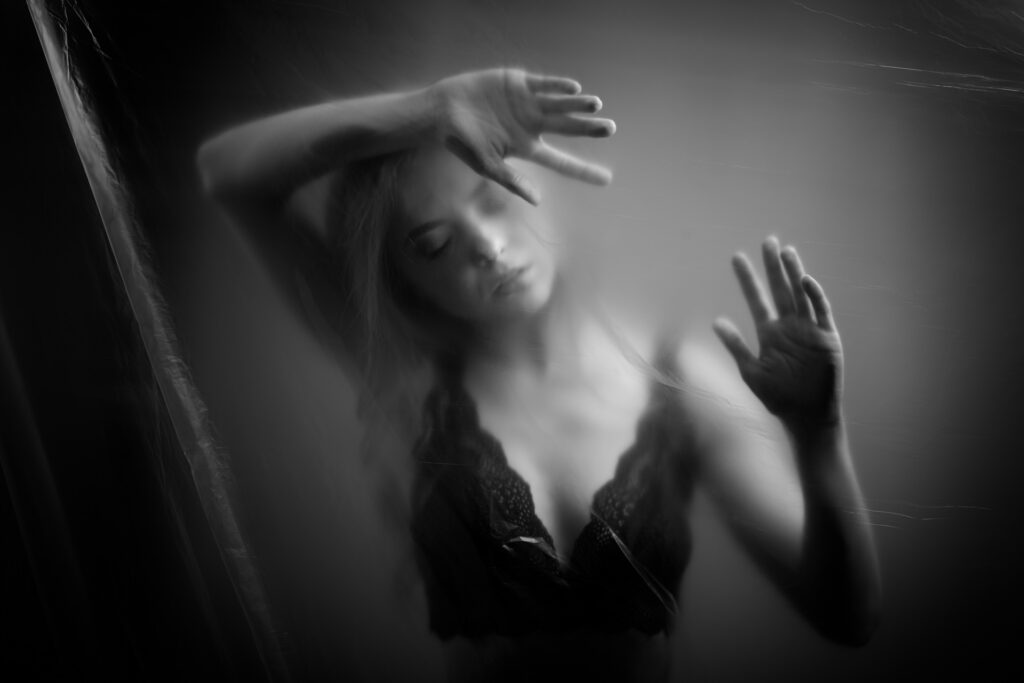
Them Frames: In terms of what you create, where do you hope to take this series in the future?
Joakim Stolt: I see several possible directions for the project, but I don’t want to decide too much in advance. One natural direction would be to continue exploring the idea of barriers and different forms of separation.
During one of the sessions, Frida told me that the plastic gave her a feeling of restricted breathing and reminded her of her own experience with asthma. That made me realise that the barrier could represent something very different from the boundary between the living and the dead. It could be a barrier between health and illness, freedom and restriction, or other physical or psychological states.
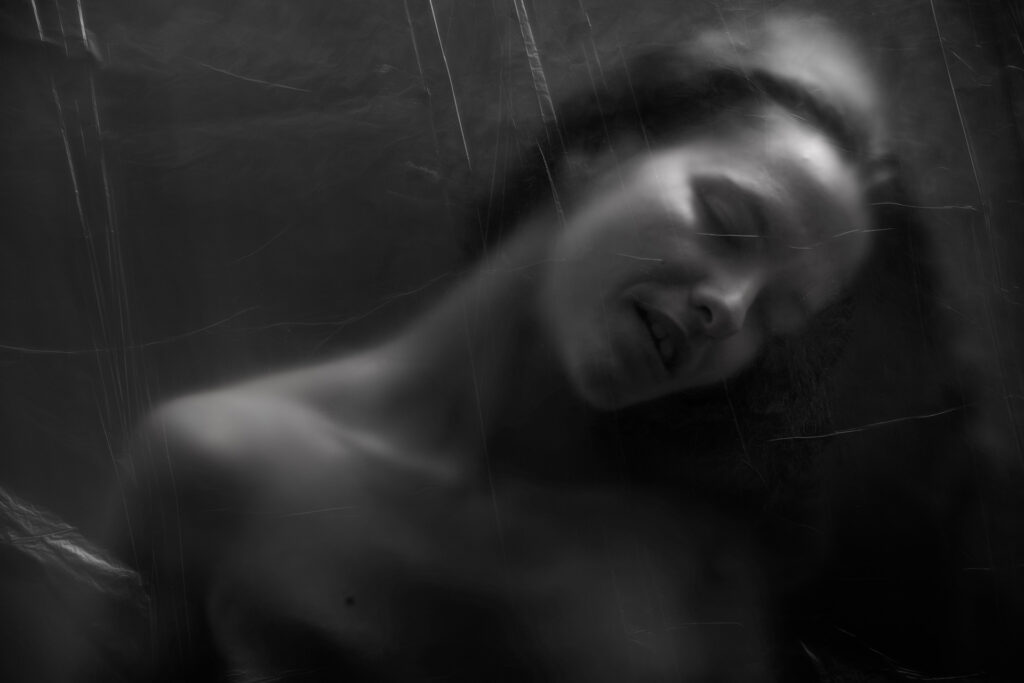
Another possible direction would be to leave the idea of the surface behind and explore water itself. That could lead to very different images and perhaps become a new concept in its own right. I’m not sure yet whether that belongs within Beneath the Surface or should become a separate project.
For me, that uncertainty is part of the attraction. I don’t feel that I have reached the other side of the surface yet. I’m happy to let the project develop through the process.
You can see more work by Joakim Stolt by visiting his website.
More reading: The Dark, Moody Milky Way Photography of Roxana Florentina