
All images by Michael Soluri. Used with permission.
Space exploration has held my attention for years, and the Artemis II mission earlier this year turned that up a notch. Rocket launches, photos of Earth, vibrant frames of our solar system: there’s no shortage of awe-inspiring shots. What we see far less of are the images that need a unique perspective and a closer look, which brings me to Michael Soluri.
Soluri is one of the few photographers to have had access to Kennedy Space Center for more than 25 years. He has photographed several missions in that time, but it was his ongoing project, Cave Art Continuum, that stood out to me.
Rather than only shooting from a distance, he gets close and photographs the beautiful wounds the hardware bears after decades of missions. Erosion, general wear and tear, the marks of equipment that has done its job. It’s a side of space exploration I’d never really thought about, and I couldn’t stop looking.
In this interview, Soluri and I talk about Cave Art Continuum and what it’s like to work inside a restricted site for so long. Let’s get into it.
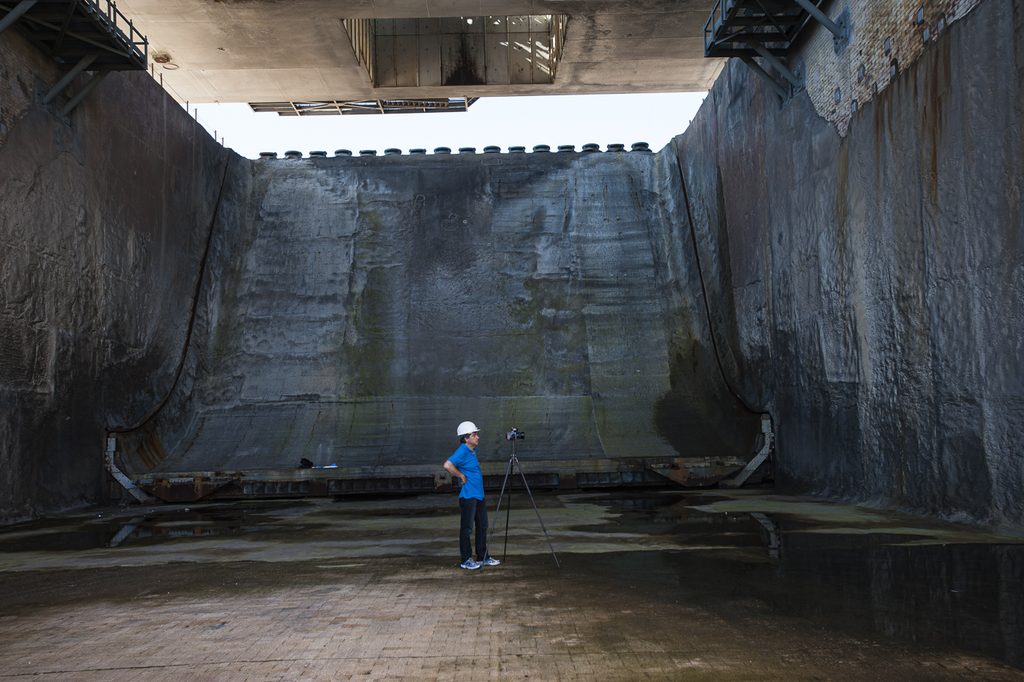
Michael Soluri.
Them Frames: Hey Michael! Please can you tell us how you initially gained access to NASA’s Kennedy Space Center, and under what circumstances?
Michael Soluri: Since access to any NASA facility is typically limited to credentialed media, I began in the late 1990’s covering space shuttle launches and the building/assembly/testing of the lego-like parts for the ISS (International Space Station).
After 9/11, accreditation became significantly more rigorous. During those years I licensed my coverage of shuttle launches and portraits of shuttle technicians for media like Discover magazine, space.com and Ad Astra. It was all a vast learning curve technically and how to “read-the-room” to navigate KSC and NASA work culture.
Gradually achieving that led to my unprecedented multi-year access to document (behind-the-scenes) the New Horizons Pluto system mission, STS125 Hubble SM4, Parker Solar Probe etc.
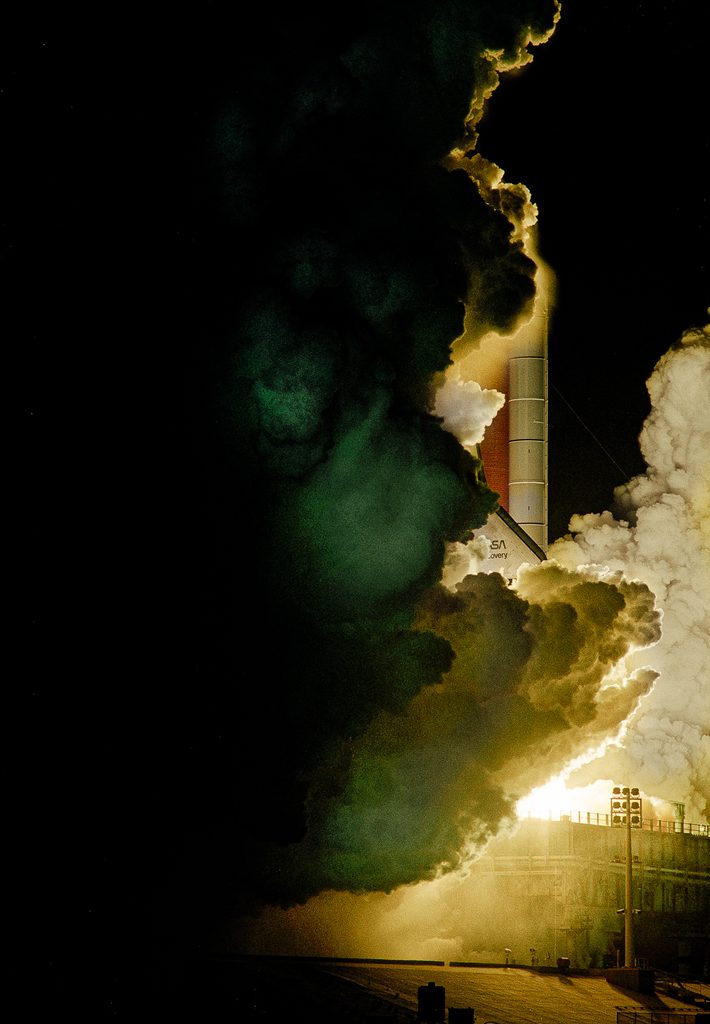
Them Frames: With such incredible infrastructure at the Space Center, it must be tempting to create wide, open shots. But for this series, you chose to get close, masking the sense of where you actually were – why did you opt for this creative choice?
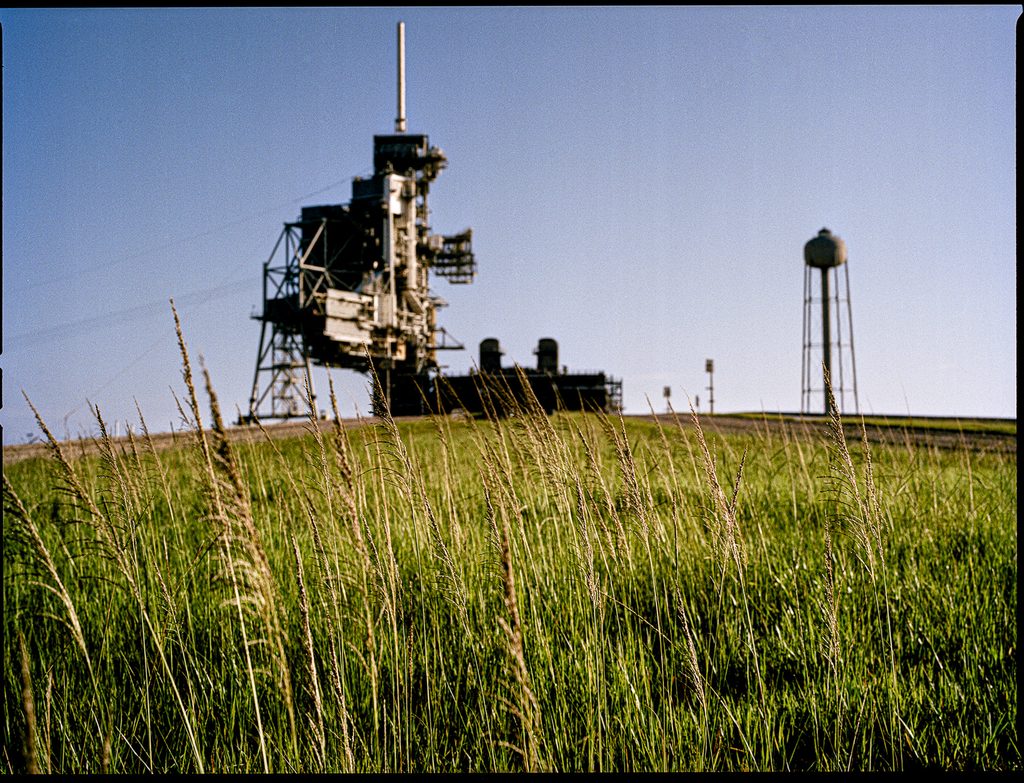
Michael Soluri: With several decades of exceptional access into NASA’s Kennedy Space Center, I explored miles of highly restricted launch pad infrastructure– massive, weather-worn steel structures that rise along the Space Center’s coastal landscape like Richard Serra sculptures.
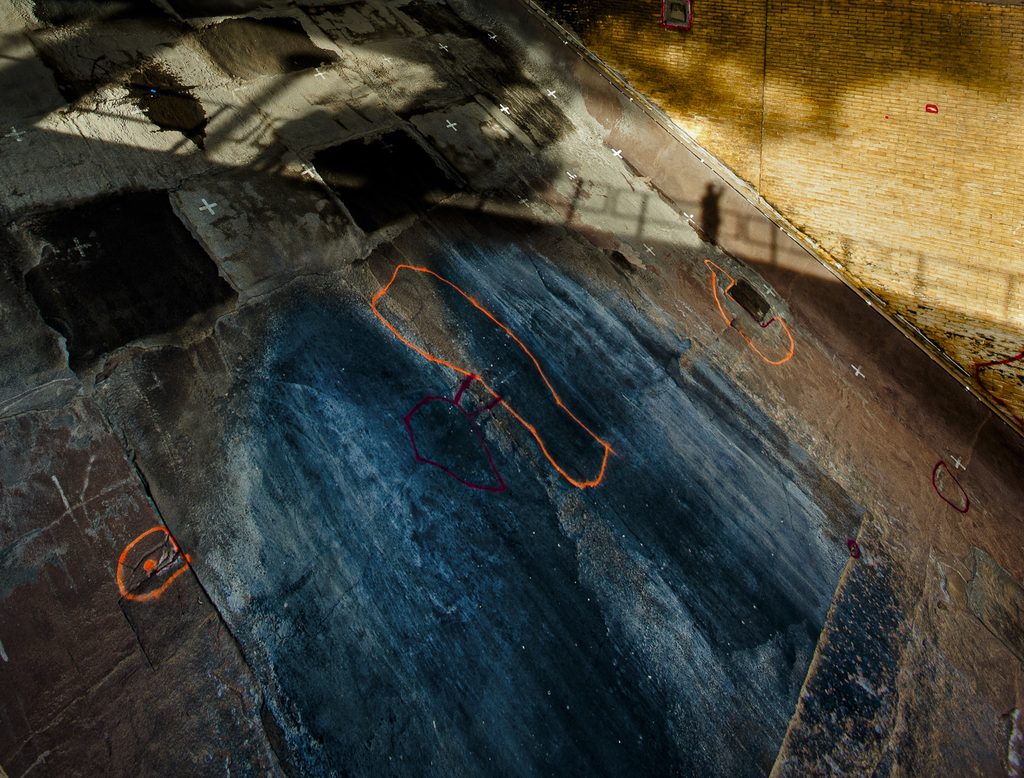
But it was the discovery of crude geometric symbols in a trench beneath a soon-to-be launched space shuttle (headed for the Hubble Space Telescope) that catalyzed my interest with cave art, planetary geology and astronomy.
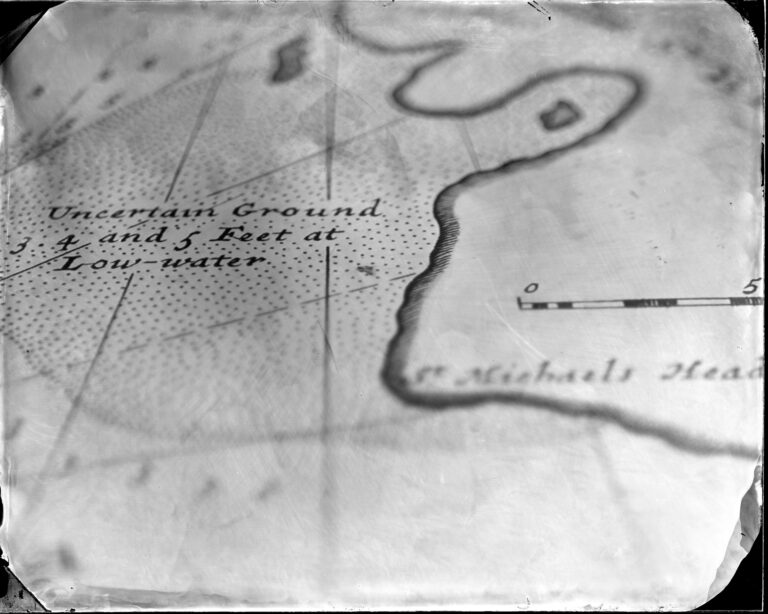
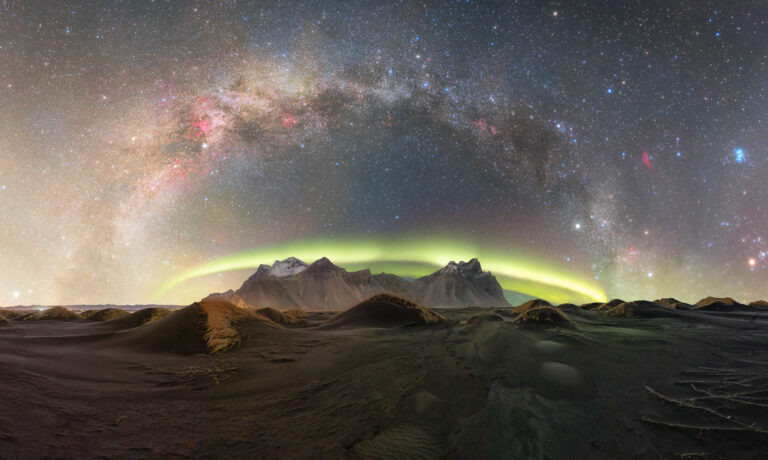
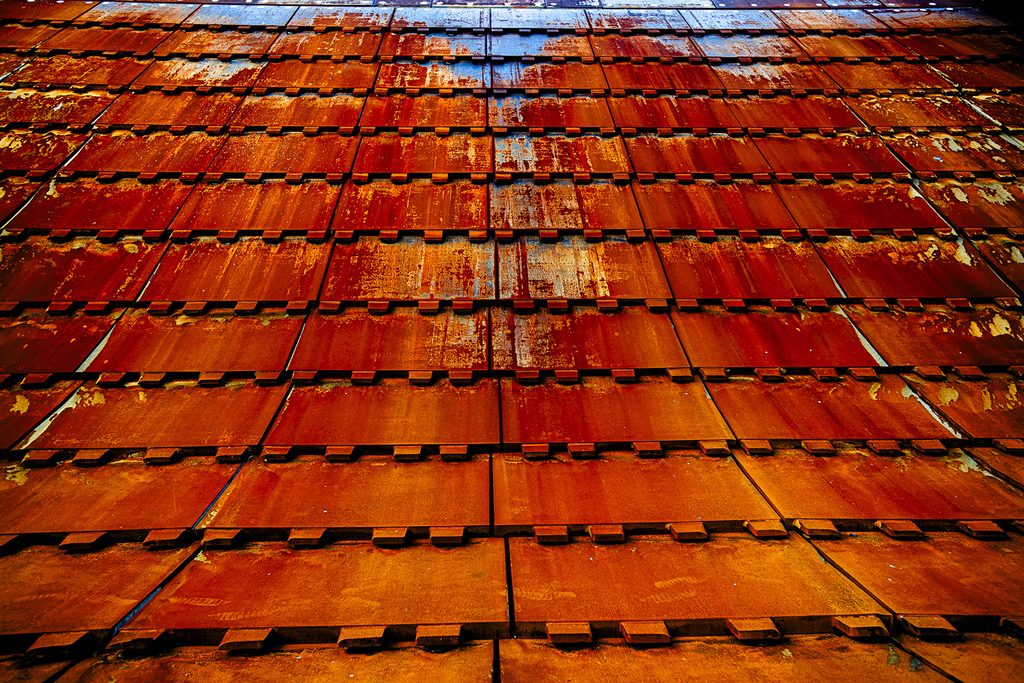
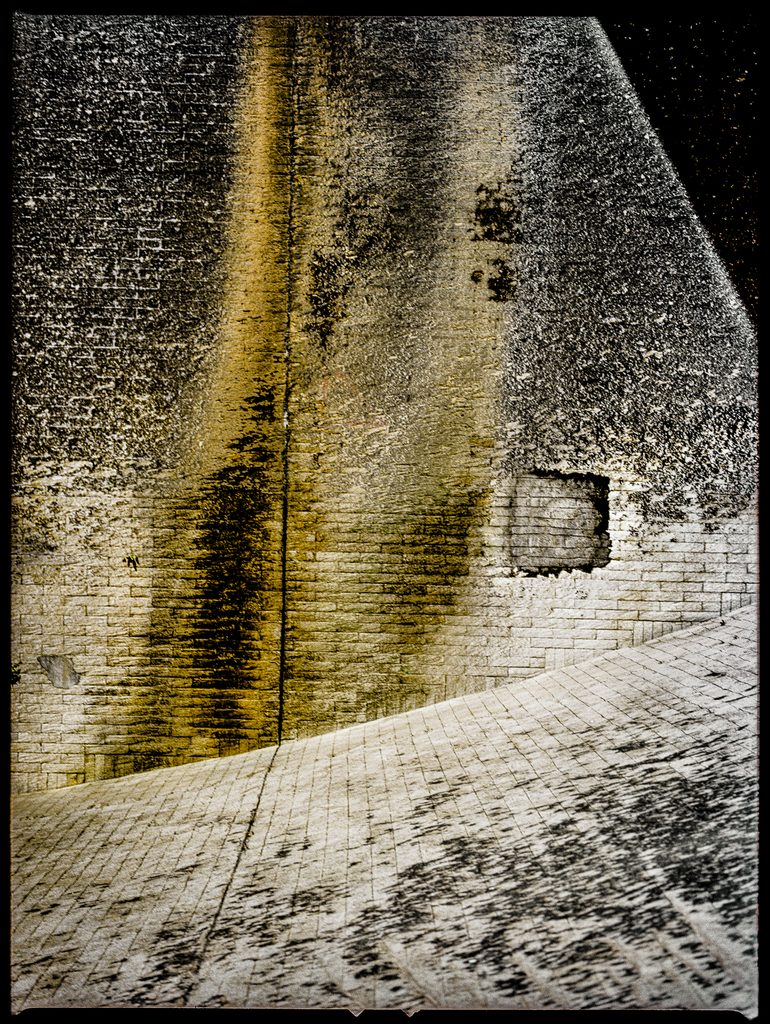
So what is Cave Art Continuum: 2009 – Present? It is an analogue photography project that explores a metaphysical arc between pre-historic human expression on the walls of fire-lit caves and modern space age surfaces transfigured by rocket-powered fire.
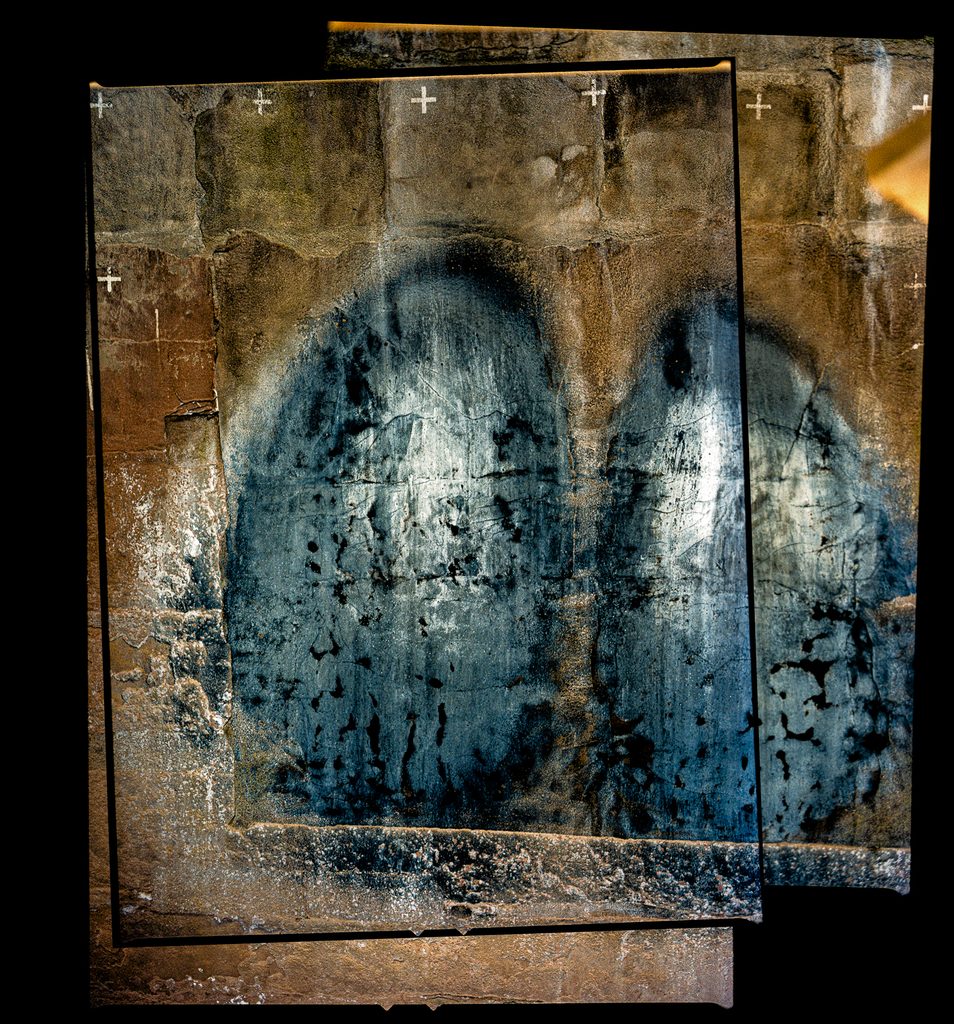
Montage of 3 full frame color images of south deflector for the space shuttle’s liquid fuel main engines
Them Frames: As you say, this is an analog project, please can you share camera and film roll choices,and why do they work for you in this specific series?
Michael Soluri: A few things to consider. My approach to thinking photographically is not just of the technical (analogue and digital) but embracing the history of photography and art. In this case I connect to the thinking of artists like Cartier Bresson, Irving Penn, Aaron Siskind, Minor White, Nathan Lyons, Richard Serra and Henry Moore among others.
With a Hasselblad H2 645 format + an 80mm lens, I worked with Kodak color negative and Tech Pan B&W film documenting these vast, multi-storied metamorphosed surfaces.
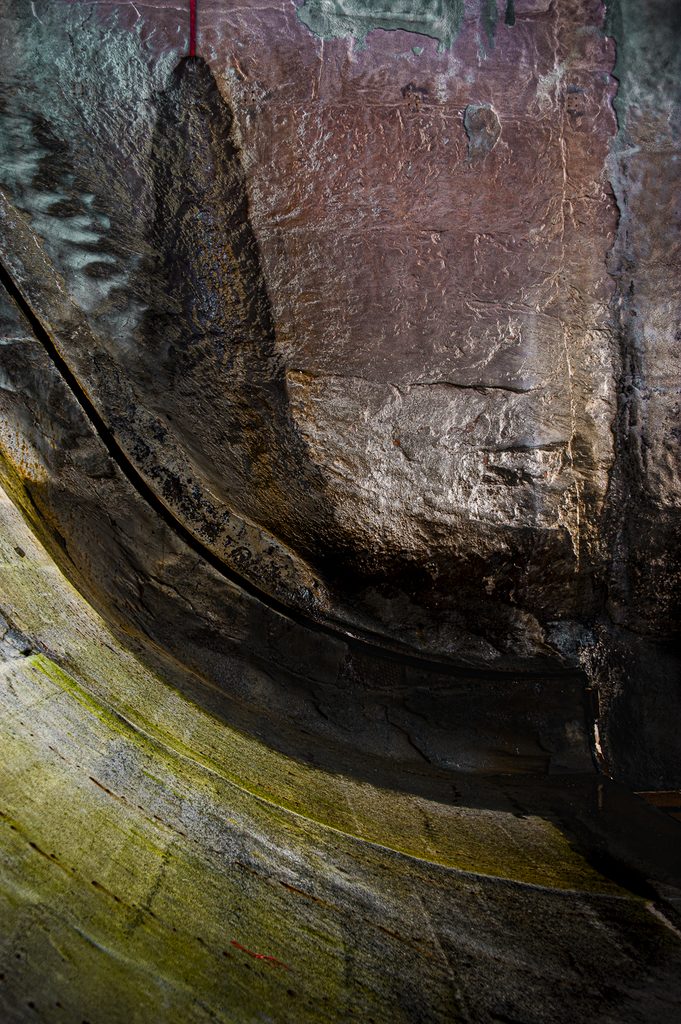
Consider that these other-worldly landscapes were created from the fire and water of more than a half century of rocket launches. So by abstracting their charred, tactile, surfaces devoid of scale, and then after years of editing and juxtaposing, these images are about the unintended signatures from the machines that had first begun transporting humans and their tools off these earthly cement and steel gateways into the time and distance of our solar system.
Them Frames: How were you able to make space for making the images, but without disrupting any of the highly technical work people were carrying out at the Space Center?
Michael Soluri: The scale of the Space Center is immense and so is the security. Once credentialed, working photographers and media are strictly limited to driving only to the press site and escorted to and from anywhere beyond.
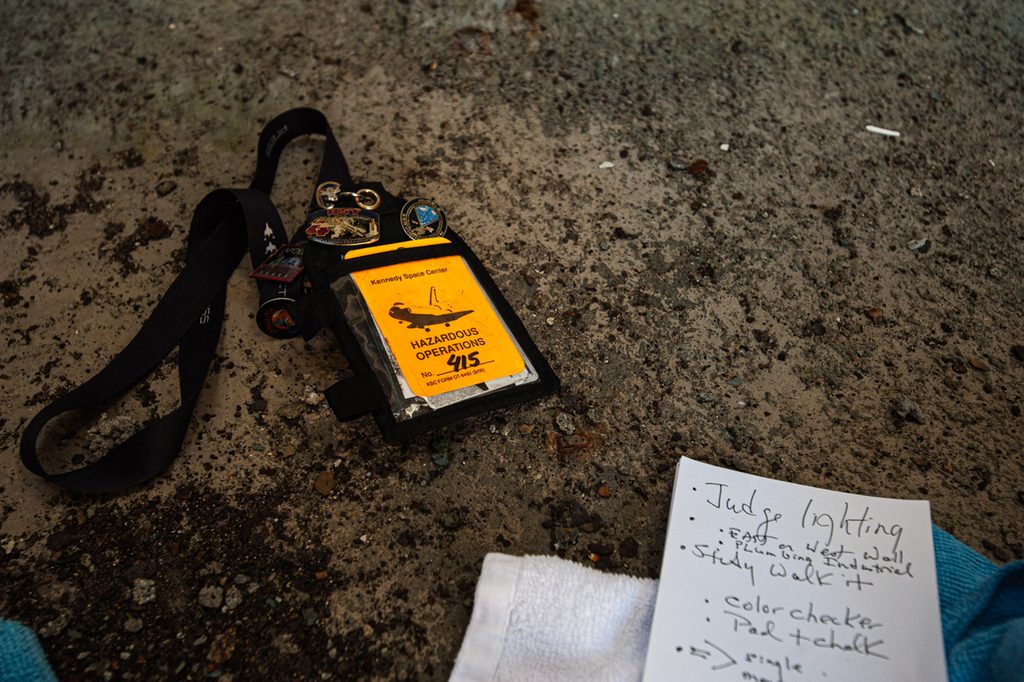
Even from the press site, a 300 to 600mm lens is essential for SpaceX and SLS-Artemis launches. However, for my series Cave Art Continuum: 2009 – Present required approved access and an escort to photograph within the high security launch pad complexes and their respective flame trenches.
Living in New York City, my access was usually coordinated for a time (usually early morning or late afternoon) about two weeks after a launch. On one occasion I was given remarkable time, about four weeks before a launch. Since I am working beneath the launch pad, it is a matter of being very prepared, organized, following the rules (including a hardhat), and using common sense. Even with all that, conditions can change and the need to go with the flow is a part of the rocket ranch culture.
Them Frames: I imagine there’s a lot of Health & Safety restrictions. How did you manage that and what did you need to do to ensure you created what you wanted but remained safe?
Michael Soluri: The only time I needed medical clearance was having access to the STS125 astronaut shuttle crew once they were in quarantine for their mission to the Hubble Space Telescope. The results of that remarkable, humbling access are in my book, Infinite Worlds. Otherwise, common sense concerning one’s health is expected no matter where I photograph.
Them Frames: It’s almost 20 years since the project began. How has your approach evolved and what keeps you energized to keep creating the work?
Michael Soluri: Well, the prospect of photographing the SLS Artemis flame trench and finding opportunities to exhibit and publish Cave Art Continuum: 2009 – Present. It’s also expanding my understanding about early human cave art and symbols.
Since this project is about metaphysical connection, I’ve become more interested in cosmology and philosophy. In addition to reading books like Martin Heidegger’s Being and Time, I’ve connected with space philosopher Dr. Rebecca Lowe at the Mercatus Center/George Mason University.
Them Frames: Have you shown the work to employees at the Space Center? How is it being received?
Michael Soluri: Although examples of this work have been globally published in print and on-line media they have also been exhibited (pre-pandemic) in Italy at Photolux Biennale Di Fotografia and at the South East Museum of Photography at Daytona State College — not far from the Kennedy Space Center.
Moving forward into 2027 and beyond, my goal for Cave Art Continuum is to both exhibit and publish internationally. Ideally, I envision mural size images juxtaposed in ways that challenge the viewer’s perceptions about space, time and uncertainty. A well designed, tactile book would be a very personalized connecting experience. A collaboration with designers, curators and writers juxtaposing my imagery with say interplanetary imagery of surfaces along with the ochre chalk rubbings I made off the flame trench walls.
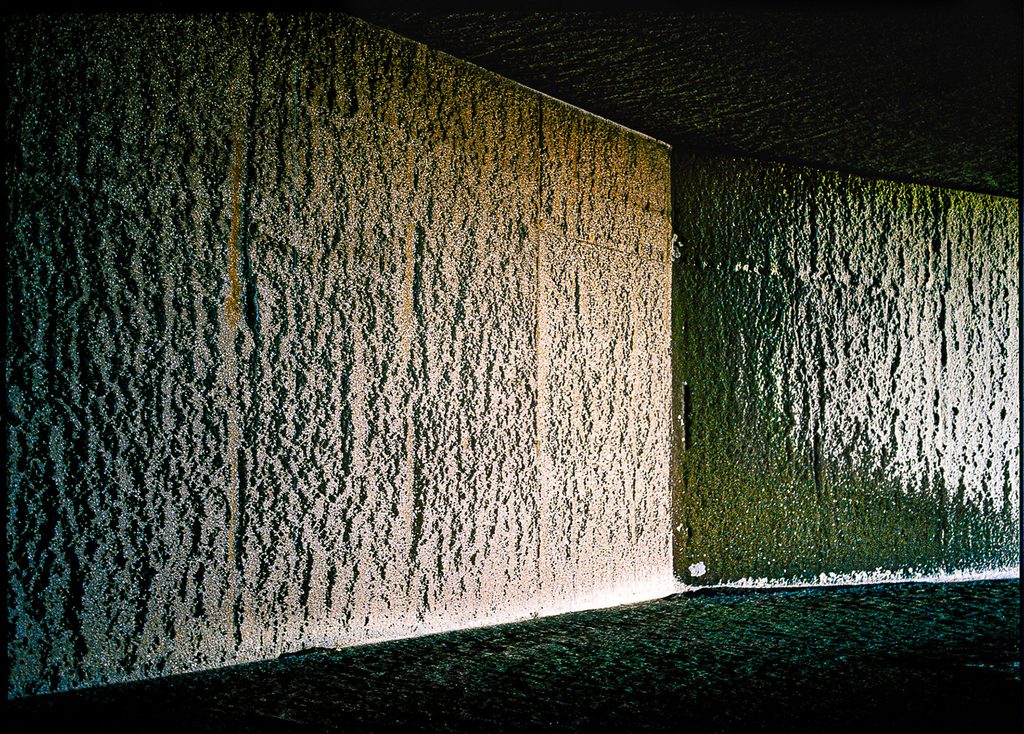
In closing I continue photographically exploring these ideas within the hidden, altered surfaces beneath other historic launch infrastructures. Among them is another former Apollo era site that has been repurposed into a 21st century gateway for the Artemis lunar missions. A departure point scorched with the signatures from the fire of modern-era machines that are lofting humans and their tools off Earth to explore the moon’s surfaces of craters, hills, and caves.
However, the Apollo / Space Shuttle era flame trench I had been photographing in for many years has been demolished. As a result, some of my works are its only representation. A “Lascaux” of the space age had been unintentionally created, accidentally discovered, and then just vanished …
You can see more work by Michael R Soluri by visiting his website.
More reading: Photographer Uses Wet Plates to Discover Hidden Lands