
All images by Michael Carr. Used with permission.
Some photographs are like a Cabernet Sauvignon: they get better with time. It was the work of photographer Michael Carr that got me thinking about this, as his project, now spanning almost four decades, is really starting to come into its own.
Carr’s project dates back to 1991, when he moved to Portland, Maine, and began exploring the city with his camera. It was here that he says he truly became an artist. Since graduating in Arts and Design in 1995, Portland has remained something of a home away from home for him, and he returns often to photograph how it has evolved over the years.
What makes Carr’s work stand out is the way it lets you hold two versions of the same place side by side: the Portland he first photographed in the early 1990s, and the Portland that exists today. Few mediums capture that kind of change with the accuracy, and the nostalgia, of photography.
I caught up with him to learn more about his work and experiences, and to understand how he feels his home away from home has changed since his very first visit.
Them Frames: Hey Michael! Please tell us what motivated you to start working on this project?
Michael Carr: I realized that I was revisiting many of the same places I used to frequent in the 90’s, and that I was still interested in photographing those places. While the years have marched on, some things stay the same.
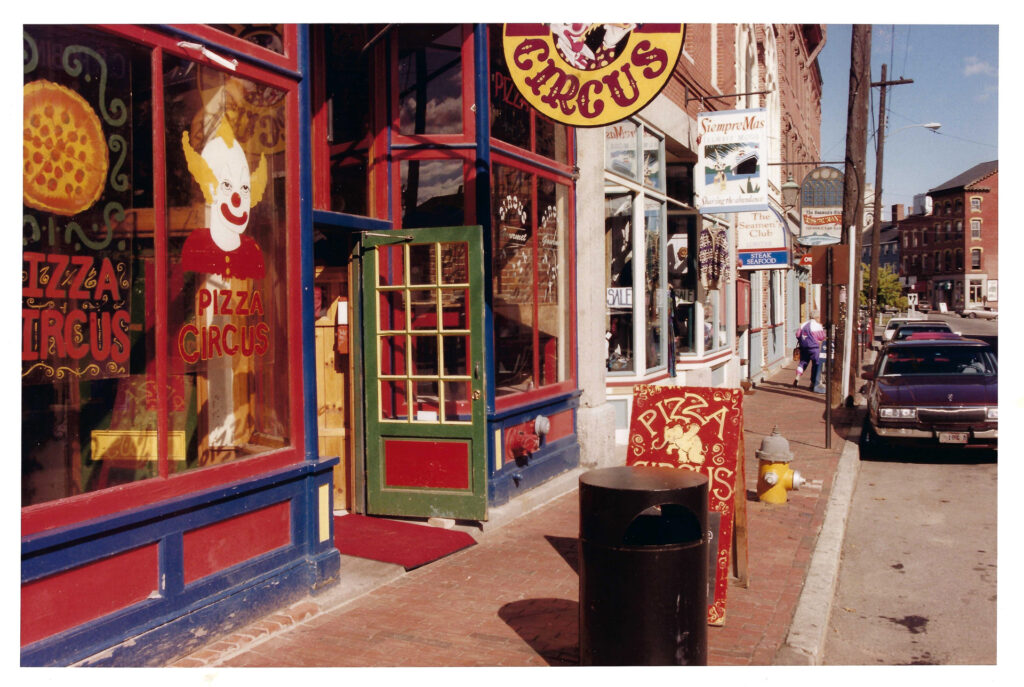
1 Exchange then.
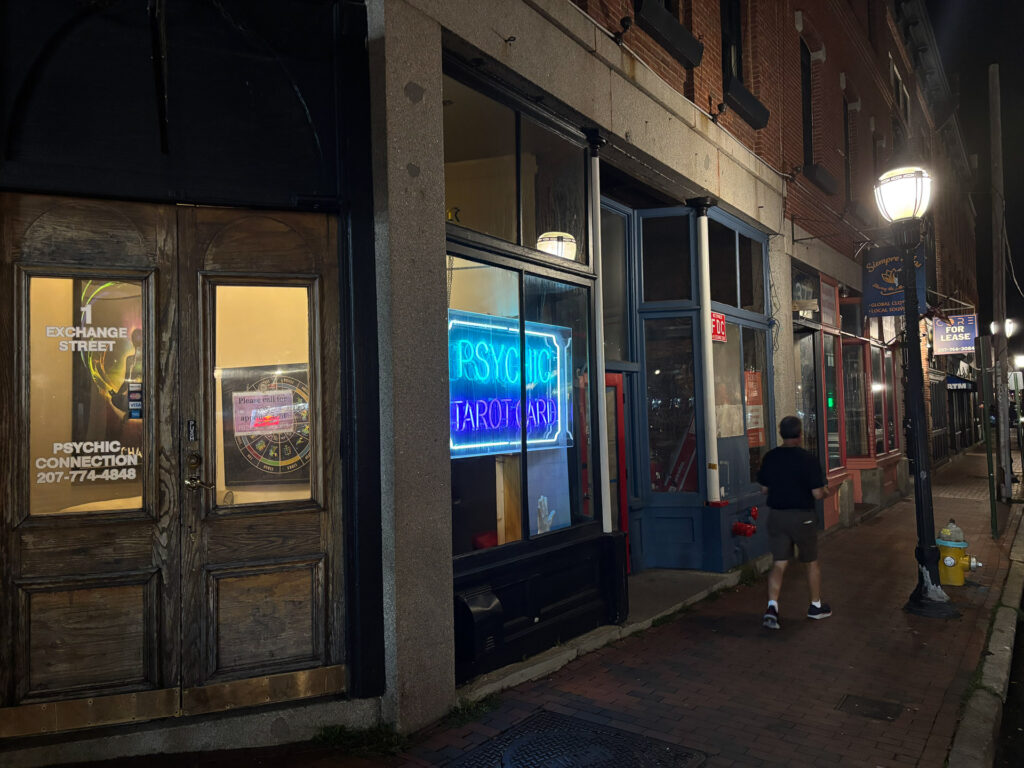
1 Exchange now.
Them Frames: Being able to compare, in what ways has Portland improved and in what ways has it lost some of its former sparkle?
Michael Carr: When I first began photographing Portland, they had recently come through a phased rebuilding era, investing time, money, and effort into upgrading many of the areas of Portland that had been neglected in the 80’s, especially along the waterfront. (What I would do to have been there during that effort….)
Portland was up and coming. It was incredible and vibrant. The arts scene was hot, music venues brought famous musicians every week. The jetport and seaport brought tourists and workers from every corner of the globe. The place was taking off. Portland responded by continuing to build and expand. Even through the Great Recession of 2008, Portland never stopped adding shops and hotels and parking garages and condos.
Portland, Maine is the largest city north of Boston, by quite a bit, so it stands to reason that the problems that come along with that honor are also larger than anywhere else around. Homelessness has become a significant issue in Portland. That’s a project for later, but as Portland grows, focuses on tourism and being a “foodie destination”, the homeless population grows and overlaps in many unfortunate ways.
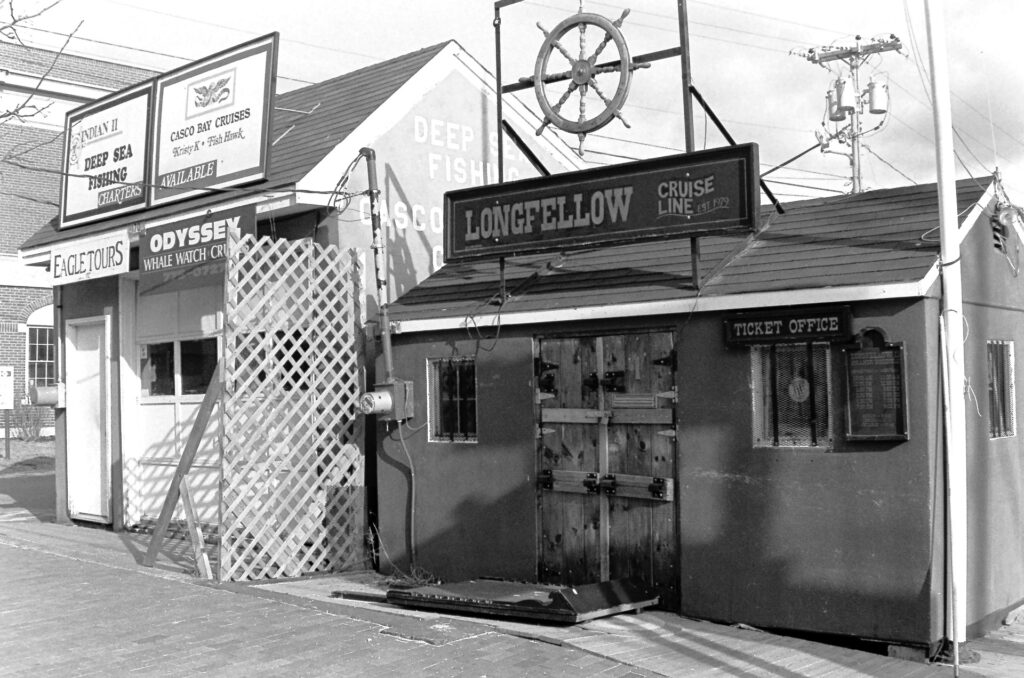
Commercial street then.
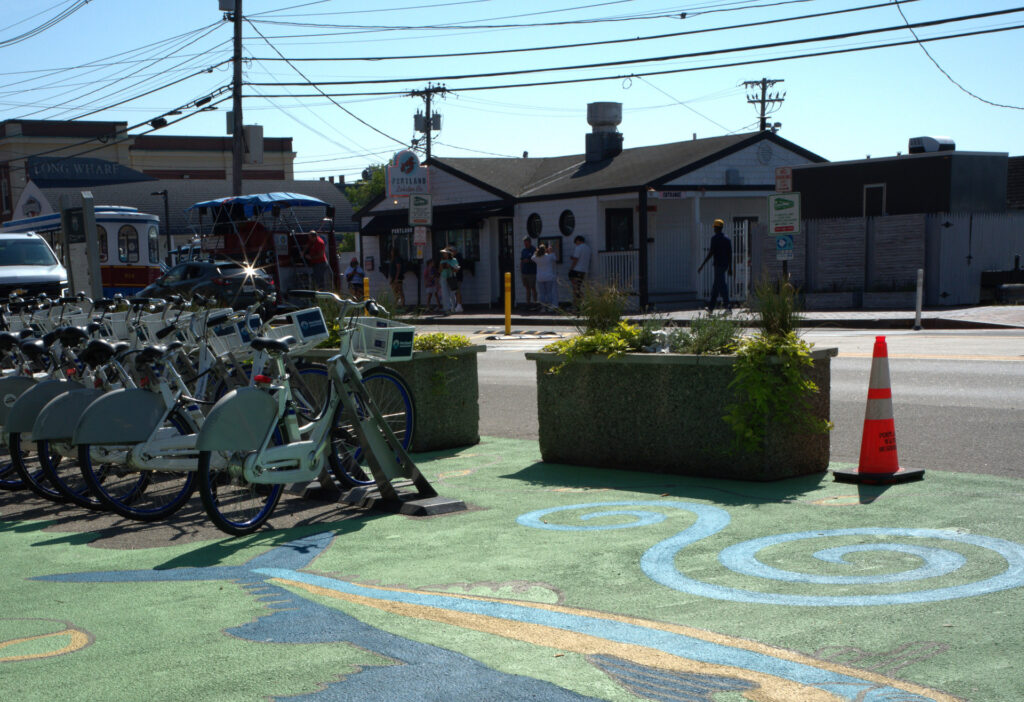
Commercial street now.
All those decades ago, I used to be able to walk and wander the streets and be fairly invisible. I was young and looked the part of a college student. I could get intimate images of the streets and people, homeless or otherwise, without much engagement from the people I met.
Social media didn’t exist, people with cameras were decidedly rare. Today, however, everyone has a camera and posts their images directly to social media, which creates some friction as I am now fair game for discussion about my camera, what I’m doing, why I’m taking pictures, etc. I have been accosted by shop owners demanding to know why I’m taking pictures of their jewelry store, etc.
Them Frames: How do you come up with comparison locations? For example, do you walk freely or are you going through your archives and choosing specific spots to return to?
Michael Carr: I am drawn back to the places I used to go, I guess in an effort to see how much they’ve changed over the years. Occasionally, I will find a place in my negatives that I feel needs an update, like the Dimillo’s shot. The blue sign was just recently upgraded to the yellow one. The blue one has been printed in a few sizes, so I knew it was time to make a new image.
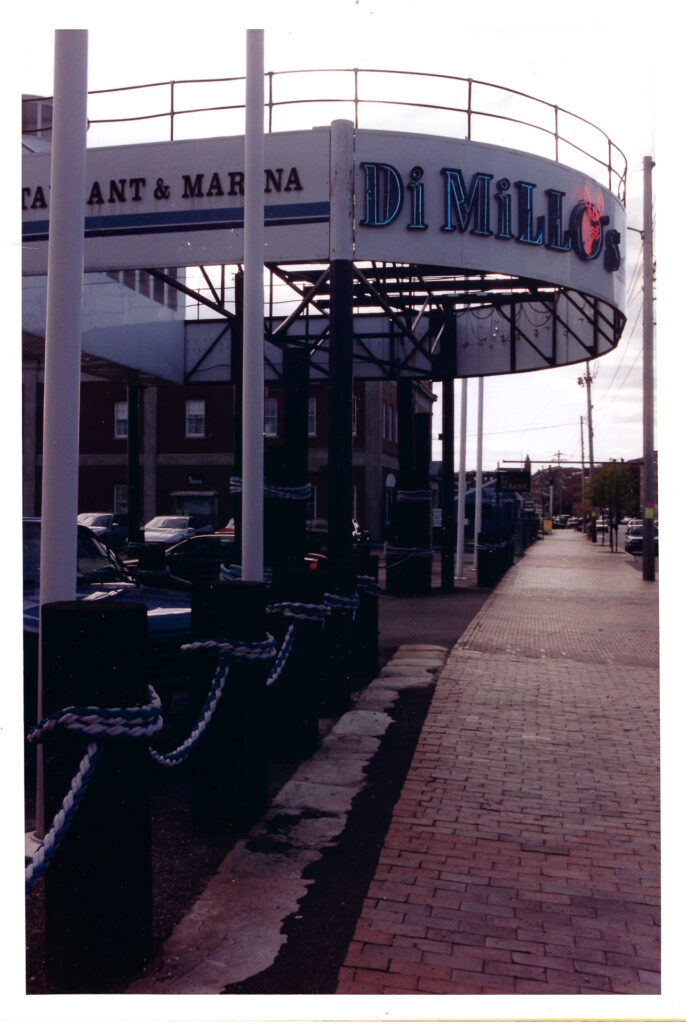
DiMillo’s then.
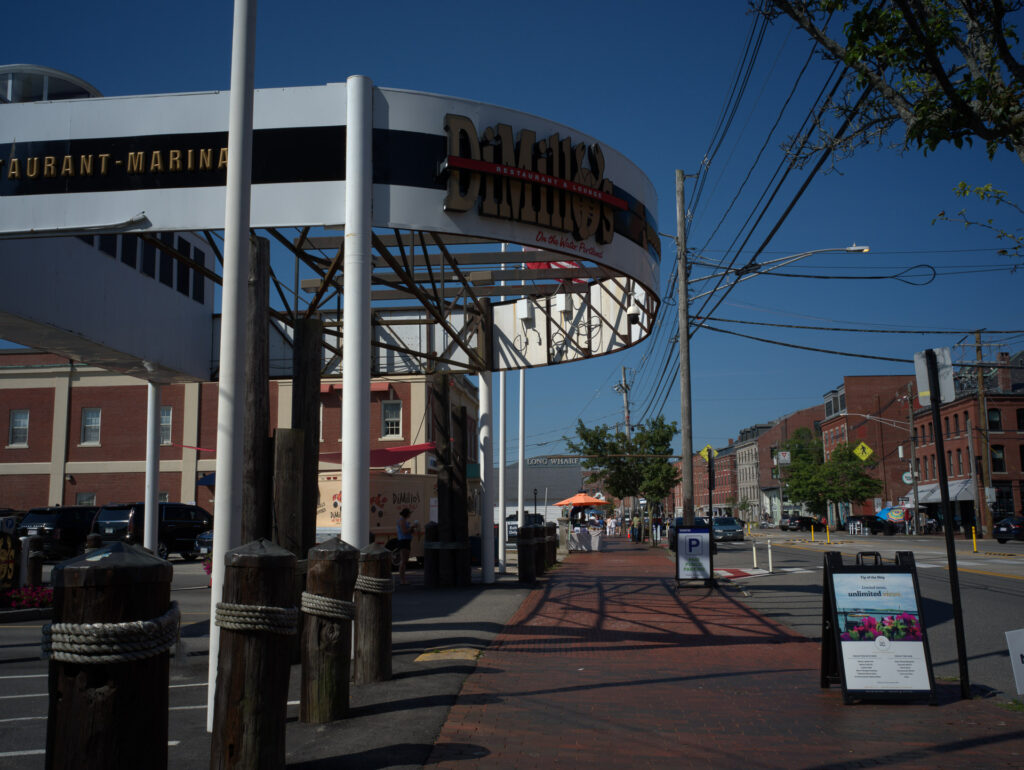
DiMillo’s now.
Them Frames: This type of comparison naturally allows you to compare your photographic style as well. How do you feel your visual interests and creativity have evolved over the years?
Michael Carr: This is the question that led me to dig out all the old negatives and prints. Shortly after my mother’s death, I had time to submerge myself in all of my work from what seemed like a lifetime ago. That retrospective, in my office, by myself, sparked something in me. The realization that I’ve been drawn to a certain place for decades, I’ve been documenting that place for those decades, and maybe it’s time to do something with that.
I’m still the same person, though now with decades more experience. My work is still my work, and feels similar to the old stuff in many ways, but with renewed interest of the subject.
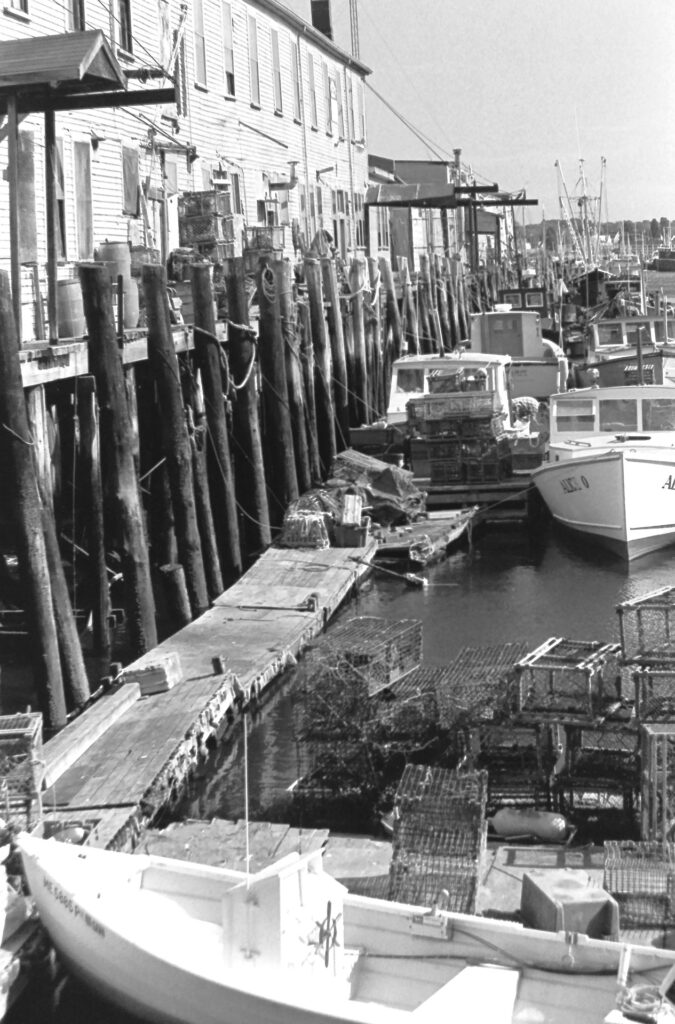
Custom House Wharf then.
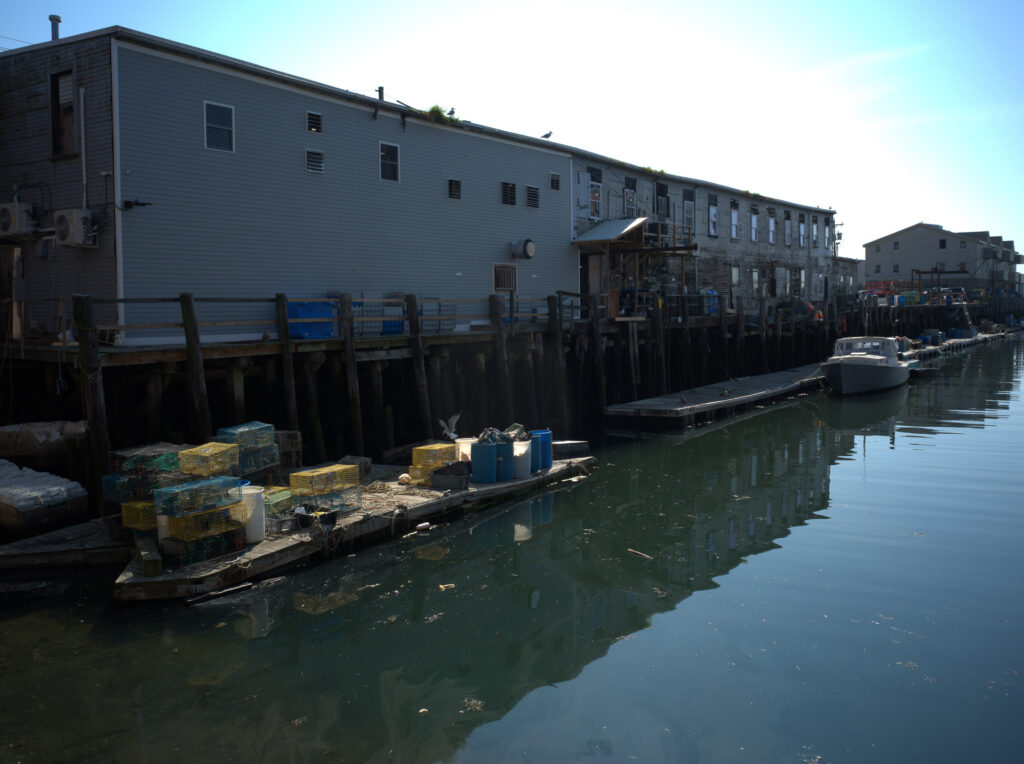
Custom House Wharf now.
Them Frames: You’ve used several formats to shoot this work. Why do you like mixing things up rather than committing to one camera/format?
Michael Carr: Good question! I shoot color and B&W through the 35mm still, I use the square format camera for B&W exclusively, and the new digital for color exclusively. Each is a different media, or tool for expression, much like a sculptor would work in wood, stone, or bronze. Each format is different enough that I actually don’t shoot multiple cameras at the same time. I have to get into a mindset specific to each.
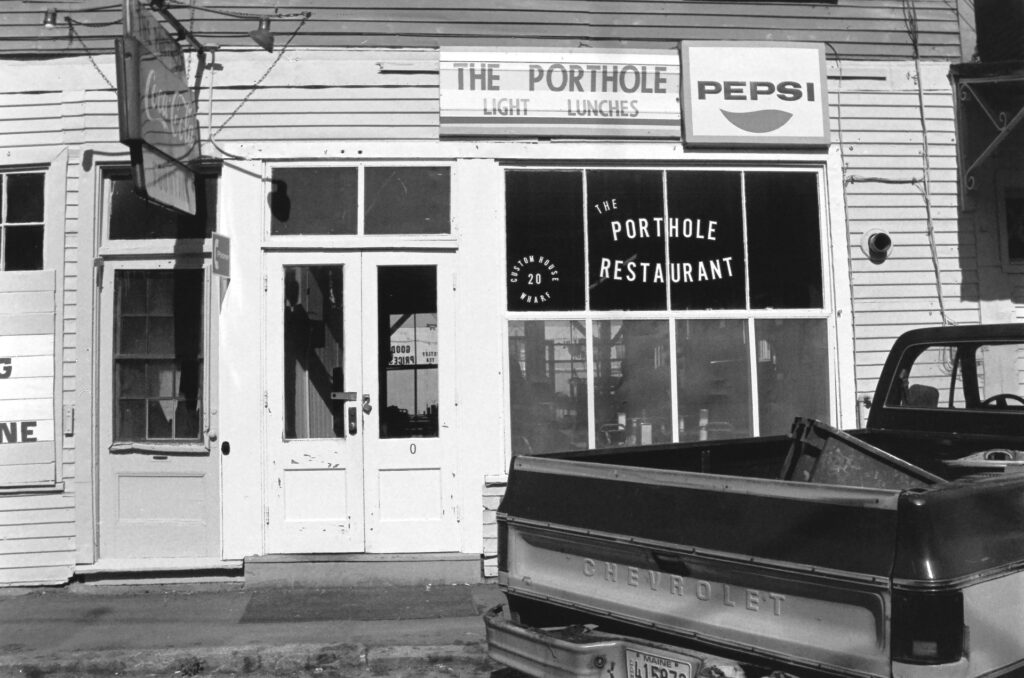
The Porthole then.
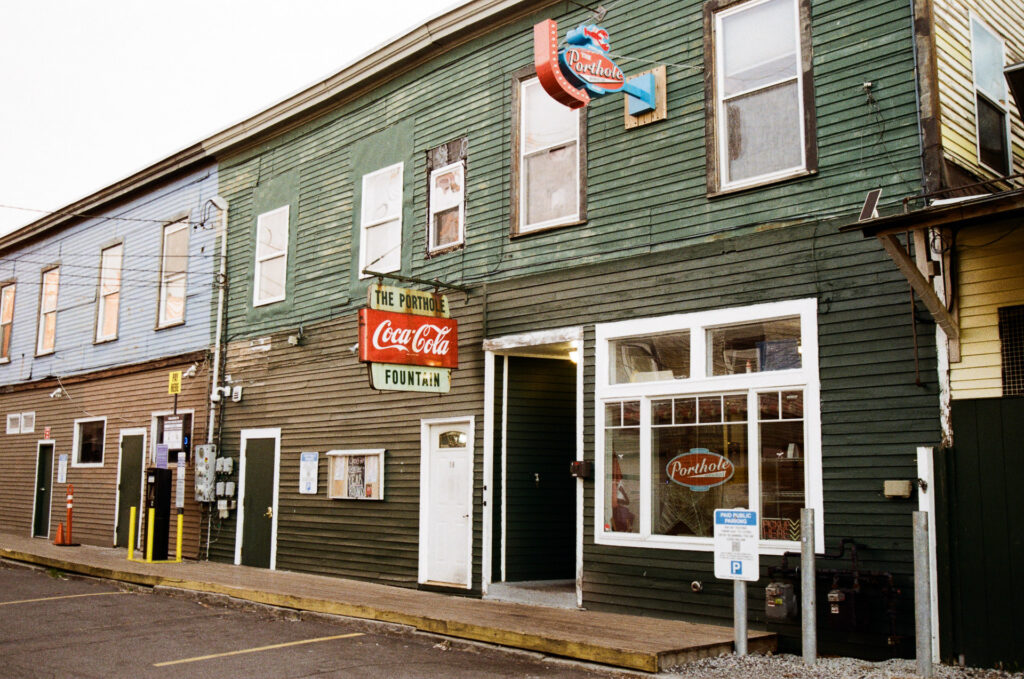
The Porthole now.
Them Frames: Finally, please can you put into words what Portland means to you?
Michael Carr: Portland represents a part of my life where I was most free and most creative. I made it my home, and Portland welcomed me with open arms. I have friends in the Portland area that I see regularly, and have seen for decades. Portland is my home away from home. It’s where I became an artist.
More reading: Bruno Quinquet Broke A Golden Rule of Photography. It Worked