
All images by Ginna Richards. Used with permission.
Exploration is one of my favorite aspects of photography. The camera feels like a gateway to the world, allowing you to observe and discover new lands. That’s how things began for photographer and historian, Ginna Richards, who embarked on a long term project that uncovered things most of us never knew existed.
The Inner Passage is Richards’ latest photobook, a collection of 60 images tracing the natural corners of South Carolina’s waterways and the people she met along the way. Every image was made using the wet plate collodion process, so what you are looking at are not modern digital captures but hand poured plates exposed on location, some taking up to 45 minutes from setup to development.
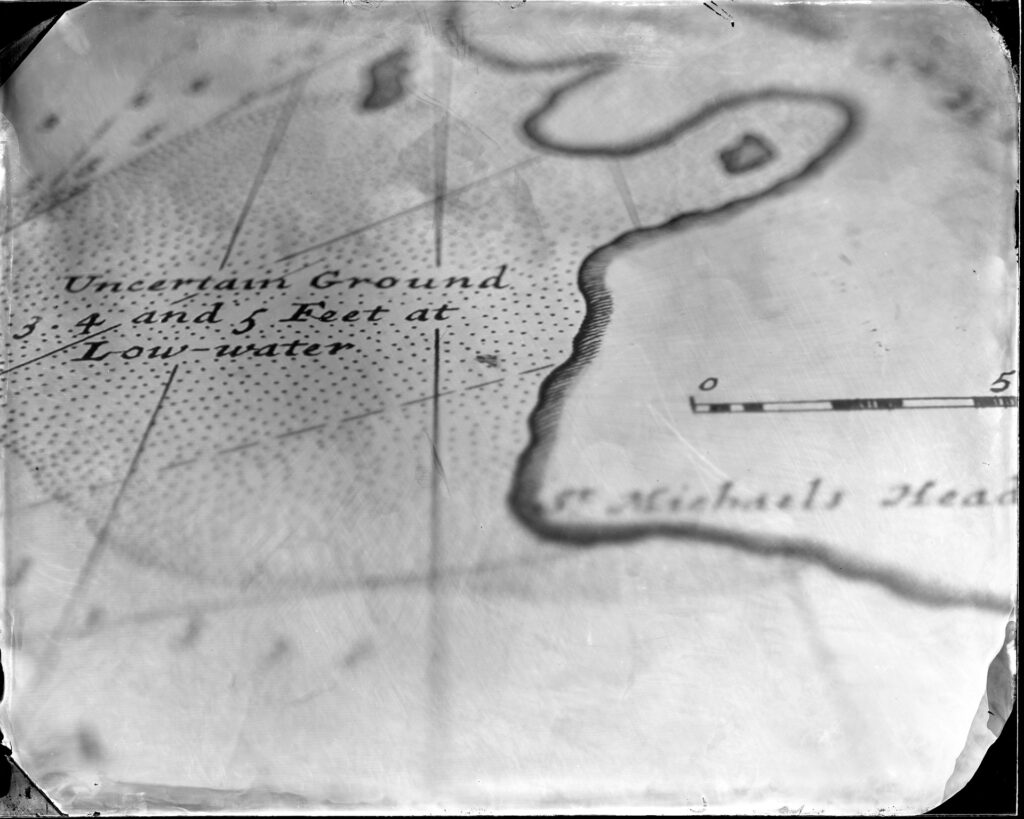
Wet plate suits this project well. The process is slow and unpredictable, streaks, drips, and chemical fog show up whether you want them or not, and there’s no way to fully control the outcome. That fits a project about piecing together history from old maps and half remembered stories, where you’re never working with the full picture either.
You can see it in the portrait of Herb Frazier, an author and journalist of Gullah Geechee descent, whose family has been rooted in the Lowcountry for generations. The soft focus and vignette give it a weight you don’t usually get from a clean digital shot. The archival 1700s map of Port Royal is labeled “Uncertain Ground,” and it’s hard not to read that as a fitting line for the whole book.
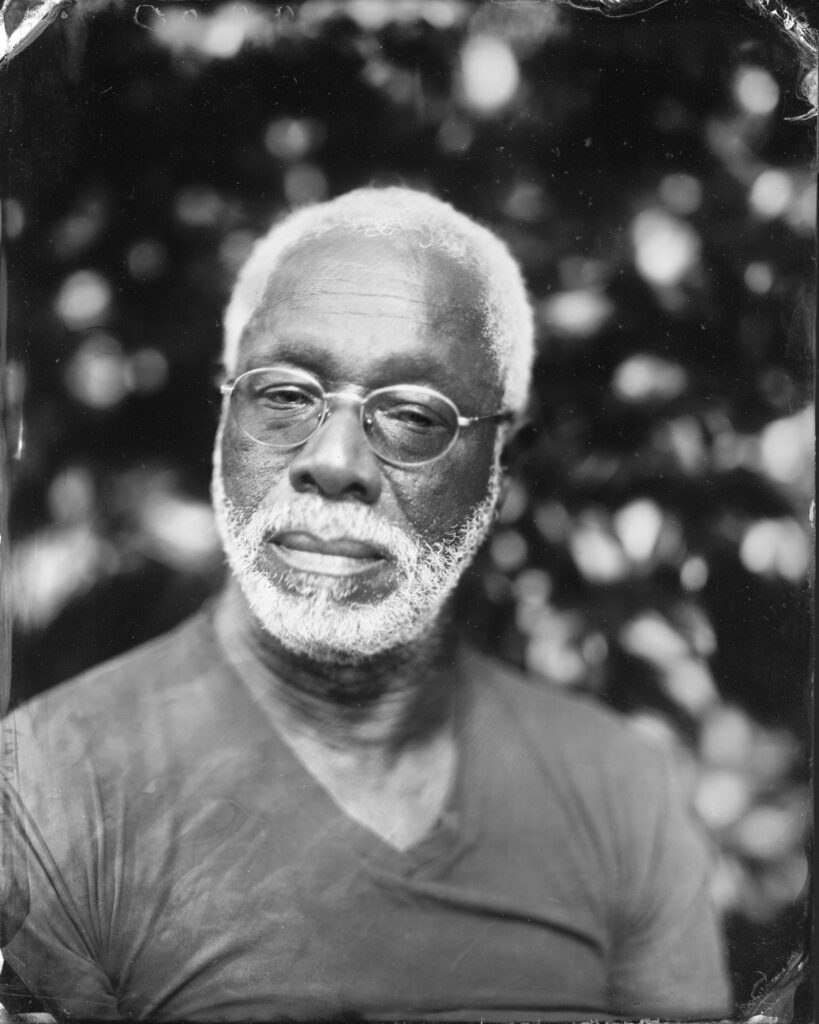
Herb Frazier.
I caught up with Richards to talk about how the project began, the wet plate process behind these images, and what she learned from the people she met along the way.
Them Frames: Hey Ginna! Please can you tell us where your desire to explore unknown grounds stems from and why photography became the perfect medium to help nurture your curiosity…
Ginna Richards: Growing in the American South, our family spent a lot of time visiting family who lived on small farms in the Carolinas. My ancestors made their living as farmers in the Piedmont area. They grew tobacco and other cash crops in small towns like Walkertown and Paw Creek, rural places.
When we went to visit, my brother and I walked the land and explored. We looked for pottery and arrowheads in stream beds and in plowed fields. We checked out reference books at the public library to identify the artifacts we’d found and trace their origins.
My brother and I saw ourselves as primitive anthropologists and created narratives about the past and the people who had lived and worked the land. I channeled those rambles from my childhood as I documented and researched the Inner Passage project.
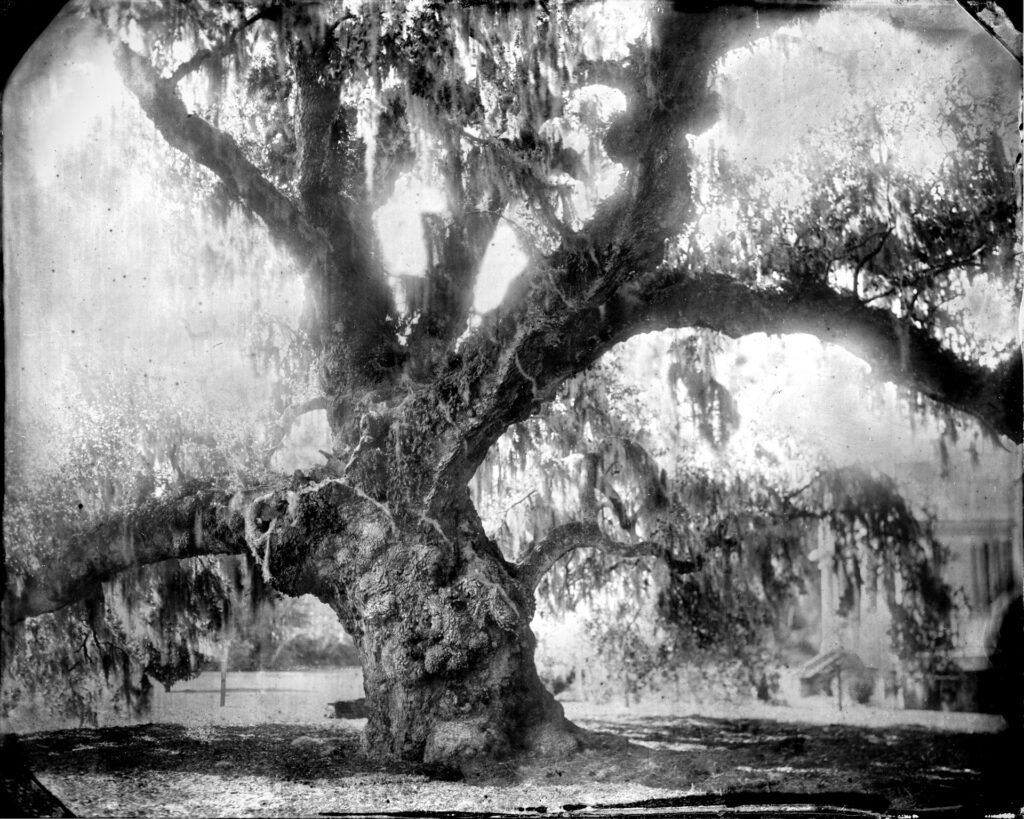
Witness Tree.
Since I was sixteen, I’ve used cameras to understand and interpret the landscapes and people in the American South where I live. Documenting the Inner Passage waterway using photographs was an extension of my regular visual practice.
When I was a high school student, I bought a used Rolleiflex camera and began taking black and white photographs with it. I enjoy the slowness of the 2 ¼ medium format and the even slower process of wet plate collodion.
Them Frames: There’s so much space and land to explore, even in the 300-mile radius, in terms of what you photograph, how did you prepare in order to ensure you covered the best locations to tell the story you wanted to tell?
Ginna Richards: About the time I began making photographs of the Inner Passage, I began to research the origins of the waterway. Maps and archival documents from the library revealed that New Cut canal, where I first swam and began the project, was one of the first channels created on the Inner Passage.
By 1720, enslaved men had excavated over a dozen canals that served as shipping lanes and transportation corridors around Charleston, South Carolina. These early canals on the Inner Passage were all within a 50-mile radius of our family home in Charleston. So I was able to drive from my house to these sites and return to them repeatedly during the project.
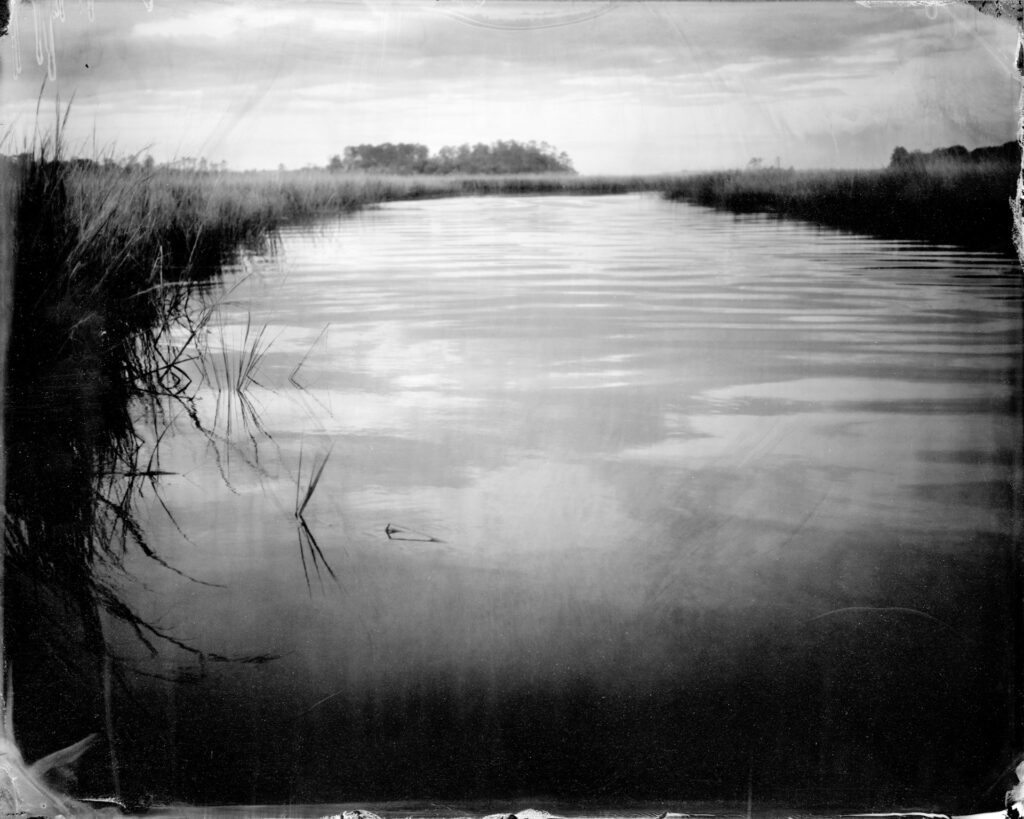
New Cut Canel.
Them Frames: Please can you tell us more about the portraits in the project. How did you connect with the subjects, and how did they respond to the work you were creating?
Ginna Richards: I began making portraits of people in the last phase of the project. The process is so time-consuming, about 30 minutes for each image, that I first wanted to practice and become facile with the wet plate chemicals and coating procedure. I wanted to make sure that I could make successful wet plate images before I asked people to collaborate on making portraits.
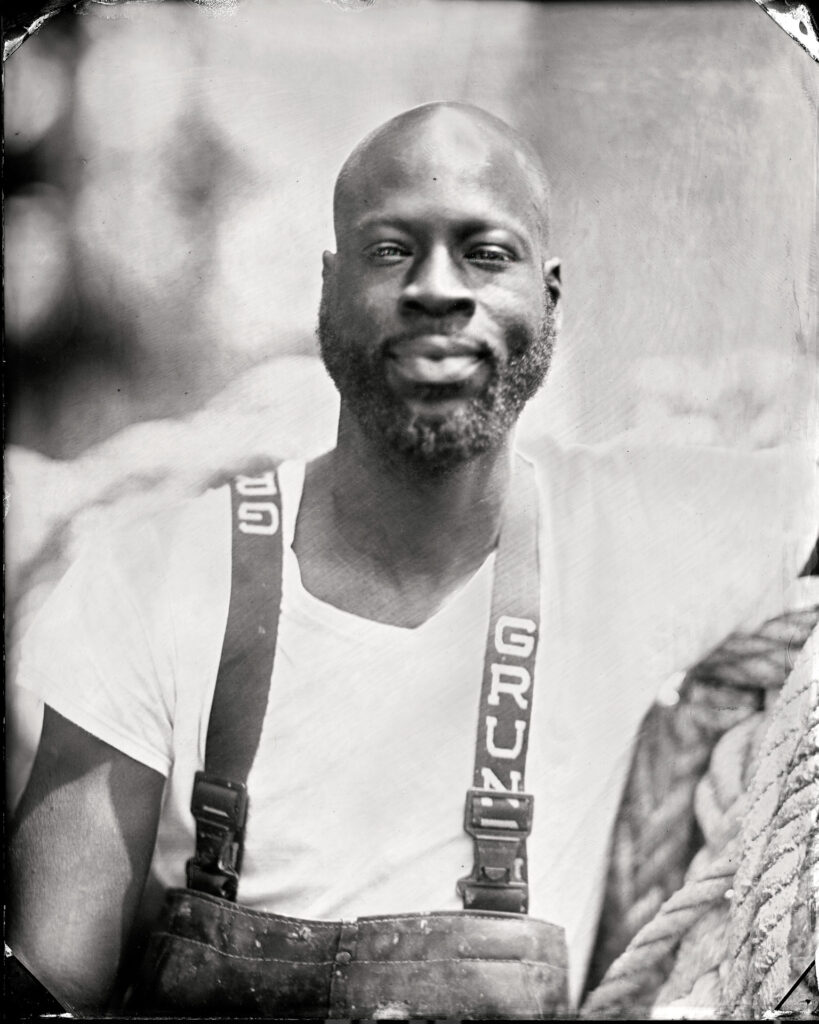
Sherman Mack.
I met some of the people whose portraits appear in the book while I was working in the marshes and fields of the Lowcountry. Once people saw the 8 x 10 Graflex camera I used, they became curious about the wet plate process and the project. Since I was developing the plates on site, I could show them photographs I’d just made in the washing trays. People wanted to know about the history of the waterway and many shared their own insights and connections.
Some people I photographed were old friends, such as Rutledge Hammes who had taught my children at a local school in Charleston. Herb Frazier and his wife, Adrienne, invited me on a kayaking trip they organized to honor their ancestors from Africa; we met on the river.
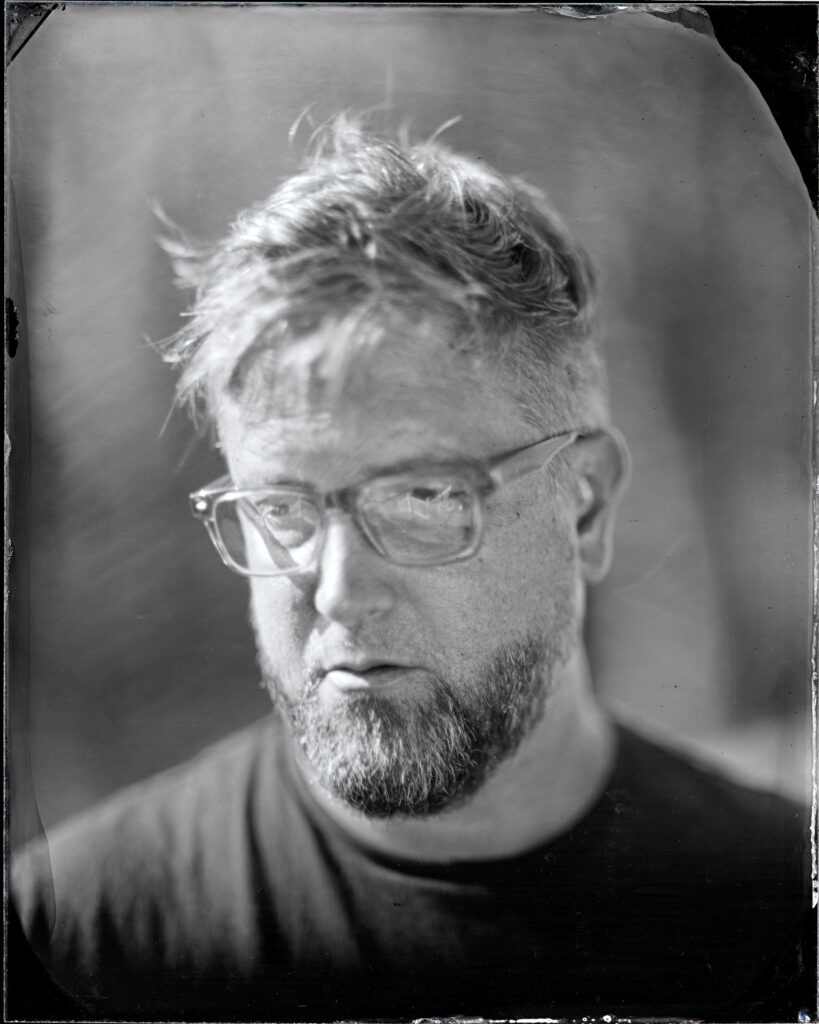
Rutledge Hammes.
Them Frames: What were some of the challenges to creating this work using wet plate processes?
Ginna Richards: The wet plate collodion process is unpredictable – heat, humidity, and the particular mix of chemicals on any given day alters the process. As a photographer, I had to become comfortable with uncertain outcomes. Taking a wet plate image took about 30 – 45 minutes to set up the tripod, coat the plate, make the photograph and then develop the plate.
I made each image with the knowledge that, despite my best efforts, the process may not work. Collodion could peel off the plate during development, and the whole image would just slide off onto the ground. Since there is no light meter for collodion, all exposure times are a guess between seven seconds and 40 seconds of exposure. I over-exposed and under-exposed many plates. Wet plate collodion requires patience and comfort with uncertainty.
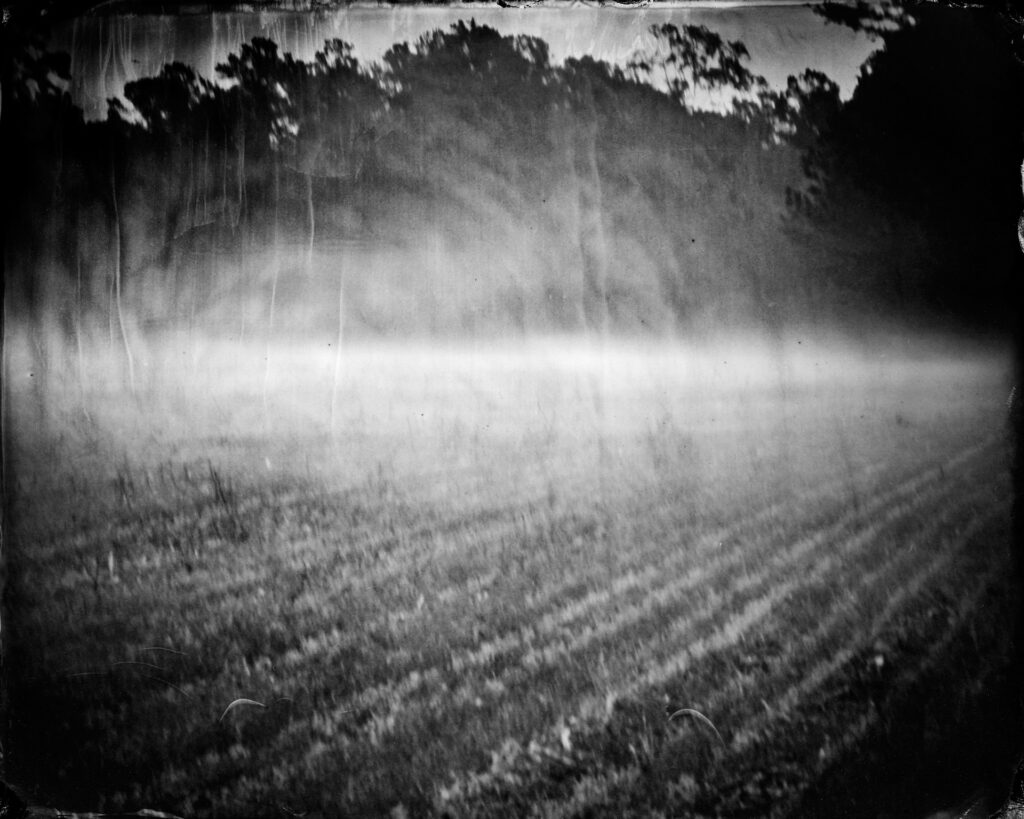
Agricultural field on Wadmalaw Island.
Them Frames: How was the process of creating the book for you? What helped you with choosing the overall layout and positing of the images to ensure the story was told in the best possible way?
Ginna Richards: To arrive at the final edit for the book, I made small prints of each plate and taped them to a wall in my house that I walked past every day. Over time I moved images around on the wall and removed some of them. Eventually I had an edit of about 60 images.
The sequencing of the photographs in The Inner Passage evokes the rhythmic tides of South Carolina’s coastal rivers. The order of images leads the viewer through a journey of the waterway that ebbs and flows visually like the Lowcountry tides. The images transport the viewer between past and present in short photographic essays grouped by subject matter:
· witness trees
· water and rivers,
· landscapes & historical artifacts
· portraits.
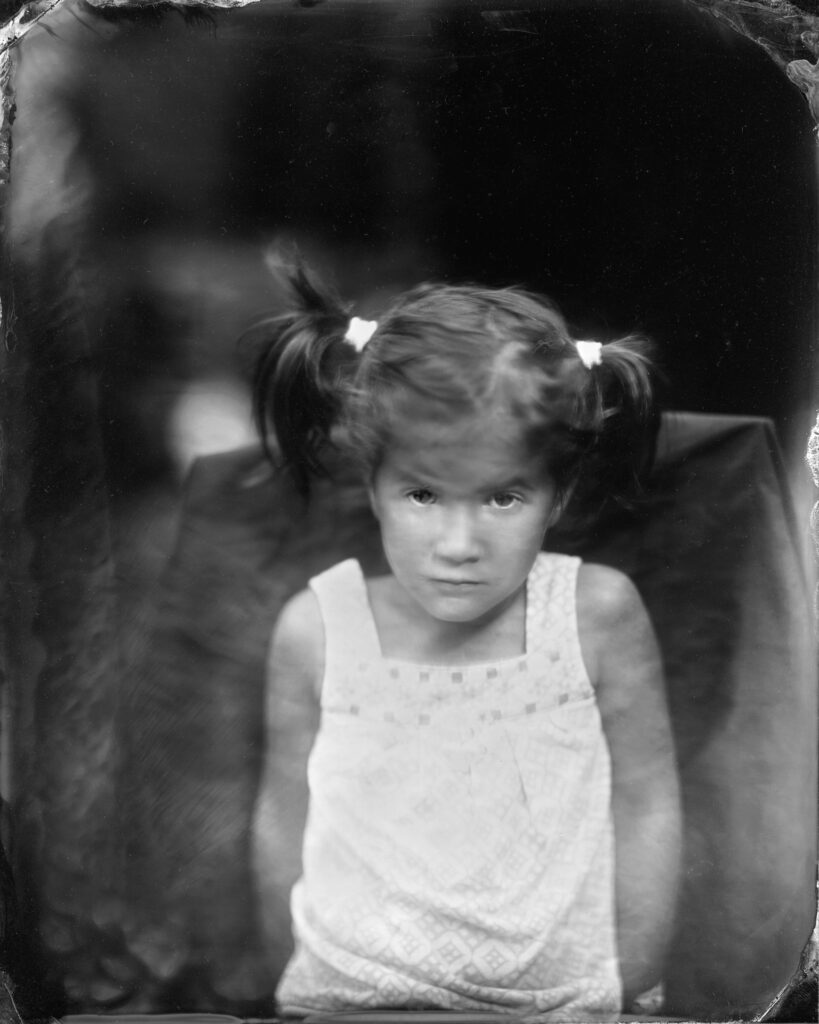
The portraits are intentionally placed on individual pages (no double spread layouts) to give them prominence. The people who appear in the photographs speak their own history in their own words in their quotes. The viewer sees and interprets both a portrait and an oral history simultaneously. Modern-day portraits (albeit in a historical visual medium) appear together with the subject’s memories.
Them Frames: The book has been out since April. How do you feel now it’s out in the open and how do you feel about the response it’s gathered so far?
Ginna Richards: After spending over a decade researching and documenting the Inner Passage waterway, it’s been wonderful to see the photographs exhibited and discussed in many different venues – bookstores, academia, magazines and book reviews.
Connecting with people during the spring tour was one of the highlights of publishing the The Inner Passage. After a book talk in Washington, DC, a woman introduced herself and shared the story of her ancestors who fled enslavement in the South in the mid-1800s.
Once they arrived in Washington, DC, they lived as free people and worked manning the lock on a local shipping canal. Their home became a hiding place for enslaved people heading north on the Underground Railway. Many of the refugees who came to their house arrived in boats traveling on the nearby canal. The project has allowed me to meet people and historians who share a passion for history.
You can purchase The Inner Passage via the Mit Press website.
See more work by Ginna Richards via her website.
More reading: A 40-Year Photography Project That’s Only Getting Better